
Congo Ebola Outbreak Surpasses 5,000 Cases Amid Unprecedented Spread
As of Sunday, August 16, 2026, Congo’s Ministry of Health recorded 5,021 cases and 2,378 deaths in the country’s ongoing Ebola outbreak. Driven by regional insecurity, population displacement, and logistical hurdles in remote territories like Ituri, the outbreak continues to outpace international response efforts at an unprecedented rate.
Anatomy of the Fastest-Growing Ebola Crisis
The outbreak, declared on May 15, 2026, involves the Bundibugyo virus strain, for which there are no officially approved vaccines or targeted treatments. Data released by Congo’s Ministry of Health outlines a staggering trajectory that has already surpassed historical infection rates seen in past West African health emergencies.
World Health Organization Director-General Tedros Adhanom Ghebreyesus addressed the severity of the crisis during an agency meeting. “We must be frank: the epidemic is far from being under control,” Ghebreyesus stated, emphasizing that the risk of both national and international spread remains high.
While the World Health Organization notes that the global risk of rapid international transmission remains relatively low due to the physical nature of direct fluid contact, the local vulnerability is extreme. Eastern Congo remains the epicenter, with Ituri province accounting for nearly 90 percent of all recorded infections.
Insecurity and Community Resistance Hamper Containment
Response operations face intense friction from community mistrust, misinformation, and active armed conflict. In Ituri’s Nyakunde health zone, international partners such as the Africa CDC and Mercy Corps were forced to temporarily relocate following a July 15 attack on a hospital and treatment center, which was triggered by a patient’s death. Dr. Désiré Duabo, chief medical officer for the health zone, warned that the withdrawal of humanitarian partners has left operational supplies nearly depleted.
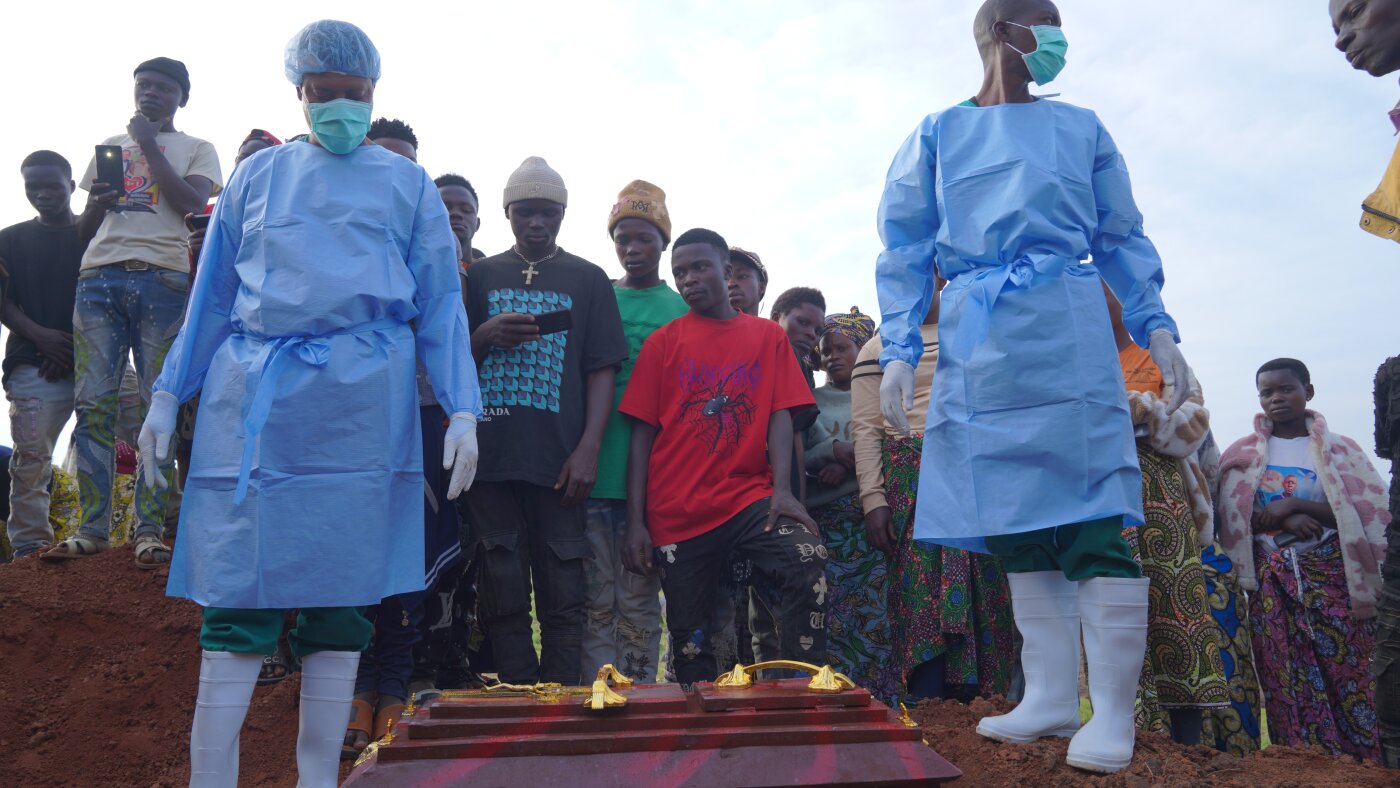
Contact tracing efforts lag severely behind the transmission curve. Health officials estimate that only about 78 percent of known contacts are currently monitored nationwide, falling well short of the 95 percent threshold required to successfully interrupt transmission chains. In the territory of Aru, a health team was attacked by a crowd after a suspected case was reported, resulting in an ambulance being set on fire, according to Michael Wani, president of the Union of Cultural Associations for the Development of Ituri.
“The community needs to be aware about the outbreak. They need to be involved in the response. They need to know what the signs and symptoms are and what to do if they get sick,” said Trish Newport, an emergency coordinator with Doctors Without Borders, highlighting the critical communication gap plaguing rural and mining zones.
Resource Strains and Health Worker Burnout
Frontline medical personnel bear the heaviest burden as patient loads swell past isolation capacities. Thérèse Anyiya, a nurse working in Ituri’s capital of Bunia, described the severe physical and psychological toll on local staff, noting that some workers have resorted to strikes over unpaid wages and hazardous working conditions. “If the managers don’t take things seriously, we too will end up withdrawing.

As response teams race to establish reliable surveillance networks across remote mining towns and displacement camps, the path forward remains fraught with danger.