Commentary: How the 2026 Brazilian Elections Affect Criminal Factions
The piece notes that these groups have expanded their influence beyond their original territories to include international markets and various legitimate sectors.
According to the Ministry of Justice and Public Security’s Secretariat for Penal Policy, an estimate from 2024 identified 88 gangs, most of which are rooted in the penitentiary system.
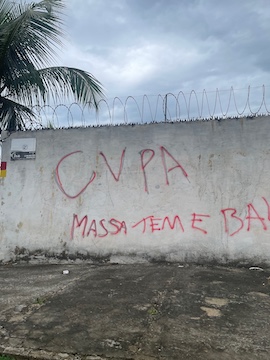
The Red Command (Comando Vermelho – CV) and the First Capital Command (Primeiro Comando da Capital – PCC) no longer operate solely in Rio de Janeiro and São Paulo. The author writes that these groups act in many states and internationally, specifically in Paraguay and at the Amazon border with Peru and Bolivia, according to Marcos Alan Ferreira.
As the Red Command was the gang most frequently targeted by police raids in Rio de Janeiro, it has expanded into 18 other states to find new markets, the author notes. Beyond drugs, the author argues these factions have grown their presence in agriculture, real estate, environmental licensing, and politics.
Violence has emerged as the primary concern for Brazilians, ranking higher than the economy, health, or corruption in a Quaest poll.
Candidates in the 2026 election have offered diverging strategies to address the crisis. Far-right candidate Flavio Bolsonaro promised to designate the PCC and Red Command as terrorist groups to align with the US administration. He also advocated for increasing the number of prisons and lowering the age of criminal responsibility to 16 years old, while praising the measures taken in El Salvador, according to TV Globo and G1 SP.
“for the citizen protection, for the criminal prison (Para o cidadão, proteção; Para o bandido, prisão),” President Lula adopted as a second-round motto, according to G1. For the first time in his career, Lula stated he favored lowering the age of criminal responsibility for the most serious crimes, according to G1.
The Senate recently approved the Public Security Amendment to the Constitution (PEC da Segurança Pública), which the author describes as a victory for the federal government. The Senate reports the proposal aims to strengthen federal competencies, increase intelligence cooperation between cities and states, and raise penalties for gang membership.
The author highlights the growing power of militias, which originated in the 1980s as “justice groups” in the outskirts of Rio de Janeiro. These groups now have political projects and function as “electoral herds” to elect local officials, according to a Rio de Janeiro Legislative Assembly report.
Flavio Bolsonaro won in 86% of areas controlled by militias, according to Economico Valor. The author also notes that investigations into the murder of councilor Marielle Franco revealed connections between certain state deputies and militia groups, according to Folha de São Paulo.
Brazil currently holds the third-largest prison population in the world, and most facilities are overcrowded, according to TV Senado.