
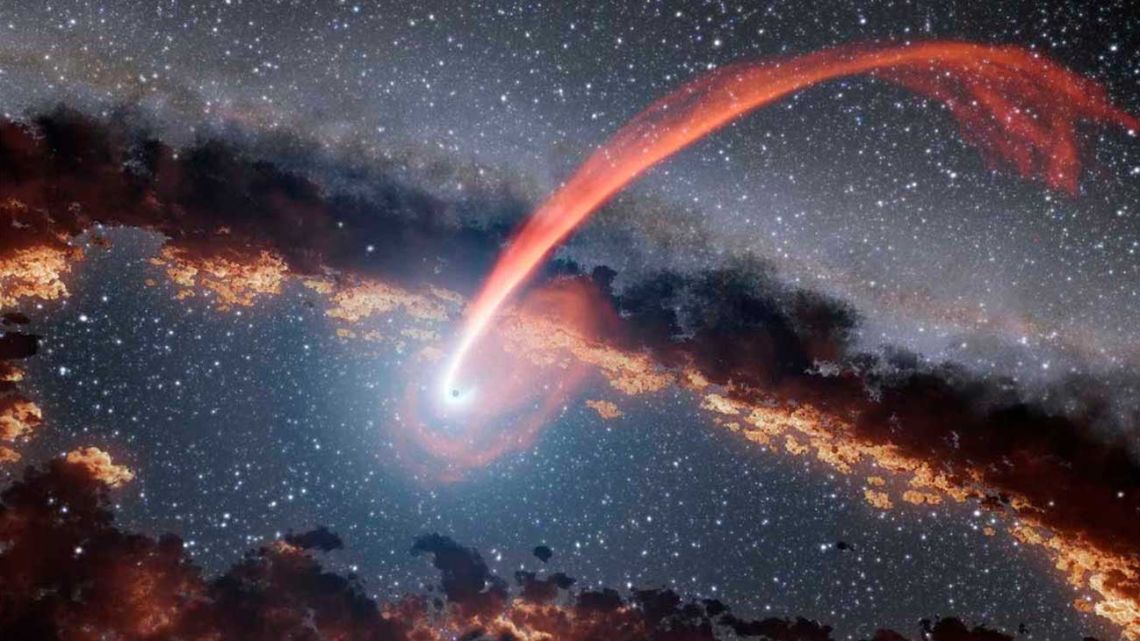
Comet 3I/ATLAS: Ancient Interstellar Fragment With Nuclear Fuel Composition
The Asteroid Terrestrial-impact Last Alert System (ATLAS) station in Chile first reported the sighting of the interstellar comet 3I/ATLAS on July 1, 2025. Designated as C/2025 N1 and previously known as A11pl3Z, the object is the third confirmed interstellar visitor to pass through the Solar System, following 1I/ʻOumuamua and 2I/Borisov.
Following its discovery, 3I/ATLAS was tracked by a coordinated network of NASA and ESA missions. The comet follows a hyperbolic, unbound trajectory and reached its perihelion on October 29, 2025. While it passed Earth at a distance of 1.8 AU, astronomers confirmed it posed no threat to the planet.
Multi-Mission Observation Campaign
A series of space-based instruments provided a comprehensive timeline of the comet’s passage. In July 2025, the Hubble Space Telescope provided images that allowed astronomers to estimate the size of the object. By August 6, the James Webb Space Telescope (JWST) utilized its Near-Infrared Spectrograph to observe the comet, revealing that 3I/ATLAS is unusually rich in its composition.

Between August and October 2025, several other missions captured data:
- The SPHEREx Observatory collected data over a one-week period in early August.
- The Psyche spacecraft recorded four observations over eight hours on September 8 and 9.
- The STEREO mission produced colorized, stacked images of the comet.
- The Lucy spacecraft spotted the object from a distance of approximately 240 million miles on September 16.
- The PUNCH mission captured images of the comet’s tail, appearing as a short elongation, between September 20 and October 3.
- MAVEN’s ultraviolet instrument identified hydrogen atoms surrounding the comet on September 28.
Observations extended to Mars, where the HiRISE camera on the Mars Reconnaissance Orbiter observed the comet from 18.6 million miles away on October 2. The Perseverance rover paused its surface exploration to photograph the comet in the Martian night sky.
Physical Composition and Origin
Technical data indicates the comet’s nucleus is less than 1 kilometer in diameter, with non-gravitational estimates placing it between 0.520 and 0.748 kilometers. Its mass is estimated at 4.4 x 10¹⁰ kg, and it possesses a CO2 coma of approximately 700,000 kilometers. The comet’s maximum orbital speed was recorded at 68.3 km/s at perihelion.
Analysis of the comet’s composition has led to significant scientific discussion. Some reports indicate that the data points to the object being a fragment expelled from an ancient, frozen system approximately 12 billion years ago, potentially making it one of the oldest comets ever detected. However, these findings have been juxtaposed with more speculative claims suggesting the comet contains nuclear fuel or could be an artificial fragment.
These contrasting narratives have placed 3I/ATLAS at the center of a conflict between scientific reporting and misinformation. While some outlets have promoted the idea of an artificial origin, other analyses have characterized these claims as hoaxes.
European Space Agency Integration
The European Space Agency (ESA) monitored the comet using ground-based telescopes in Australia, Chile, and Hawaii, as well as space telescopes including XMM-Newton and XRISM. In late 2025, ESA redirected the Mars Express, the ExoMars Trace Gas Orbiter, and the Jupiter Icy Moons Explorer (Juice) to observe the comet from strategic vantage points.
Data from the Juice mission has recently arrived on Earth, and scientists are currently analyzing the findings to determine what they reveal about the object.