Colombia’s Frailejóns: Keystone Species Face Threats as Restoration Gains Momentum
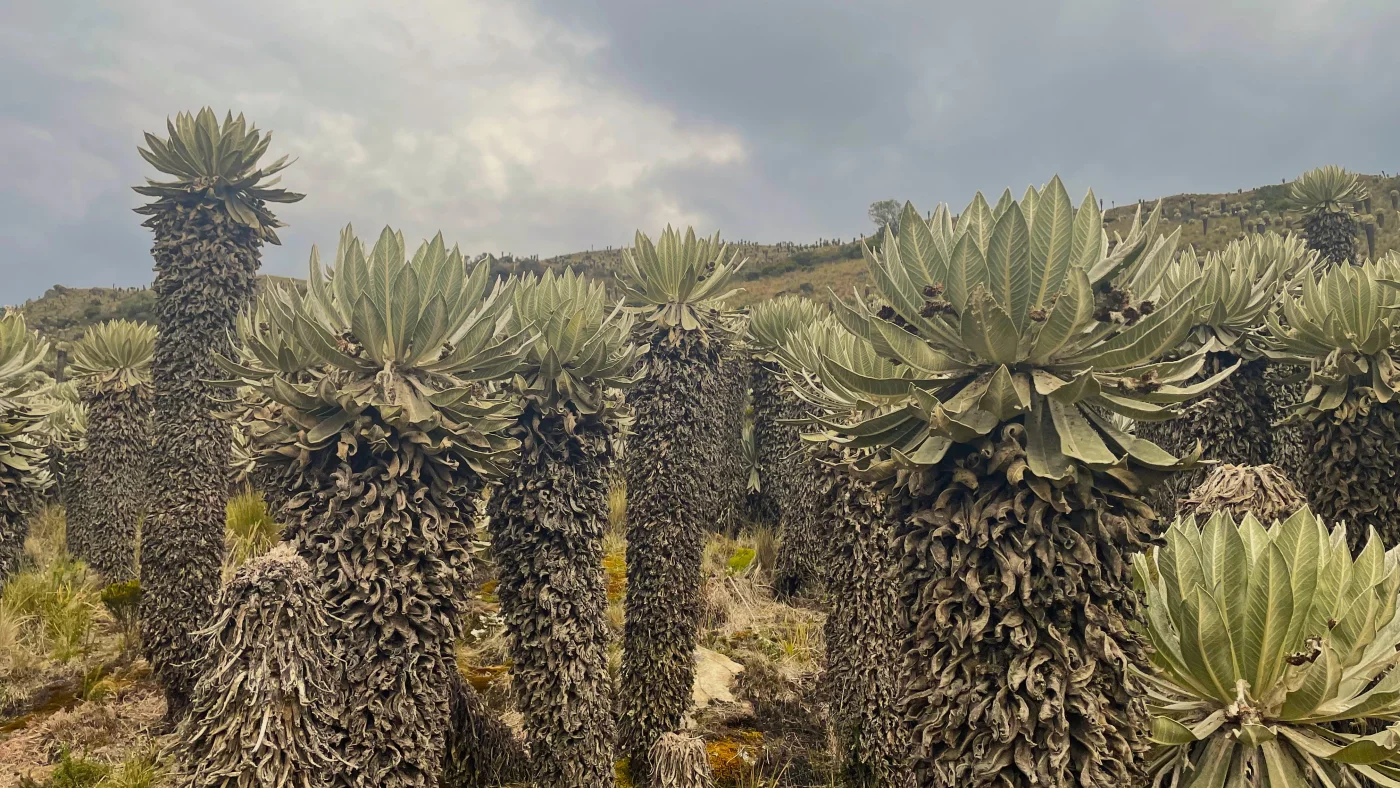
Colombia’s frailejón plants, the keystone species of high-altitude páramos that supply water to millions, face mounting threats from agriculture, mining and climate change even as a grassroots restoration movement gains momentum, NPR reported.
Moisés Moreno, 53, runs a greenhouse at 10,000 feet near the central Colombian town of Monguí where he nurtures seedlings that can reach 30 feet tall. The woolly fuzz on their leaves captures moisture from cloud cover, sustaining the spongy páramo soils that feed major rivers.
Of the nearly 150 frailejón species, two-thirds are at risk and 17 are endangered, said Mauricio Diazgranados, chief science officer at the New York Botanical Garden. “They are a keystone species for maintaining the páramos and play a key role in water production,” he said. “But most frailejons are in trouble.”
Moreno once cleared frailejóns for potato fields and cattle pasture. “We viewed them as a nuisance,” he said. A coal-mine cave-in injured him and prompted a vow to work above ground. He taught himself páramo ecology, built the greenhouse and now leads volunteers on planting expeditions at 11,000 feet.
“I felt inspired to do something to protect the páramos,” he said.
Farmers, ranchers and coal miners continue pushing higher into the Andes, while warming temperatures allow invasive species to gain ground. Wildfires have scorched thousands of acres, prompting Colombia’s National Parks agency and the armed forces to join reforestation campaigns, NPR reported.

Public awareness owes much to Ernesto Pérez, a frailejón-shaped cartoon character with an earworm theme song. “The song is very contagious,” said Nicolás Coronado, 25, a Bogotá plastics worker who carried a six-inch seedling up the mountain. Volunteers planted seedlings in shallow holes with shredded tobacco as fertilizer, some offering prayers and blowing conch shells.
Biologist Julieta Barba named hers “Gerry” after her mother. “I’m very excited for her future here in the páramo,” she said.
Survival is uncertain; plants that take hold grow only a few inches per year. Barbed-wire fences and grazing cattle still mark the state park where Moreno works.
He frames them as a keystone species for maintaining páramos and a key driver of water production, underscoring their ecological indispensability. A Colombian expert on the plant who became captivated by them as a teenager in Colombia, Diazgranados provides the scientific authority that contextualizes grassroots restoration efforts led by figures like Moisés Moreno, linking species-level taxonomy to the hydrological services on which millions depend.