
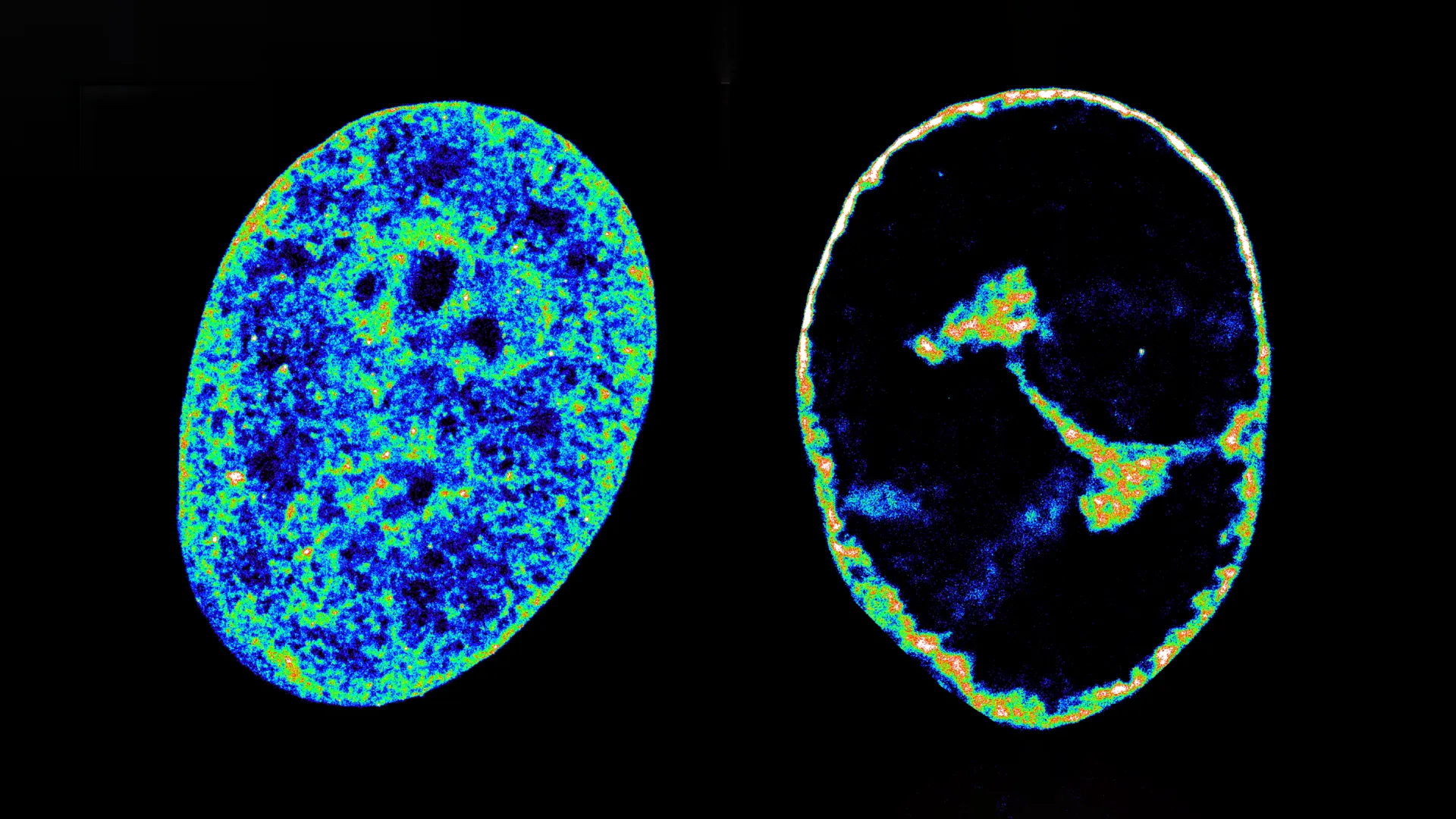
Cold Sore Virus Rewires Human Genome
New study reveals how HSV-1 manipulates our DNA
Scientists have made a startling discovery about the herpes simplex virus-1 (HSV-1), which causes cold sores. The virus doesn’t just replicate within cells; it also actively reshapes the human genome, manipulating it to aid its own reproduction. This hostile takeover could lead to new treatments for this common infection.
Virus’s Interior Design
Researchers at the Center for Genomic Regulation (CRG) in Barcelona found that HSV-1 acts as an “opportunistic interior designer.” The virus rearranges the architecture of the human genome in three-dimensional space to access the genes it needs to replicate. This mechanism of manipulation was previously unknown.
“HSV-1 is an opportunistic interior designer, reshaping the human genome with great precision and choosing which bits it comes into contact with. It’s a novel mechanism of manipulation we didn’t know the virus had to exploit host resources,”
—Dr. Esther González Almela, Study Author
Blocking a single host enzyme, topoisomerase I, completely halted HSV-1’s ability to rearrange the genome. This could offer a novel strategy to combat the virus, which affects nearly four billion individuals globally. Currently, over-the-counter medications can help with symptoms, but there’s no cure, and drug-resistant strains are emerging (World Health Organization, 2024).
Hostile Takeover Timeline
The study revealed the takeover commences within an hour. The virus hijacks the human RNA-polymerase II enzyme to make its own proteins. Topoisomerase I and cohesin then follow RNA-polymerase II into the viral replication compartments.
Three hours post-infection, most polymerase and a significant portion of the other two factors had abandoned human genes. This causes transcription to collapse across the host genome. As a result, chromatin, the human genome’s natural state, compacts into a dense shell.
“We always thought dense chromatin shut genes down but here we see the opposite: stop enough transcription first and the DNA compacts afterwards. The relationship between activity and structure might be a two-way street,”
—Dr. Álvaro Castells García, Study Author
The researchers employed super-resolution microscopy and Hi-C to understand how HSV-1 hijacks human cells. This enabled them to gain new mechanistic insights.
Significance
Two in every three individuals under age 50 carry HSV-1. While often asymptomatic, the virus can cause cold sores and, in rare cases, severe diseases. The research may help address the public health burden of HSV-1.
The findings highlight a new approach to controlling HSV-1. This could ultimately lead to improved therapies and, potentially, a cure for this widespread virus.
