
Clover Gains Ground as a Forage Alternative – AgroPecuarias News
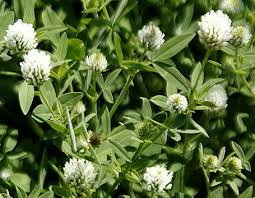
Jubilee, Entre Ríos (NAP) – Alexandrian clover is experiencing a resurgence in Argentina, proving too be a valuable asset for both livestock feeding and soil health in coastal farming systems. This was highlighted by agronomist Héctor Rodríguez, extension agent of Inta San Salvador, during the Argentine Beef Promotion Institute’s “Journey to the Field” event in Jubilee.
Originally utilized as a service crop in rice rotations due to its tolerance to waterlogging as an annual legume, clover quickly demonstrated potential beyond cover cropping. ”We started using it as cover, but we saw that it had a very good regrowth capacity, and from then on producers adopted it as forage,” explained Rodríguez.
The results speak for themselves: clover yields approximately 4 tons of dry matter per hectare,supporting daily gains of 1.1 kilos per animal without supplemental feeding. Rodríguez noted its protein levels are comparable to alfalfa, but with superior adaptability to local conditions.
Inta recommends intensive or rotational grazing systems, with occupation periods of 6-7 days per lot. Soil response to phosphorus fertilization is significant, with dry matter production increasing by up to 50% when deficiencies are addressed. “The more clover grows, the more biological nitrogen fixation, which considerably improves the following crop,” Rodríguez stated.
In rice farming trials, incorporating clover’s nitrogen and organic matter resulted in yield increases of 1,500 kilos per hectare, alongside improvements in soil structure and biological activity.
Rodríguez emphasized that clover is an annual winter crop, cycling from April to December, capable of producing up to 10,000 kilos of dry matter during that period. He advises combining it with long-cycle oats, triticale, or buffel grass to mitigate the risk of bloat.
With proven benefits for animal production, soil fertility, and overall system efficiency, clover is establishing itself as a versatile and enduring tool for livestock and rice farming along the Argentine coast.
