
Caregiver Burnout: Lack of Respite Threatens Family Care
Exhausted Spouse Faces Impossible Choices Amidst Decaying Care Facilities
A dedicated wife caring for her husband with Parkinson’s disease is sounding the alarm on a critical shortage of quality respite care, pushing her to the brink and contemplating permanent placement.
Desperate for a Break
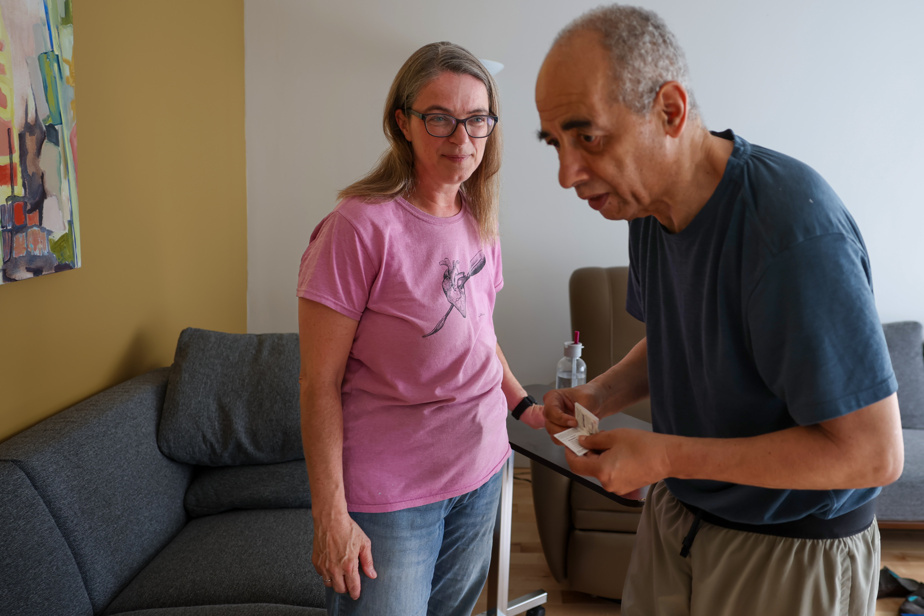
Diane Gendron, a full-time, unpaid caregiver, expressed her exhaustion, yearning for even a week or two of vacation annually to “recharge her full energy.” However, she laments that “decent respite options are almost nonexistent.” Her husband, Mohamed, whose condition has progressed since his 2015 diagnosis, relies entirely on her presence, as noted by a CLSC report stating he is “autonomous thanks to the constant presence of his spouse.”
The emotional toll is immense, with Mme Gendron admitting to being “extremely tired” and breaking down in tears when recounting her situation.
Inadequate Alternatives
In May, Mme Gendron sought a week of respite through the CIUSSS de l’Est-de-l’île-de-Montréal to visit her daughters. The offered solution was a stay at CHSLD Champlain-Marie-Victorin. A visit to the facility, however, left her deeply disturbed.
She described the rooms as “tiny and toilet rooms, dirty and dilapidated units,” leading her to conclude, “I wouldn’t even entrust my dog.” Her concerns are echoed by the Ministry of Health’s own May 2024 report for the CHSLD, which cited issues such as a lack of warm staff interaction, cleanliness problems, and infrequent activities.
Official Reassurance vs. Lived Reality
While a spokesperson for the CIUSSS de l’Est-de-l’île-de-Montréal, Luc Fortin, stated that care at CHSLD Champlain-Marie-Victorin is “safe, adequate and well suited,” and that an improvement plan is in place, the experiences of caregivers like Mme Gendron paint a starkly different picture.
The operator of the CHSLD, Champlain group, acknowledged the facility’s need for significant renovations. Meanwhile, the CIUSSS maintains that its 14 respite beds adequately meet demand, asserting that “No respite request from eligible users has been refused this year.”
A System Under Strain
Nathalie Déziel, director of a Montreal caregiver support group, highlighted that long-term respite spaces are “rare” and often substandard, deterring families from utilizing them. She noted that people seek peace of mind when placing a loved one in respite, but the facilities themselves can be problematic.
The lack of accessible and quality respite is not unique to Montreal. The founder of Gilles-Carle houses, Chloé Ste-Marie, stated that the number of respite places in Quebec is insufficient. Despite a government commitment to open 20 Gilles-Carle houses, only 11 have opened, with four closing due to funding issues.
Recent government funding increases for Gilles-Carle houses and planned investments in respite services offer some hope. However, Mme Ste-Marie stresses the urgent need for accelerated development, emphasizing that “It’s not just quantity. It also takes on quality.”
“Without adequate respite, I will have to consider placing my husband in CHSLD permanently. It costs the state $13,000 per month. It seems to me that it would be more economical to offer me two weeks of respite per year than having to watch out for my husband.”
—Diane Gendron, Close Caregiver
This sentiment underscores the financial and emotional burden on informal caregivers. According to a 2023 report by the Canadian Centre for Caregiving Excellence, unpaid caregivers contribute an estimated $16.3 billion annually to the Canadian economy through their work, yet often face significant personal costs.
Mme Gendron also explored private options, finding them prohibitively expensive. Her personal journey includes overcoming aggressive breast cancer with metastases, only to become the primary caregiver for Mohamed after his Parkinson’s diagnosis.
She points out the irony that those most in need of respite may lack the energy or resources to navigate the complex care system and advocate for their needs, leaving many in precarious situations.
Read the open letter from Diane Gendron
