
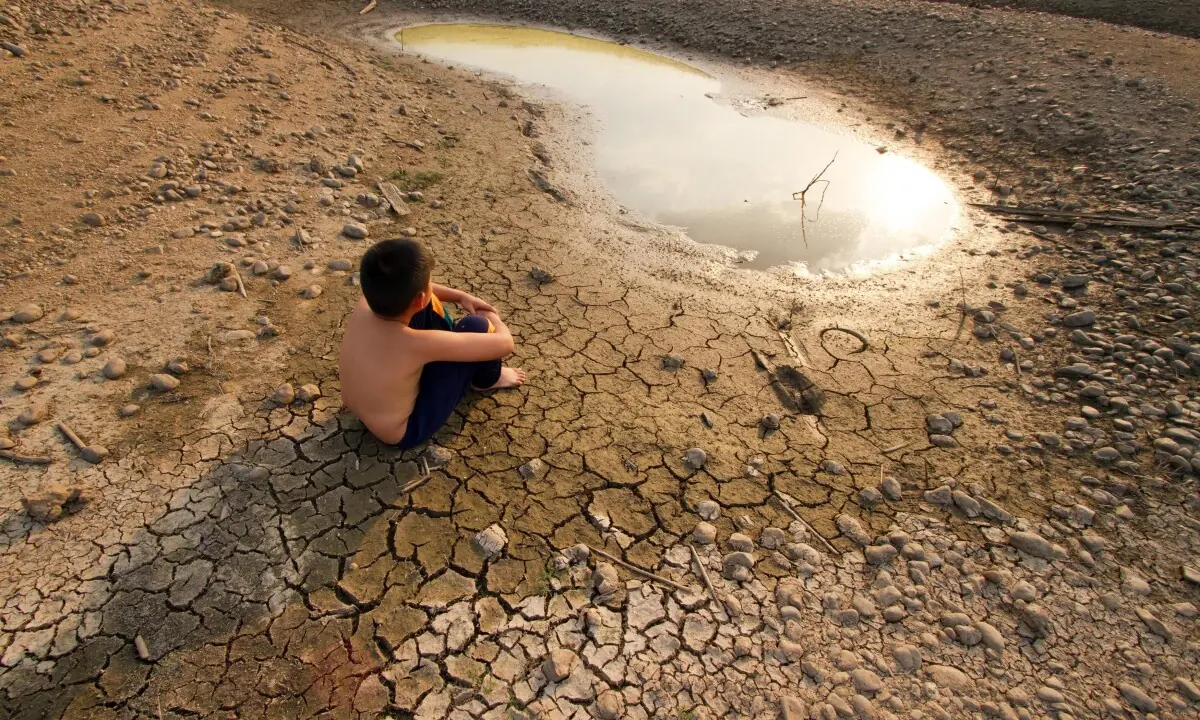
Climate change challenges
Pakistan’s fiscal stability faces an immediate erosion in 2026 as glacial melt in the north threatens 7.1 million citizens and risks wiping out nearly 1% of annual GDP. With daytime temperatures in Gilgit-Baltistan running 3–5°C above historical norms, the hydrological volatility demands urgent capital allocation toward resilient infrastructure and adaptive agricultural supply chains.
The data emerging from the Pakistan Meteorological Department (PMD) is not merely a weather report; it is a balance sheet warning. During the first 22 days of February, nighttime temperatures in the northern highlands remained 1–3.5°C above the 1981–2010 average. This thermal anomaly has triggered a cascade of liquidity risks for the region’s agrarian economy. Persistent warmth and clear skies have accelerated snowmelt at mid-to-lower altitudes, reducing the natural “water tower” storage that typically buffers the country through the dry summer months.
We are witnessing a structural shift in asset valuation for anything tied to water security. The lack of overnight refreezing has spiked meltwater runoff, directly inflating the probability of Glacial Lake Outburst Floods (GLOFs) in critical districts like Ghizar, Hunza, and Astore. For institutional investors, this translates to heightened sovereign risk premiums. The International Centre for Integrated Mountain Development notes that ice loss rates in the Hindu Kush Himalaya have doubled this century, a trajectory that invalidates traditional long-term infrastructure models.
The Three Vectors of Fiscal Exposure
Market participants must gaze beyond the immediate humanitarian crisis to understand the systemic drag on corporate earnings and national output. The interaction between thermal anomalies and fragile mountain hydrology creates three distinct pressure points for the 2026 fiscal year.
- Infrastructure Depreciation: The government’s approved action plan highlights a 200–250-day emergency phase to repair embankments. Without rapid intervention from specialized civil engineering and construction management firms, the depreciation of existing road and energy assets will accelerate, forcing unexpected CAPEX reallocations.
- Agri-Commodity Volatility: Erratic water cycles are forcing farmers to abandon traditional practices. Research linked to the European Geosciences Union connects glacier retreat in the Karakoram to farmland abandonment dating back to the 1950s. This supply-side shock threatens to spike food inflation, requiring robust supply chain risk management and logistics providers to stabilize distribution networks.
- Insurance Liability Caps: With 33 glacial lakes classified as highly dangerous, the exposure for underwriters is catastrophic. The interplay of floods and droughts has already driven crop losses of 30–40% in recent years according to the Integrated Food Security Phase Classification (IPC), suggesting that standard parametric insurance models are failing to price in tail risks accurately.
The volatility is not theoretical. April 2024 alone recorded rainfall 164% above normal, followed by sharp deficits. This “whiplash” effect destroys working capital for mid-market enterprises that lack the hedging instruments of multinational conglomerates. A study in Theoretical and Applied Climatology confirms rising drought conditions in Punjab, with February rainfall declining by 44.7% over three decades. When water availability swings this violently, inventory planning becomes impossible.
Capitalizing Resilience: The Green Finance Pivot
Pakistan is losing nearly 1% of GDP annually to these climate shocks. The response has shifted from policy intent to aggressive financial engineering. The government is exploring instruments such as the proposed Green Panda Bond, aiming to tap into Chinese capital markets for currency-diversified funding. However, execution risk remains high without rigorous third-party validation.
“The transition from policy to implementation is where the value lies. We are seeing a massive demand for ESG compliance advisory to structure these green instruments in a way that satisfies international institutional investors.”
— Senior Partner, Global Climate Finance Advisory (London)
Financing remains the central bottleneck. The National Climate Finance Strategy aims to mobilize private capital, supported by climate-linked subsidies in the FY27 budget. Major programmes include the $3.5 billion “Glaciers to Farms” initiative and the $1.3 billion Resilient Water Infrastructure Facility. To access this liquidity, local developers and municipalities must partner with top-tier ESG compliance and green bond advisory firms capable of navigating the complex reporting requirements of the International Monetary Fund’s Resilience and Sustainability Facility (RSF).
The IMF has already disbursed $210 million under the RSF, with a total facility of $1.4 billion supporting water governance reforms. This capital is contingent on measurable resilience outcomes. It is no longer enough to build a dam; the project must demonstrate climate adaptability through data-driven monitoring.
The Monsoon Forecast and Strategic Defense
Projections indicate the 2026 monsoon could be up to 26% more intense than in 2025. This forecast drives the government’s time-bound action plan, which includes a three- to five-year strategy focused on river training works. Urban centers like Peshawar, which have seen a 16% deterioration in climate conditions over the past 15 years, are particularly exposed to heatwaves exceeding 45°C.
The economic cost of inaction outweighs the cost of adaptation. Poorly planned development has amplified impacts across rural and urban areas, exposing vulnerabilities that threaten foreign direct investment. As the government moves to repair drainage systems and expand urban infrastructure, the procurement cycle will favor firms with proven track records in disaster-resilient construction.
The window for defensive positioning is narrowing. As thermal anomalies persist into April 2026, the risk of sudden floods remains elevated in Hunza, Chilas, and Astore. Corporate leaders must treat climate resilience not as a CSR initiative, but as a core component of operational continuity. The World Today News Directory connects enterprises with the vetted B2B partners necessary to navigate this volatility, from structural engineers to climate finance architects. In a market defined by hydrological uncertainty, the only viable hedge is preparedness.