Cisco and USGA Extend Partnership to Power Golf with AI
Cisco and the United States Golf Association (USGA) have extended their technology partnership for five years, integrating AI-ready infrastructure and the “Cisco AI Defense” platform. The deal focuses on enhancing the GHIN app’s rulebook accessibility and optimizing network operations at the 2026 U.S. Open and U.S. Women’s Open.
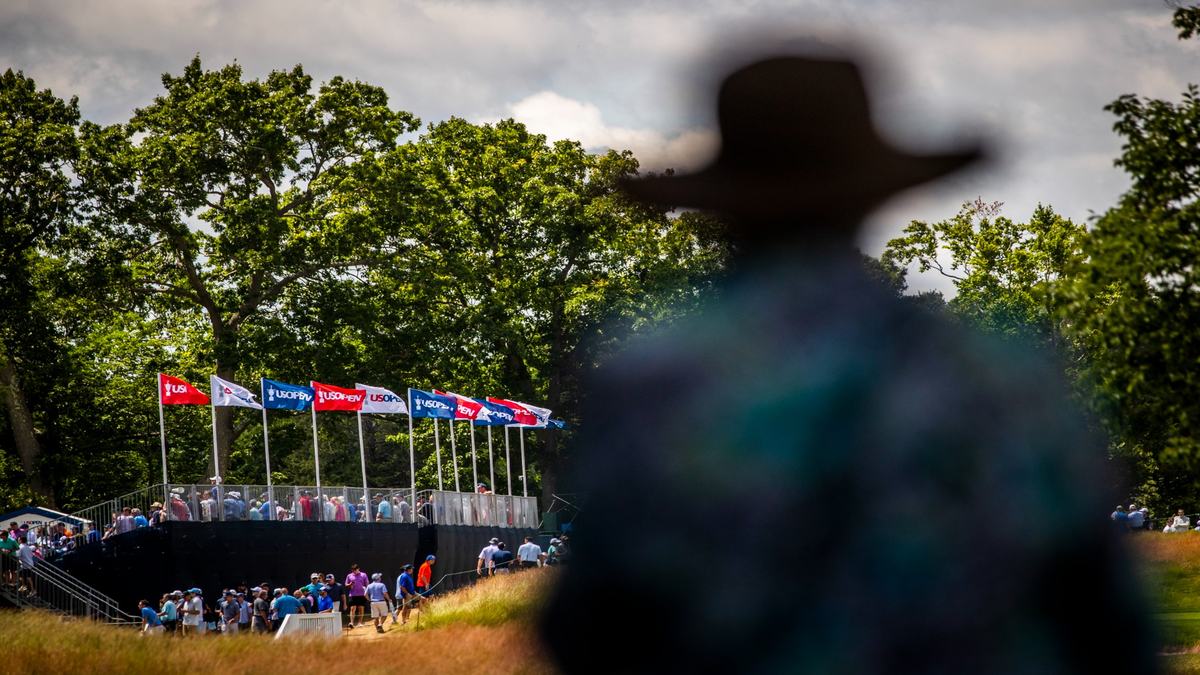
The logistical burden of hosting a major championship at a venue like Shinnecock Hills or The Riviera Country Club is an operational nightmare. These sites are essentially temporary cities, requiring high-density connectivity in environments not designed for massive device loads. When thousands of spectators, media members, and officials converge on a rural or restricted landscape, the risk of network latency and infrastructure collapse is high. The USGA is solving this by pivoting from basic connectivity to a model of total observability, treating their network as a dynamic asset rather than a static utility.
The Infrastructure Pivot: Wi-Fi 7 and Crowd Observability
Moving into the 2026 season, the USGA is deploying Wi-Fi 7 access points and Meraki cameras to manage the volatile nature of event-day traffic. This isn’t just about faster internet for fans; it is a strategic play in crowd flow monitoring and venue security. By leveraging customized dashboards, USGA officials can identify bottlenecks and hardware failures before they disrupt the event’s rhythm. This level of precision is critical for the upcoming U.S. Women’s Open at The Riviera Country Club and the U.S. Open at Shinnecock Hills Golf Club.

The deployment of this hardware creates a massive operational vacuum that extends beyond the course. The sheer scale of these events requires a sophisticated layer of support, often forcing the USGA to source regional event security and premium hospitality vendors to manage the overflow of high-net-worth spectators and corporate sponsors. The “temporary environment” mentioned by Cisco executives is where the highest risk of failure occurs, making the stability of the network the backbone of the entire fan experience.
“Being able to showcase how our technology works in a temporary environment — and sometimes in a really difficult and challenging environment — is important for us,” said Cisco VP/Global Sponsorships Rob McQueen. “It’s really [about] showcasing that in person, and it always has been with this relationship.”
Securing the AI Rulebook: The GHIN Integration
For the amateur golfer, the USGA rulebook has long been a barrier to entry—a dense, complex document that often requires a steward’s intervention. The partnership is addressing this via an AI-powered experience within the GHIN handicap scoring app, allowing users to query the rules in real-time. However, deploying AI in a governing body’s official app introduces significant risks regarding data integrity and “hallucinations” that could lead to incorrect rule interpretations.
To mitigate this, Cisco is implementing “Cisco AI Defense.” This platform is designed to secure the underlying AI by validating models for risk and integrity and safeguarding applications at runtime against AI-specific threats. By providing visibility into AI usage, the USGA ensures that the answers provided to golfers are consistent with the official laws of the game. This transition from a static PDF rulebook to an agentic intelligence model represents a fundamental shift in how the USGA interacts with its global base.
Front-Office Breakdown: The Evolution of the Partnership
Since the relationship began in 2018, the scope of the collaboration has expanded from basic connectivity to a deep strategic integration. The USGA no longer views Cisco as a mere vendor but as a core component of its IT architecture. This is evident in the shift toward predictive maintenance and AI-driven security.
| Operational Focus | Legacy Partnership (2018–2025) | AI-Era Partnership (2026–2031) |
|---|---|---|
| Core Technology | WebEx, Standard Networking | Wi-Fi 7, AI-Ready Infrastructure |
| User Interface | Remote Fan Engagement | AI-Powered Rulebook (GHIN App) |
| Security Model | Enterprise Perimeter Security | Cisco AI Defense (Runtime Protection) |
| Event Management | Reactive Troubleshooting | Predictive Observability & Crowd Flow |
Bryan Miranda, the USGA’s Managing Dir/Partnerships & Hospitality, describes this relationship as a symbiotic IT partnership. “Our tech team will look at Cisco and say, ‘OK, we need to solve some problems here that we can’t solve alone. How does Cisco help?’ We engage Cisco real-time in how they can help solve X, Y, Z problem,” Miranda noted.
Local Economic Impact and the Talent Pipeline
The presence of the USGA and Cisco at premier venues like Shinnecock Hills triggers a significant economic halo effect. Beyond the immediate ticket sales, the requirement for high-end infrastructure attracts a secondary wave of corporate event planning services and luxury logistics providers. The “presenting sponsor” status of Cisco in the media center further cements the event as a hub for B2B networking among the tech and sports elite.

Equally important is the human capital element. Cisco is deploying members of its “Networking Academy Dream Team” on-site. This career development program bridges the gap between academic theory and the high-pressure reality of live sports production. For aspiring network engineers, this is the ultimate laboratory. Those looking to enter this field often start by seeking out vetted technical certification programs to prepare for these high-stakes deployments.
As the USGA continues to digitize the game, the reliance on Cisco’s observability tools will only grow. The ability to monitor the health of venue infrastructure in real-time ensures that the focus remains on the athletes rather than a crashing server. The next five years will likely see this partnership move deeper into predictive analytics, potentially influencing how the USGA manages tournament pacing and player tracking.
The trajectory for the USGA is clear: they are moving toward a “smart championship” model where AI handles the bureaucracy of the rules and the logistics of the crowd, leaving the purity of the game intact. For those operating in the orbit of these events—whether as a legal consultant for sports contracts or a provider of high-end hospitality—the integration of AI into the sports business landscape is no longer optional; it is the new baseline.
Disclaimer: The insights provided in this article are for informational and entertainment purposes only and do not constitute medical advice or sports betting recommendations.