
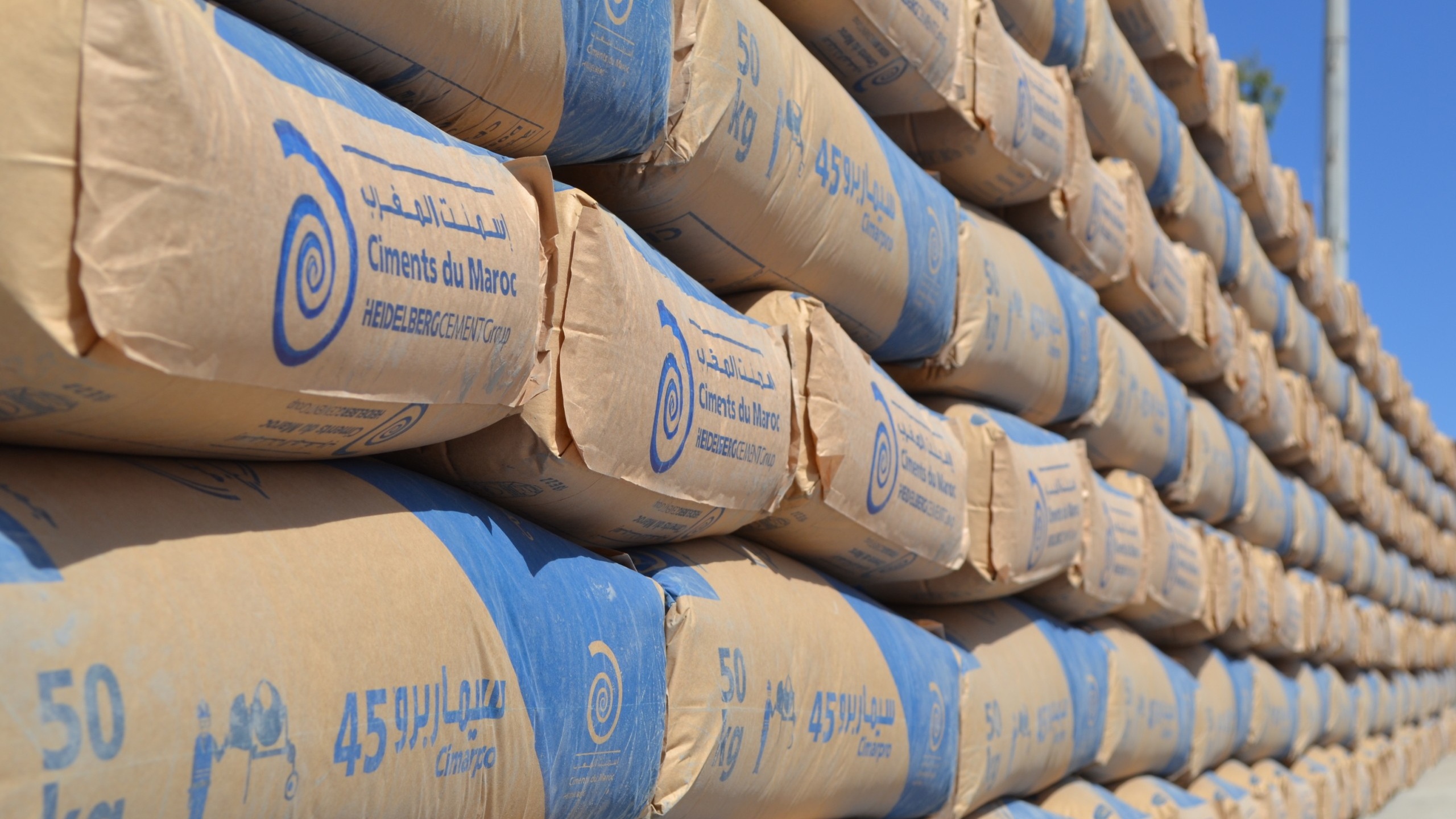
Ciments du Maroc Net Profit Surges 50% in 2025 Driven by CAN 2025 and World Cup 2030
Ciments du Maroc reported a staggering 49.9% net profit surge in FY2025, reaching $130 million. Driven by CAN 2025 stadium upgrades and early World Cup 2030 infrastructure contracts, the cement giant is capitalizing on Morocco’s construction supercycle. This liquidity windfall signals a robust demand environment for industrial materials across North Africa.
The Infrastructure Supercycle: Decoding the 50% Margin Expansion
The numbers do not lie. In a fiscal year characterized by global supply chain fragility, Ciments du Maroc managed to decouple from broader market volatility. The Casablanca-listed industrial giant posted a net result of approximately 1.3 billion dirhams ($130 million), a figure that underscores the efficacy of their strategic pivot toward high-volume public works. This is not merely organic growth. it is a direct correlation to state-backed capital expenditure.
Morocco is currently in the throes of a dual-event preparation phase. The 2025 Africa Cup of Nations (CAN) requires immediate stadium refurbishments, while the joint 2030 World Cup bid with Spain and Portugal demands a decade of heavy civil engineering. For Ciments du Maroc, this translates to guaranteed offtake agreements that stabilize revenue streams against commodity price fluctuations.
However, scaling production to meet this demand introduces complex operational risks. Rapid expansion often strains supply chains and working capital. As order books swell, the company must navigate procurement bottlenecks that could erode these impressive margins. This is where the role of specialized supply chain logistics firms becomes critical. Managing the inbound flow of clinker and the outbound distribution of finished cement requires a level of coordination that generic freight forwarders cannot support.
Financial Performance: FY2024 vs. FY2025 Projections
The following table breaks down the key performance indicators driving this valuation shift, based on data filed with the Casablanca Stock Exchange and corroborated by regional financial analysts.
| Metric | FY2024 (Actual) | FY2025 (Reported) | YoY Change |
|---|---|---|---|
| Net Profit | $86.7 Million | $130.0 Million | +49.9% |
| Revenue | $410 Million (Est.) | $545 Million (Est.) | +32.9% |
| EBITDA Margin | 24.5% | 29.1% | +460 bps |
| Capex Intensity | Moderate | High | Increased |
Notice the EBITDA margin expansion of 460 basis points. This efficiency gain suggests that the company is not just selling more volume, but selling it at a better mix. The integration of the Asment de Témara acquisition appears to be yielding synergies earlier than anticipated, reducing unit costs through economies of scale.
Capital Allocation and the M&A Landscape
Cash rich companies in emerging markets often face a dilemma: reinvest in organic capacity or pursue inorganic growth through acquisitions. With $130 million in net profit, Ciments du Maroc holds significant dry powder. In the current interest rate environment, deploying this capital efficiently is paramount to maintaining shareholder value.
We are seeing a trend where regional conglomerates consolidate to defend market share against international entrants. As consolidation accelerates, mid-market competitors are scrambling for capital, consulting with top-tier M&A advisory firms to explore defensive buyouts or strategic partnerships. The barrier to entry in the cement sector is high due to environmental regulations and energy costs, making existing players like Ciments du Maroc attractive targets or acquirers.
“The 2030 World Cup is not just a sporting event; it is a ten-year infrastructure bond issued by the state. Companies that secure the foundational contracts now will dominate the Moroccan industrial landscape for a generation.”
This sentiment was echoed by Karim Tazi, a Senior Infrastructure Analyst at a leading North African investment bank, during a recent roundtable on Maghreb economic trends. Tazi noted that the regulatory framework surrounding public tenders is tightening. Compliance is no longer a back-office function; it is a frontline strategic necessity.
Regulatory Headwinds and Legal Compliance
Operating in the public infrastructure sector exposes firms to intense scrutiny. Anti-corruption measures, environmental impact assessments, and labor compliance are non-negotiable. A single regulatory misstep can halt a project and trigger massive penalties. The demand for specialized corporate law and compliance firms with expertise in North African public procurement law is skyrocketing.
Ciments du Maroc’s ability to navigate these legal complexities is as valuable as its production capacity. Their recent filings indicate a robust risk management framework, likely bolstered by external counsel. For investors, this governance premium reduces the discount rate applied to future cash flows, effectively raising the stock’s fair value.
The Macro View: Liquidity and Yield
From a macro perspective, this earnings beat reinforces the bullish thesis on Moroccan equities. The country is transitioning from an emerging market to a frontier investment destination. Yield-seeking institutional investors are taking notice. The liquidity provided by companies like Ciments du Maroc offers a hedge against currency volatility in the region.
Yet, risks remain. Energy prices constitute a significant portion of cement production costs. Any spike in global fuel prices could compress those 29% EBITDA margins quickly. Hedging strategies are essential. We expect to see the treasury department increase activity in derivatives markets to lock in energy costs for the next 24 months.
the reliance on public spending creates a concentration risk. If the government delays World Cup projects due to fiscal constraints, the revenue pipeline dries up. Diversification into private residential or commercial real estate remains a strategic imperative to balance the books.
Editorial Kicker: The Long Game
Ciments du Maroc has successfully positioned itself as the primary beneficiary of Morocco’s golden decade of infrastructure. The 49.9% profit jump is not an anomaly; it is the first inning of a long game. However, sustaining this momentum requires more than just pouring concrete. It demands sophisticated financial engineering, airtight legal compliance, and flawless logistics.
For the B2B sector, the message is clear: the infrastructure boom is open for business, but only for those with the expertise to handle the scale. As we move toward 2030, the winners will be those who can solve the complex operational problems behind the headlines. Explore our World Today News Directory to connect with the vetted partners capable of supporting this industrial transformation.