
CIB Group’s 2025 Financial Report: Profit Up, But Banking Landscape Shifts
Hungary’s CIB Csoport reported a 5.5% year-over-year increase in 2025 net profit to 75.872 billion forints, but underlying shifts in revenue composition—a declining net interest margin coupled with increased reliance on residential lending—signal a changing operating environment. This necessitates strategic risk management and operational efficiency improvements for banks navigating a lower interest rate landscape.
The CIB Csoport’s performance, while superficially positive, reveals a deeper structural challenge facing Hungarian banks. The profit increase isn’t driven by substantial revenue growth; total operating income remained flat at 173.380 billion forints, a slight 0.5% decrease. This points to a critical inflection point: the era of easy profits from interest rate arbitrage is waning. Banks are now forced to compete on efficiency and service innovation. This situation creates a significant demand for specialized financial risk management consulting to navigate the evolving regulatory landscape and optimize capital allocation.
The Shrinking Net Interest Margin
The bank’s net interest income decreased from 129.239 billion forints in 2024 to 121.623 billion forints in 2025, a drop of nearly 7.6 billion forints. This contraction reflects the narrowing net interest margin, a natural consequence of lower interest rates. According to the Magyar Nemzeti Bank (MNB – the National Bank of Hungary) monthly bulletin released February 2026, the average lending rate decreased by 125 basis points throughout 2025, directly impacting bank profitability. However, CIB partially offset this decline by increasing net fee and commission income by over 15% to 45.292 billion forints, demonstrating a successful shift towards fee-based services.
Balance Sheet Expansion and Liquidity
The bank’s total balance sheet grew by 11.8% to 3870.455 billion forints, primarily fueled by a substantial increase in customer deposits, which rose by 16.4% to 2944.287 billion forints. This surge in deposits indicates strong liquidity, but as well highlights a divergence from loan growth. Consolidated gross customer loans increased by only 9.2% to 1822.330 billion forints. This disparity suggests a cautious lending environment, particularly on the corporate side.
“We’re seeing a clear bifurcation in demand. Retail lending, especially mortgages, is robust, driven by improving consumer confidence and government support schemes. Corporate lending, however, remains subdued due to ongoing economic uncertainty and a lack of large-scale investment projects.” – Luigi Fuzio, CEO of Intesa Sanpaolo Hungary (Source: Reuters interview, March 15, 2026).
The slower corporate loan growth is attributable to economic uncertainty and the phasing out of previous state-backed lending programs. Conversely, the residential market has experienced a revival, with new mortgage loan demand increasing by 59% and new personal loan disbursements rising by 56%. This shift in the loan portfolio’s composition towards households is a significant trend.
Operational Efficiency and Cost Control
While profit improved, operating expenses increased by 6% to 78.294 billion forints, excluding bank and excess profit taxes. This rise was primarily driven by inflation and wage increases. The cost-to-income ratio deteriorated to 45.2%, still acceptable but signaling a slight decline in efficiency. Banks are actively seeking ways to streamline operations and reduce costs, creating opportunities for process automation and robotic process automation (RPA) solutions to enhance efficiency and reduce operational overhead.
Credit Risk and Provisions
Credit quality remains relatively stable, but early warning signs are emerging. The ratio of non-performing loans (NPLs) over 90 days past due rose slightly to 0.7%, an increase of 0.15 percentage points compared to the previous year. The bank also increased its loan loss provisions to 7.088 billion forints, compared to 4.239 billion forints in 2024. This proactive provisioning suggests a cautious outlook on future credit quality.
Tax Burden and Regulatory Impact
The tax burden remains substantial, with the bank paying 6.081 billion forints in bank tax and 8.316 billion forints in excess profit tax, totaling 14.397 billion forints. This significant tax outflow reduces pre-tax profit from 84.713 billion forints to a final net profit of 75.872 billion forints. The Hungarian banking sector continues to operate under a complex regulatory framework, necessitating expert legal counsel. Banks frequently engage specialized corporate law firms to navigate these regulations and ensure compliance.
Market Share and Competitive Positioning
CIB Csoport has strengthened its market position in several key areas. Its share of corporate deposits increased from 5.4% to 5.8%, while its share of personal loans rose from 6.6% to 7.5%. The leasing business performed particularly well, with new leasing disbursements doubling and truck financing increasing by 26%, significantly outpacing market growth.
The numbers indicate that CIB Csoport remains a stable player in the Hungarian banking sector, but its future performance will depend on its ability to adapt to a persistently low-interest-rate environment and subdued economic growth. The bank’s success will hinge on its ability to innovate, control costs, and manage risk effectively.
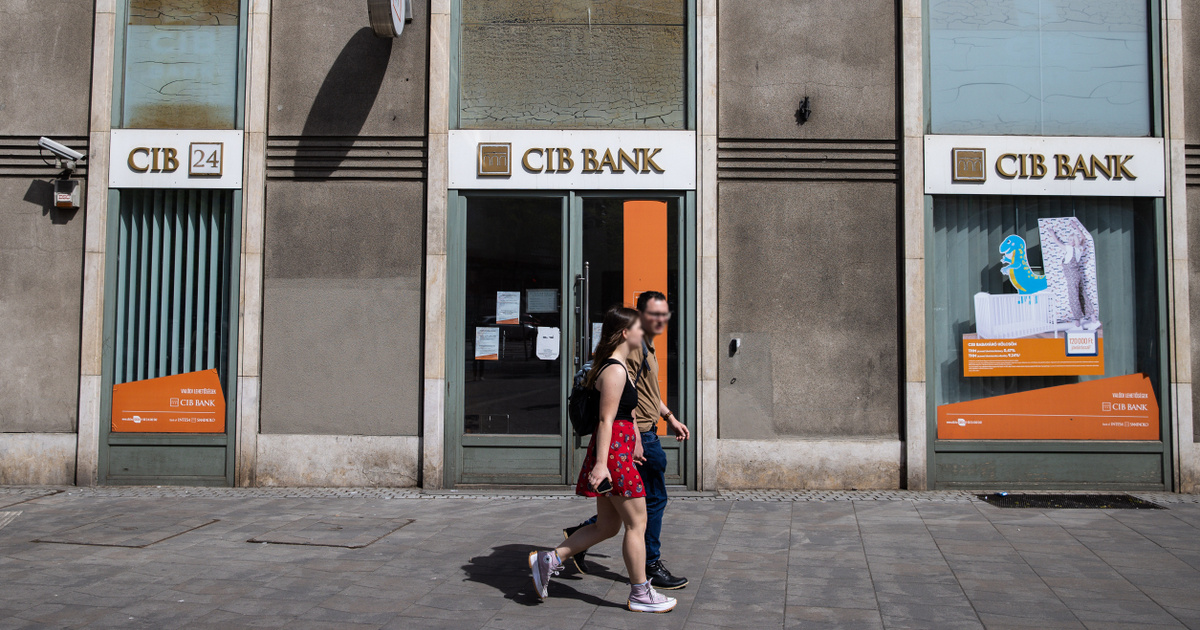
(Cover image: Illustration! Photo: Patrícia Bodnár / Index)
As Hungarian banks grapple with these evolving dynamics, the need for strategic partnerships and specialized expertise becomes paramount. The World Today News Directory provides access to a curated network of vetted B2B providers—from financial risk consultants to process automation specialists and legal experts—empowering financial institutions to navigate the challenges and capitalize on the opportunities ahead. Explore our directory today to identify the partners you need to thrive in this new era of banking.