
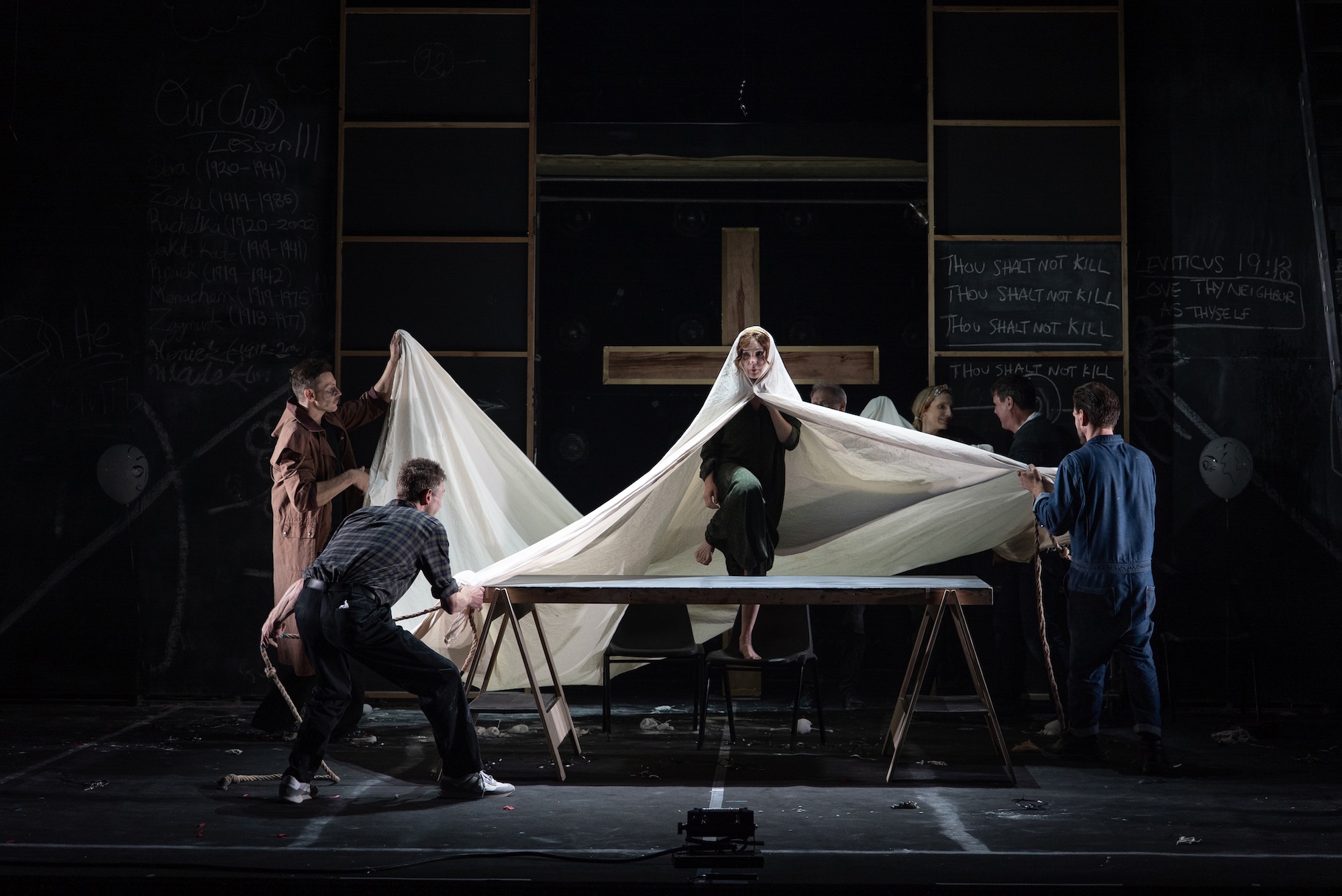
Chulpan Khamatova on First English Role in Our Class and Art Amid Global Events
Chulpan Khamatova, the exiled Russian screen and stage icon, has anchored herself in San Francisco for a high-stakes run of Our Class with the Arlekin Puppet Theater. This production represents more than a theatrical comeback; It’s a case study in navigating the complex intersection of geopolitical sanctions, talent immigration, and brand rehabilitation within the 2026 entertainment landscape.
The Bay Area theater scene rarely functions as a global geopolitical flashpoint, but the arrival of Chulpan Khamatova changes the calculus. In March 2026, as the dust settles on another volatile awards season and the industry pivots toward summer tentpoles, Khamatova’s presence in Our Class is a masterclass in resilience. She isn’t just playing Rachelka, a Jewish woman surviving the Holocaust; she is embodying the modern exile, a figure increasingly common in our fractured cultural economy. For the producers at Arlekin, this isn’t merely art for art’s sake. It is a high-wire act of logistics and reputation management. When you import talent from a sanctioned region, the creative process is immediately entangled with compliance officers and visa attorneys. The production’s ability to stage this in San Francisco, a hub known for both progressive activism and tech-sector wealth, suggests a calculated bet on the “dissent premium”—the idea that audiences will pay a premium for authentic, high-stakes political storytelling.
However, the mechanics of bringing a star of Khamatova’s magnitude to the American West Coast reveal the hidden friction in the global talent market. In her interview, Khamatova notes the bureaucratic nightmare of her relocation: “All the laws and all the rules were aimed at making life outside Russia as hard as possible… Why it was necessary to turn off our credit cards.” This is the unglamorous reality of the exile economy. For production companies looking to replicate this model, the first hurdle isn’t casting; it’s liquidity and legal status. Standard payroll systems often flag transactions originating from or involving sanctioned entities, freezing the very funds needed to pay the talent. To mitigate this, forward-thinking productions are increasingly retaining specialized entertainment immigration and sanctions compliance attorneys before a single script page is turned. These firms navigate the O-1 visa labyrinth and ensure that royalty payments don’t trigger federal red flags, turning a potential legal liability into a seamless operational workflow.
From a brand equity perspective, Khamatova’s involvement transforms Our Class from a regional play into a cultural event with international press coverage. Yet, this visibility is a double-edged sword. In an era where social media sentiment can tank a box office run overnight, the association with a polarizing geopolitical conflict requires careful narrative stewardship. The risk isn’t just boycotts; it’s the potential for the artist’s personal trauma to overshadow the IP itself. This is where the role of strategic communication becomes critical. A production of this magnitude cannot rely on standard press releases. They require elite crisis communication firms and reputation managers to frame the narrative around universal human rights rather than partisan politics, ensuring the focus remains on the art whereas insulating the investors from collateral reputational damage.
The financial implications of such “eventized” theater are significant. According to the 2025 Regional Theater Attendance Report, productions featuring high-profile exiled artists saw a 22% increase in ticket yield compared to standard seasonal offerings, driven largely by donor circles and corporate sponsorship seeking ESG-aligned cultural investments. However, the overhead is equally steep. Security costs for high-profile dissenters often outpace standard venue requirements. As Khamatova touches on themes of antisemitism and violence, the physical safety of the cast becomes a line item that cannot be ignored. Productions are now contracting with specialized event security and logistics vendors who understand the nuance of protecting talent without creating a fortress-like atmosphere that alienates the audience. It is a delicate balance between accessibility and protection, one that defines the modern security protocol for politically charged art.
“We are seeing a shift where the ‘exile narrative’ is no longer just a tragedy; it is a marketable asset class. But the due diligence required to vet these partnerships is exponentially higher than a standard domestic casting.” — Senior Producer, Major Regional Theater Group
Khamatova’s reflection on her character Rachelka—”She did not burn in the shed, but she died on the inside”—resonates beyond the stage. It mirrors the industry’s own anxiety about survival in a consolidating media environment. Just as Rachelka had to navigate the loss of community, artists today navigate the loss of traditional revenue streams. Khamatova mentions her wealth is now “in the form of friends,” a poignant reminder that in the gig economy of the arts, social capital often outweighs liquid assets. For the World Today News Directory, this underscores a vital trend: the need for financial planning and asset protection services tailored specifically to itinerant creatives who may find their home-country assets frozen overnight. The traditional talent agency model is ill-equipped for this; the future belongs to holistic management firms that offer legal, financial, and security under one roof.
the success of Our Class in San Francisco will be measured not just by the curtain call, but by the sustainability of the model it represents. Can the American theater ecosystem support a permanent class of exiled artists, or is this a temporary humanitarian gesture? If the industry wants to move from gesture to infrastructure, it must professionalize the support system. That means normalizing the involvement of sanctions lawyers in casting meetings and treating security as a creative partner. Khamatova has shed the “bad skin” of her past identity to embrace a new one, but the industry must shed its outdated assumptions about how global talent operates. The curtain has risen on a new era of theater, one where the drama off-stage is just as critical to the bottom line as the performance on it.
*Disclaimer: The views and cultural analyses presented in this article are for informational and entertainment purposes only. Information regarding legal disputes or financial data is based on available public records.*