
China’s Strategic Expansion in Latin American Mining and Infrastructure
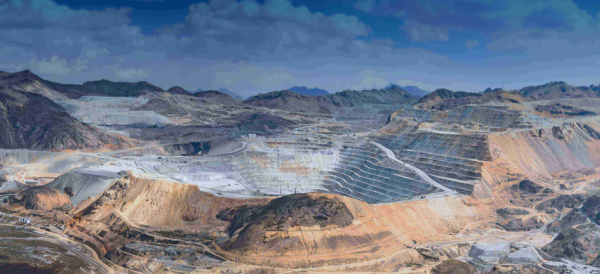
China’s $4.3 Billion Toromocho Play: Securing the Copper Backbone of the Green Transition
Beijing has cemented its dominance over the Western Hemisphere’s critical mineral supply chain by finalizing control of Peru’s Toromocho copper deposit, a 2-billion-ton reserve asset valued at over $4.3 billion in initial CAPEX. This acquisition, coupled with the operational launch of the Chancay megaport and the proposed Bioceanic Railway, effectively bypasses traditional US-dominated logistics routes, forcing global commodity traders to recalibrate their risk models for Latin American infrastructure.
The narrative here isn’t just about digging holes in the Andes; it is about vertical integration on a continental scale. While Western miners focus on quarterly EBITDA margins and shareholder buybacks, Chinese state-owned enterprises (SOEs) like Chinalco are playing a decades-long game of asset accumulation. The Toromocho mine, located 138 kilometers from Lima at an altitude of 4,600 meters, represents more than just copper ore. It is the anchor for a logistics network designed to funnel South American resources directly to Chinese gigafactories, circumventing the Panama Canal and reducing shipping times by up to 20 days.
This shift creates immediate friction for Western competitors. As China consolidates its grip on the region’s extractive industries, mid-market mining firms and logistics providers face a shrinking window to secure independent supply lines. Companies failing to diversify their supply chains are now scrambling to engage specialized supply chain logistics consultants to audit their exposure to single-source dependencies in the Pacific Rim.
The Infrastructure Moat: Chancay and the Bioceanic Corridor
The true value of the Toromocho acquisition lies in its connectivity. The mine is not an isolated asset; it is the northern terminus of a planned economic corridor. COSCO Shipping Ports, holding a 60% stake in the $3.4 billion Chancay port project, has transformed a quiet fishing village into Latin America’s first direct deep-water hub to Asia. This infrastructure allows for the direct export of bulk commodities without transshipment through US ports.
the proposed 4,500-kilometer Bioceanic Railway aims to link this Pacific gateway to Brazil’s Atlantic coast. By connecting the Fiol and Fico rail lines in Brazil to the Peruvian network, Beijing creates a transcontinental artery. This moves the strategic focus from simple extraction to transport sovereignty. For international investors, this signals a massive shift in trade finance. The reliance on traditional shipping lanes is being replaced by overland rail freight, a sector requiring heavy capital expenditure and complex cross-border regulatory navigation.
“We are witnessing the end of the ‘resource curse’ narrative for Peru and the beginning of an ‘infrastructure trap’ for the West. China isn’t just buying copper; they are buying the roads, ports, and rails that move it. If you aren’t hedging your logistics contracts against this recent reality, you are already behind.”
— Elena Rossi, Senior Commodities Strategist, Global Macro Insights
The financial implications are stark. According to data from the International Monetary Fund’s World Economic Outlook, copper demand is projected to double by 2035 due to electrification. By controlling the source (Toromocho) and the route (Chancay/Bioceanic Rail), China effectively sets the floor price for a significant portion of the global market. This vertical integration reduces their marginal cost of delivery while increasing the barrier to entry for Western firms lacking similar state-backed financing.
Comparative Analysis: Western vs. Chinese Investment Models in LatAm
The divergence in investment strategy between Western multinationals and Chinese SOEs is creating a bifurcated market. Where Western firms prioritize short-term ROI and strict ESG compliance audits, Chinese entities prioritize long-term resource security and infrastructure lock-in. The table below outlines the structural differences driving this competitive landscape.
| Metric | Western Multinational Model | Chinese SOE Model (e.g., Chinalco/COSCO) |
|---|---|---|
| Primary Objective | Shareholder Return (Dividends/Buybacks) | Resource Security & Strategic Access |
| Investment Horizon | 3-5 Year Cycles | 20-50 Year Infrastructure Lifecycles |
| Financing Source | Commercial Banks / Bond Markets | State Policy Banks (CDB, Exim Bank) |
| Risk Tolerance | Low (Strict Compliance/ESG) | High (Geopolitical/Operational Risk) |
| Asset Scope | Mine Site Only | Mine + Port + Rail + Energy Grid |
This comprehensive approach allows Chinese firms to absorb volatility that would bankrupt a traditional miner. However, it introduces significant political risk. The integration of critical infrastructure with foreign state actors has triggered scrutiny from Washington. As geopolitical tensions rise, companies operating in this space must navigate a minefield of sanctions and foreign investment regulations. This complexity has driven a surge in demand for international arbitration and political risk insurance firms capable of structuring deals that survive regime changes and trade wars.
The Brazil Pivot: From Buyer to Owner
Brazil represents the next frontier in this strategy. While Peru serves as the Pacific exit, Brazil is the resource engine. Chinese giants like Baowu Steel and Zijin Mining are moving beyond simple purchase agreements to equity stakes in niobium and lithium projects. The recent feasibility study for the Brazil-Peru railway, signed in July 2025, confirms that Beijing views the two nations as a single logistical unit.
For Brazilian agribusiness and mining conglomerates, this offers liquidity but threatens sovereignty. The “debt-for-equity” swaps and long-term off-accept agreements common in these deals often lock nations into supplying China at below-market rates for decades. As noted in the World Bank’s Trade Development Report, such dependencies can stifle local value-added processing industries, keeping Latin America in a raw material export role while China captures the manufacturing margins.
local boards are increasingly seeking M&A advisory firms with specific expertise in cross-border sovereign wealth fund negotiations. The goal is no longer just finding capital, but finding partners who do not demand strategic control over national infrastructure in exchange for a loan.
Market Trajectory: The Cost of Exclusion
The Toromocho deal is a bellwether. It signals that the era of open access to Latin American resources is closing, replaced by exclusive spheres of influence. For the global market, this means higher volatility and fragmented supply chains. The “China Price” for copper and lithium will increasingly reflect not just extraction costs, but the strategic premium of controlling the logistics corridor.
Investors and corporations must adapt immediately. The window to secure independent supply chains before the Chancay port reaches full capacity is narrowing. Those who fail to audit their exposure to this new Sino-Latin axis will find themselves priced out of the green energy transition. The directory of vetted B2B partners in the World Today News ecosystem remains the critical resource for identifying the legal, financial, and logistical expertise needed to navigate this high-stakes environment.