
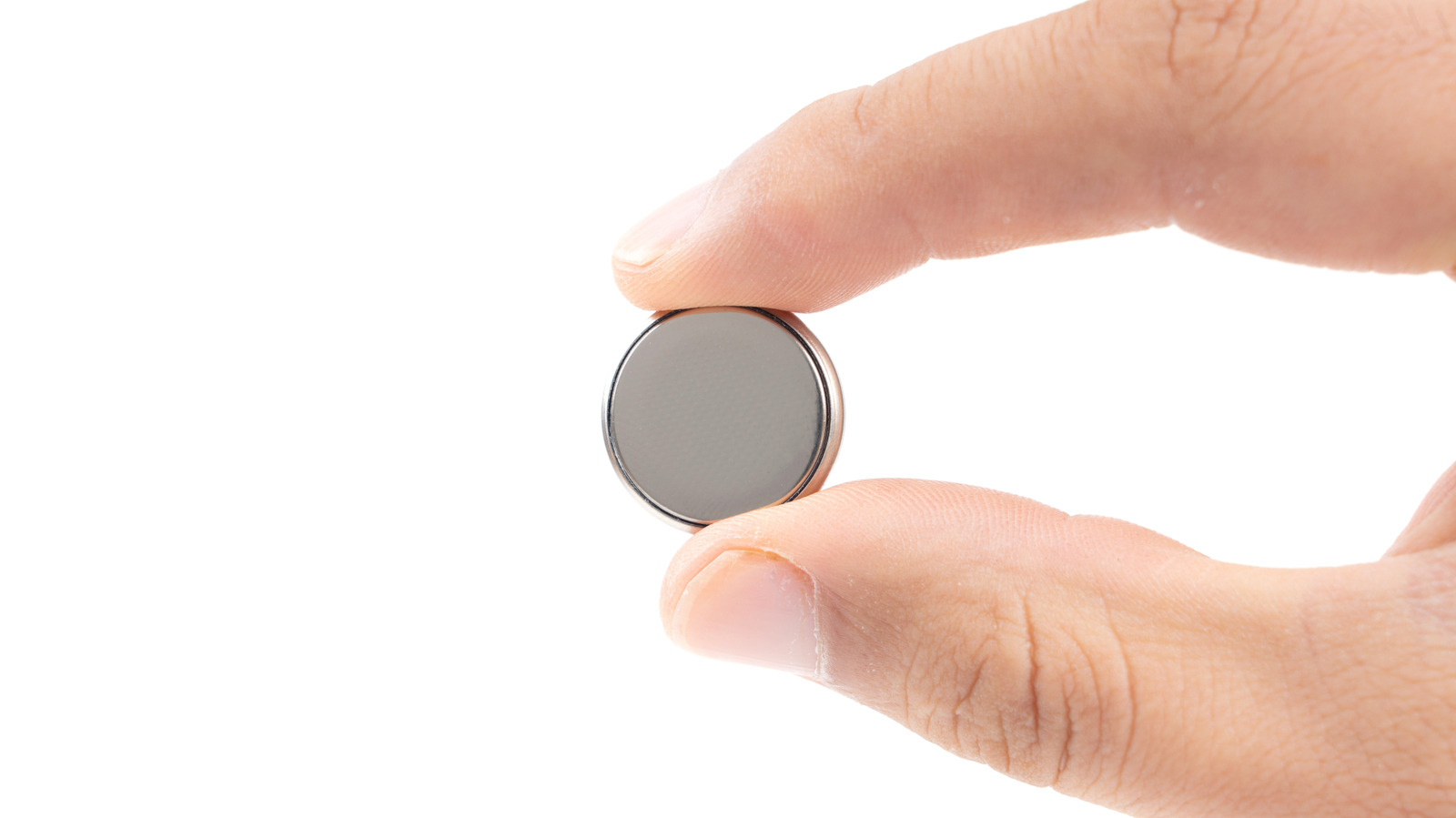
China’s Nuclear Batteries: 50-Year Power & US Competition
Nuclear Batteries Missed the 2025 Ship Date: Here’s the Real Power Density Data
The promise of a 50-year battery life sounds like the holy grail for edge computing and IoT deployments. Beijing Betavolt New Energy Technology Company Ltd claimed they would ship a one-watt nuclear battery in 2025. We are now in April 2026, and silence from the production line speaks louder than the press release. While the physics of nickel-63 decay coupled with diamond semiconductors is sound, the transition from lab prototype to mass-producible SKU introduces latency in supply chains that PR teams rarely quantify. This isn’t just about energy density; it’s about whether the infrastructure can handle radioactive isotopes in consumer electronics without triggering a compliance nightmare.

- The Tech TL;DR:
- Betavolt’s 2025 production target was missed; current output remains in the milliwatt range suitable only for low-power sensors.
- Integration requires rigorous cybersecurity risk assessment due to physical safety and supply chain provenance.
- US competitor Infinity Power claims 100-year life but faces similar Department of Defense regulatory hurdles.
Engineers necessitate to look past the headline “50 years” and examine the discharge curve. A nuclear battery using beta decay doesn’t provide peak power like a lithium-ion cell. It provides a steady, low-current trickle. For a smartphone, this is useless without a massive buffer capacitor or secondary chemical battery to handle burst loads. The architectural bottleneck isn’t energy storage; it’s power delivery. When you introduce radioactive materials into the global hardware supply chain, you also introduce a vector for physical tampering and regulatory non-compliance that standard IT audits don’t cover.
Spec Breakdown: Ni-63 vs. Li-Ion Architecture
Comparing these technologies requires understanding that they solve different problems. Lithium-ion is for high-drain applications; nuclear betavoltaics are for deep-space probes or implanted medical devices where swapping cells is impossible. The diamond semiconductor converter efficiency is the critical variable here. If the conversion efficiency drops due to radiation damage over decades, the theoretical 50-year life collapses.
| Metric | Betavolt Ni-63 (Claimed) | Standard Li-Ion (Current Gen) | Infinity Power (US DoD) |
|---|---|---|---|
| Energy Density | High (Theoretical) | 250-300 Wh/kg | Low (Milliwatts) |
| Lifespan | 50 Years | 2-5 Years | 100 Years |
| Power Output | 1 Watt (Target) | High Burst | Tens of Milliwatts |
| Safety Risk | Radioactive Isotope | Thermal Runaway | Radioactive Isotope |
Deploying hardware with radioactive isotopes changes the threat model. It’s no longer just about securing the API endpoint; it’s about securing the physical asset. Enterprise IT departments cannot simply plug these devices into the network without verifying the chain of custody. This necessitates engaging specialized cybersecurity consulting firms that understand hardware integrity and regulatory compliance. A standard SOC 2 audit won’t cover the disposal protocols for nickel-63.
The Compliance Latency in Hardware Deployment
The delay in Betavolt’s 2025 shipping window likely stems from regulatory friction, not just engineering. Moving nuclear material across borders triggers International Atomic Energy Agency (IAEA) safeguards. For a CTO planning infrastructure, this means lead times aren’t measured in sprints but in fiscal years. The risk assessment phase alone requires vendors who can validate that the hardware doesn’t violate export controls or environmental safety standards.
Organizations looking to pilot this technology must treat it as a high-risk asset class. You need providers who specialize in cybersecurity audit services capable of scoping physical security alongside digital access controls. If a nuclear battery is tampered with, the consequence isn’t just data loss; it’s potential contamination. This shifts the responsibility from the network operations center to the physical security team.
Implementation Check: Hardware Inventory Compliance
Before integrating any non-standard power source into your rack, you need a verification script to log the hardware signature and compliance status. Below is a Python snippet designed to validate hardware inventory against a approved security baseline, ensuring only vetted power modules are authorized on the network.
import hashlib import json def validate_hardware_signature(device_id, expected_hash): """ Validates the hardware signature of power modules against a secure baseline to prevent tampering. """ # Simulate fetching device metadata device_metadata = { "id": device_id, "type": "nuclear_betavoltaic", "isotope": "Ni-63", "status": "active" } current_hash = hashlib.sha256(json.dumps(device_metadata, sort_keys=True).encode()).hexdigest() if current_hash == expected_hash: return {"status": "verified", "message": "Hardware integrity confirmed"} else: return {"status": "critical", "message": "Hardware signature mismatch. Isolate immediately."} # Example usage in CI/CD pipeline for hardware provisioning print(validate_hardware_signature("BV-2026-X1", "a1b2c3d4...")) This level of verification is critical when dealing with dual-use technology. The line between a power source and a security vulnerability blurs when the power source itself is regulated material. Infinity Power’s work with the U.S. Department of Defense highlights this; their efficiency claims are tied to national security protocols that commercial entities might struggle to replicate without significant overhead.
“The bottleneck isn’t the decay rate of the isotope; it’s the semiconductor conversion efficiency under thermal stress. Until we observe independent IEEE validation of the diamond converter’s longevity, this remains a lab curiosity, not a data center solution.” — Dr. Elena Rossi, Senior Hardware Architect at Vertex Systems
Marketing materials from Betavolt and Infinity Power emphasize the “limitless” nature of atomic energy. In reality, every engineering decision trades off cost, safety, and performance. The diamond semiconductor layer adds significant manufacturing complexity. If the yield rates are low, the cost per watt-hour becomes prohibitive for consumer electronics. Enterprise adoption will likely happen first in remote monitoring sensors where battery replacement costs outweigh the unit cost of the nuclear cell.
For now, the technology remains in the “watchlist” phase for most CTOs. The potential is undeniable, but the operational risk requires a mature security posture. Companies should prioritize engaging cybersecurity risk assessment and management services to model the impact of introducing such hardware before signing procurement contracts. The future of power might be nuclear, but the present reality is still bound by compliance and safety checks.
Disclaimer: The technical analyses and security protocols detailed in this article are for informational purposes only. Always consult with certified IT and cybersecurity professionals before altering enterprise networks or handling sensitive data.