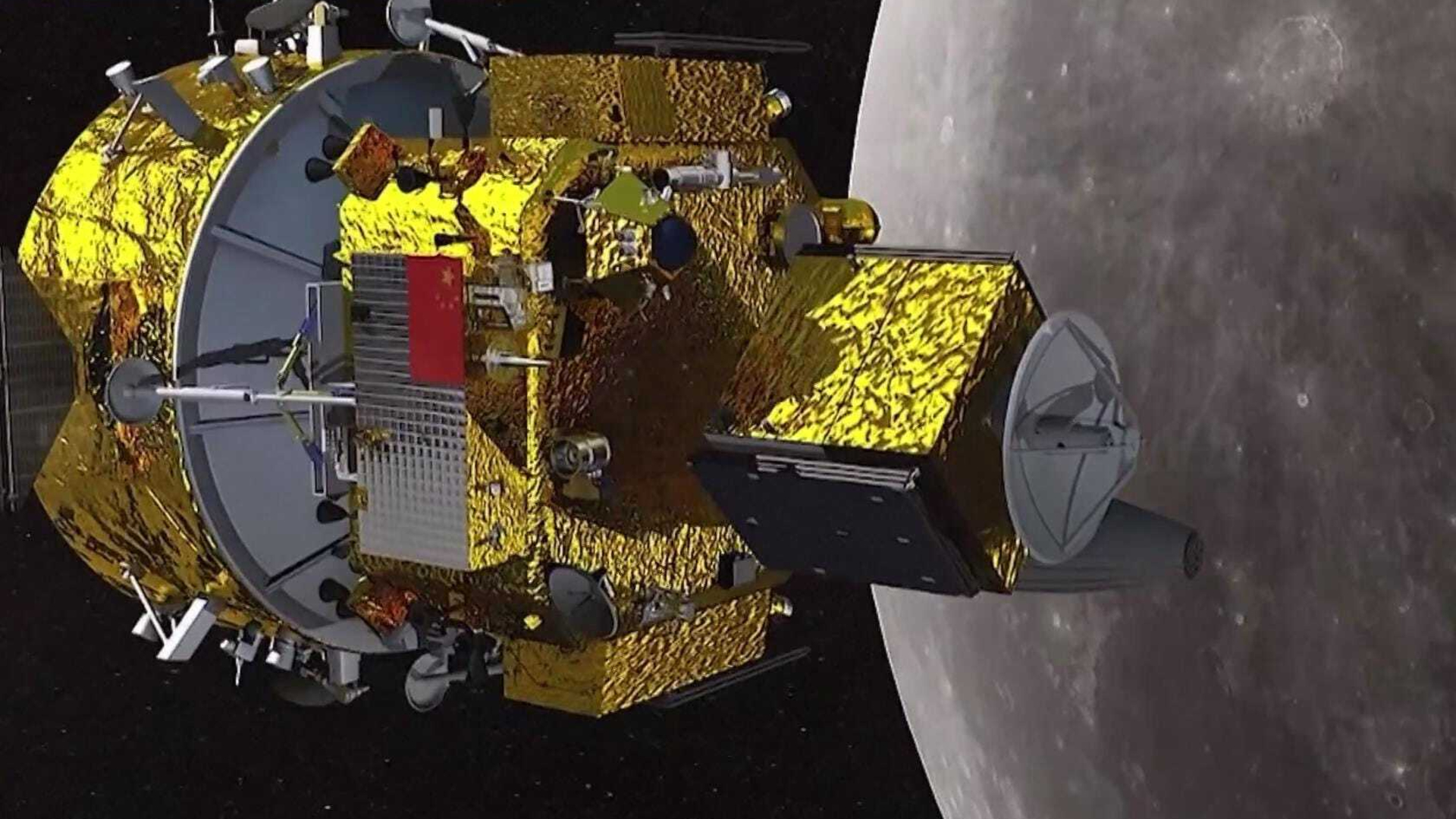
China to Launch Ambitious Chang’e-7 Mission to Hunt for Lunar Ice
China is finalizing preparations for the Chang’e-7 mission, a high-stakes expedition to the Moon’s south pole. The operation, managed by the China Manned Space Engineering Office (CMSEO), is designed to hunt for water ice hidden within permanently shadowed craters. A Long March 5 rocket is slated to carry the payload from the Wenchang Satellite Launch Center on Hainan Island, with industry observers pinpointing August 24 as the likely opening of the launch window.
A Lunar Ascent from Hainan
The Hopper: A High-Stakes Leap
Moving beyond traditional static landings, the mission carries a lander, a rover, and a specialized “hopper” robot. According to Xinhua, this hopper is purpose-built to traverse the brutal, jagged terrain of the lunar south pole, specifically diving into craters untouched by sunlight for billions of years.
The machine is equipped with six landing legs and six thrusters. This architecture allows it to shuttle between the frigid, dark crater floors and the sunlit ridges above. It is a tactical necessity: the robot must descend to analyze water molecules, then ascend to the rim to recharge its batteries using solar power. Xinhua reports the robot is expected to execute at least three such maneuvers during its operational life.
Probing the Shackleton Crater
Its geography offers a rare advantage: while the floor is locked in permanent shadow, the surrounding rims are frequently bathed in sunlight, offering a critical power management solution.

Reports from Reuters and detikInet note that temperatures in these shadowed zones plummet to -203 degrees Celsius. Scientists view these pockets as a “cosmic refrigerator,” potentially preserving water ice and organic compounds for eons. If confirmed, these deposits could serve as a logistical backbone for human exploration, providing drinking water, oxygen, and hydrogen for rocket fuel.
Paving the Way for 2030
The CMSEO is using the Chang’e-7 data as the architectural foundation for a broader lunar roadmap, which includes the Chang’e-8 mission tentatively set for 2029. These flights are the precursors to China’s stated goal of landing astronauts on the lunar surface by 2030.
The discovery and characterization of water resources will directly dictate the placement of a permanent lunar research station. At the Wenchang facility, technicians are currently completing final checks, and authorities have already issued airspace closures to clear the path for the rocket’s ascent.
Related reading
- Xiaomi Launches Redmi Watch 6 Active with 18-Day Battery Life and AMOLED Display
- ChatGPT iMessage Plugin for Mac: New Features and Privacy Risks
- NASA Photos Show 60-Foot Lunar Crater Carved by SpaceX Rocket Impact (time.news)
- China Investigates Comedian Guo Degang Over Revolutionary Song Lyric Change (archyde.com)