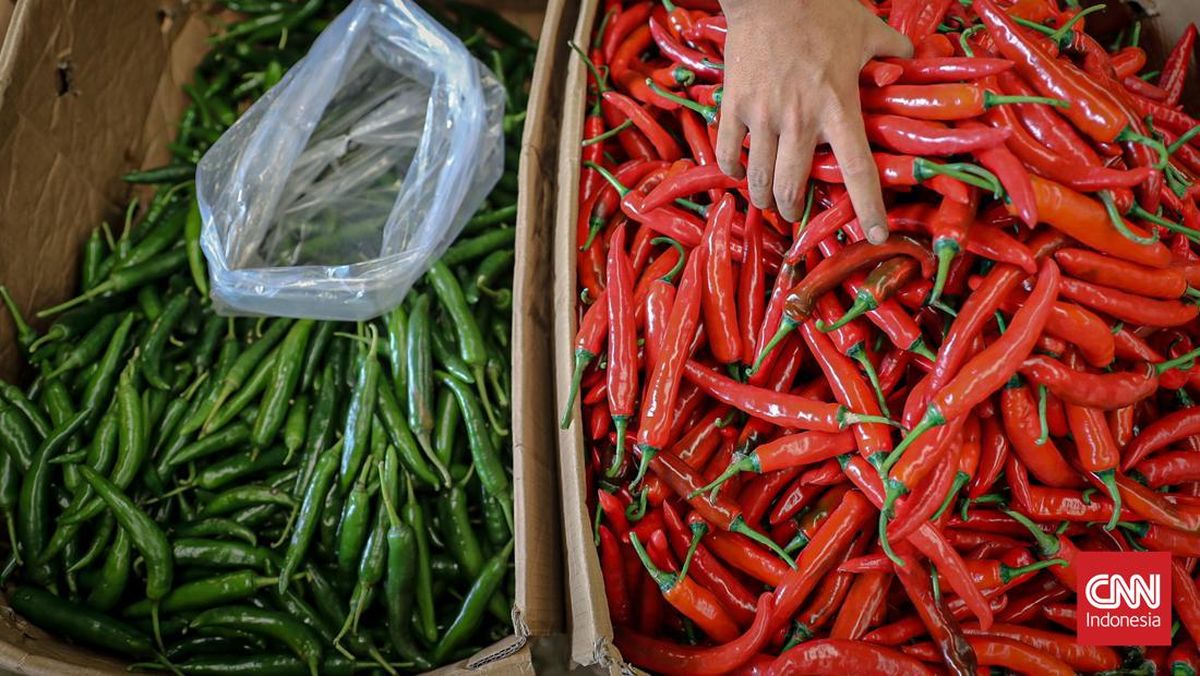
Chili Prices Soar in Indonesia with Bird’s Eye Chili Hitting Rp200,000 per Kg
As of August 24, 2026, a severe agricultural supply squeeze is rippling through Indonesian markets, driving national consumer price inflation. According to data released by Badan Pusat Statistik (BPS) during the Regional Inflation Control Coordination Meeting, average chili prices have surged across 182 districts and cities, representing 50.56 percent of the country’s territory. BPS Price Statistics Director Sarpono reported that the national average price for bird’s eye chilies reached Rp57,750 per kilogram by the third week of August, breaching the government’s upper consumer reference price (HAP) of Rp57,000 per kilogram and marking a 3.60 percent increase from July 2026 levels.
Regional Disparities and Extreme Price Spikes in Remote Districts
The national averages obscure extreme regional volatility driven by severe distribution bottlenecks and localized shortages. According to BPS disclosures, the highest recorded price for bird’s eye chili hit Rp200,000 per kilogram in Nduga Regency. Other regions experienced severe deviations above the official benchmark. Malaka Regency recorded prices at Rp80,000 per kilogram, which stands 40.35 percent above the HAP. Natuna Regency followed closely with prices reaching Rp79,048 per kilogram, or 38.68 percent above regulatory thresholds.
Conversely, lower pricing tiers appeared in surplus areas, with the lowest recorded bird’s eye chili price dropping to Rp23,667 per kilogram. Meanwhile, red chilies experienced a parallel climb. BPS noted a national average of Rp48,115 per kilogram for red chilies—remaining beneath the Rp55,000 HAP threshold—yet local spikes were severe. Nduga Regency again recorded the national high for red chilies at Rp180,000 per kilogram. Melawi Regency logged prices at Rp95,000 per kilogram (72.73 percent above HAP), while Gunung Mas and Natuna regencies recorded Rp87,857 and Rp82,500 per kilogram respectively.
El Nino Pressures and Ministry Intervention Strategies
Ministry of Agriculture Director of Vegetables and Medicinal Plants Sudi Mardianto identified declining production yields as the primary driver behind the August inflation spike. According to Mardianto, diminished output from key agricultural centers directly correlates with lingering weather disruptions associated with El Nino. Reduced soil moisture severely constrained harvesting volumes during what should otherwise be an optimal planting window.

To combat the shortfall, the Ministry of Agriculture has initiated structural mitigation programs. These measures include deploying pump-based irrigation systems in regions with active water sources, alongside distributing seed packets, production tools, and plastic mulch across 2,953 hectares spanning 36 provinces and 336 districts. Furthermore, agricultural officials are coordinating directly with regional distribution champions to reroute surplus inventory from productive farming hubs directly into deficit markets.
Fiscal Outlook and Corporate Preparedness
