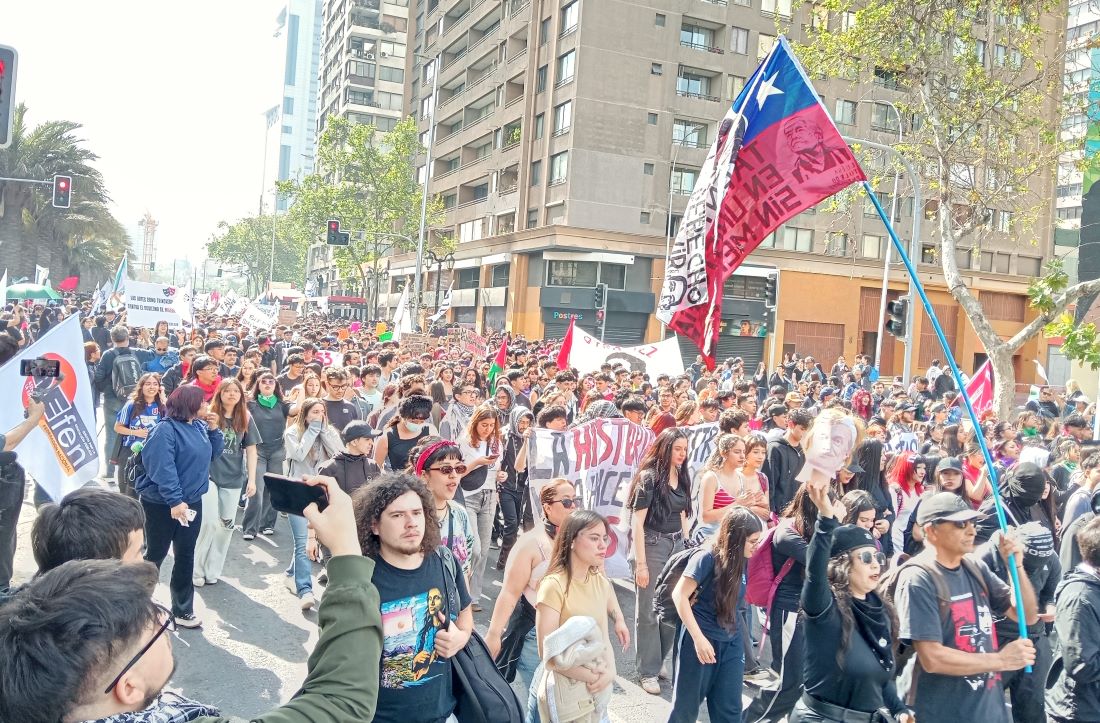
Chilean police intercept education budget march in Santiago
Public education protests in Chile turned confrontational when security forces intercepted a march in Santiago, prompting fierce denunciations from labor and student leaders over proposed budget cuts and rising institutional precarity under President José Antonio Kast.
Clashes Erupt Along La Alameda Following Metro Baquedano Departure
The demonstration began near Metro Baquedano, moving approximately five blocks down La Alameda avenue before security forces intervened. The march proceeded peacefully with leaders from the Confederation of Students of Chile and the Unitary Workers Central before Carabineros deployed what participants described as unprovoked force. Protesters eventually managed to skirt Santa Lucía hill and return to La Alameda despite ongoing police containment.
Secondary students, workers, the 8M Feminist Coordinator, and various social organizations joined the mobilization called by the student confederation. Chants echoed through the streets as demonstrators asserted that public education is defended rather than sold. The mobilization spanned at least 15 cities across the northern, central, and southern regions of Chile, marking one of the largest displays of public dissent since the current administration took office.
Budget Disputes and Precarious Conditions Fuel Nationwide Unrest
Mlynarz pointed to the proposed 2027 national budget currently heading to Congress, arguing that the financial framework remains inadequate for securing quality education, healthcare, and stable employment amid historic unemployment levels. She also criticized what she termed the criminalization of the student movement.
José Manuel Díaz, president of the Unitary Workers Central, specified that the administration's proposed budget provides only a 1.5 percent increase following a prior three percent spending cut.

Congressional Budget Debate Scheduled
Legislative deliberations on the 2027 national budget are slated to begin in the Chilean Congress, where lawmakers will weigh the proposed 1.5 percent spending increase against demands from striking educators and labor unions. No official timeline has been released regarding potential revisions to the spending bill following the nationwide demonstrations.