Chilean Peso Plummets as Dollar Approaches 1,000 Peso Milestone
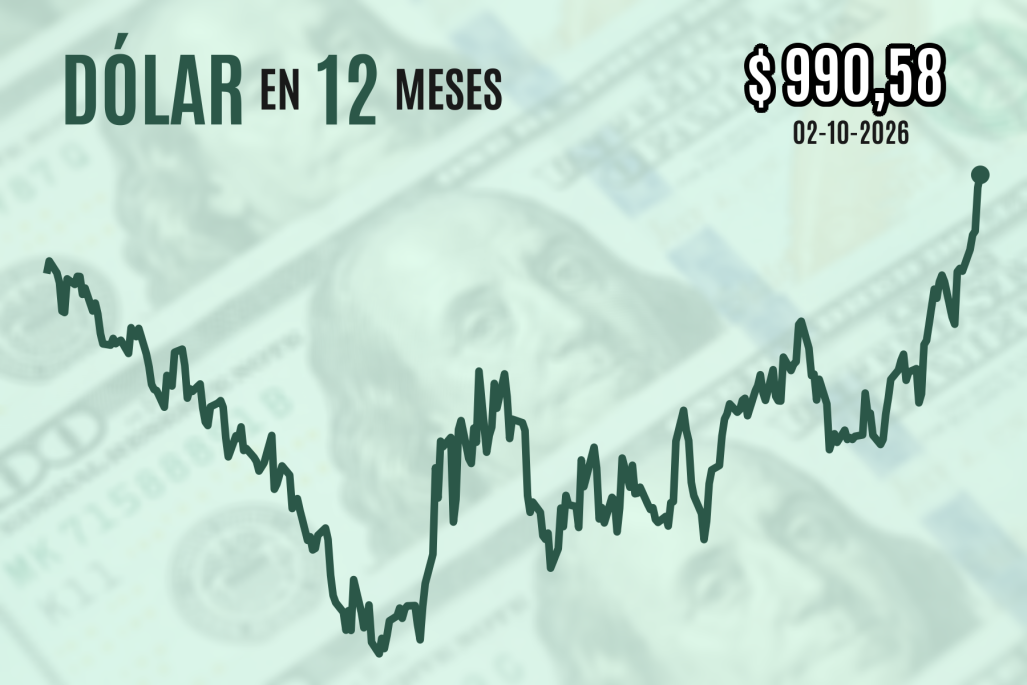
The Chilean peso recorded its worst quarterly performance against the dollar since 2024, closing at $990,6 per dollar on Friday, October 2, 2026, according to df.cl. The currency depreciated for five consecutive sessions, accumulating a weekly advance of $27,6 and hitting its highest level since April 8, 2025. The dollar has climbed for eight consecutive weeks in Bloomberg's selling price compilation, its longest streak since February 2024. At the Bolsa Electrónica de Chile, the dollar had previously closed at $985,65 on Thursday after rising $12,15, while another session recorded a jump of $14,6 to $987,1. During the week, the currency touched highs of $993 during a session, and compared to October 1, 2025—when it stood at $959,3—the exchange rate accumulated a 2,7% variation, having reached a period low of $851,68 on February 9, 2026, before rising 15,7% to its October 1, 2026 value.
df.cl reported that the exchange rate climbed despite a disappointing United States non-farm payrolls report for September. While the currency pair initially dropped to $980 following the employment data, it rebounded by midday as structural pressures supporting long-term dollar yields remained firmly in place. US sovereign rates reversed initial declines and rose across the curve, including a 3,8 basis point increase in the key 10-year maturity segment, while the dollar index fell 0,2% and the dollar index reported by other sources rose 0,58% to 102,04 points. Meanwhile, the currency was also influenced by geopolitical tensions, with market analyst Lucas Santillán from Capitaria noting that negotiations between the United States and Iran continue without a definitive solution and that Washington has discussed intensifying military actions after the midterm elections, though no decision has been made.
Mining Production Drops as Domestic Activity Contracts
The depreciation of the peso occurred alongside a contraction in domestic activity. The Central Bank of Chile reported that the Monthly Index of Economic Activity (Imacec) for August 2026 registered a 1.0% decline over twelve months, weighed down by a sharp drop in mining production, which recorded an annual contraction of 17,4%, alongside a 0,7% fall in seasonally adjusted terms despite a 1,4% advance in non-mining Imacec. The unemployment rate reached 9,6% in the June-August quarter.

Carlos Smith, a researcher at the Center for Enterprise and Society at the Universidad del Desarrollo, noted the disconnect between domestic fundamentals and currency movement. Smith added that while long rates in the US remain where they are and the Chilean economy shows no signals, pressure on the dollar will persist.
The spot price of copper on the London Metal Exchange fell 1,05% to $6.50 per pound—its lowest since September 16, when it was $6,45—and subsequently closed the week at $6.51 per pound, while Comex three-month copper fell 0,25% to $6.5 per pound, pressured by a strengthening global currency and low trading volumes, as detailed by Cochilco. Cochilco added that the global strengthening of the dollar and higher US Treasury bond yields have directly increased purchase and financing operations for the red metal. Ignacio Mieres, Head of Research at XTB, also pointed to the economy’s low overall dynamism as a pressure factor.
US Job Creation Falls Short of Expectations
The US labor report showed the creation of only 29 mil jobs in September—falling short of the 90 mil expected—alongside net downward revisions of 60 mil jobs for the August-July period, while the unemployment rate ticked up one tenth to 4.2% and average earnings grew slower than anticipated.
Concurrently, energy markets reacted to international supply adjustments.

Market Participants Monitor Exchange Rate Technical Floors
As the exchange rate approaches the psychological barrier of $1,000, market participants monitor whether the currency will consolidate above current technical floors.