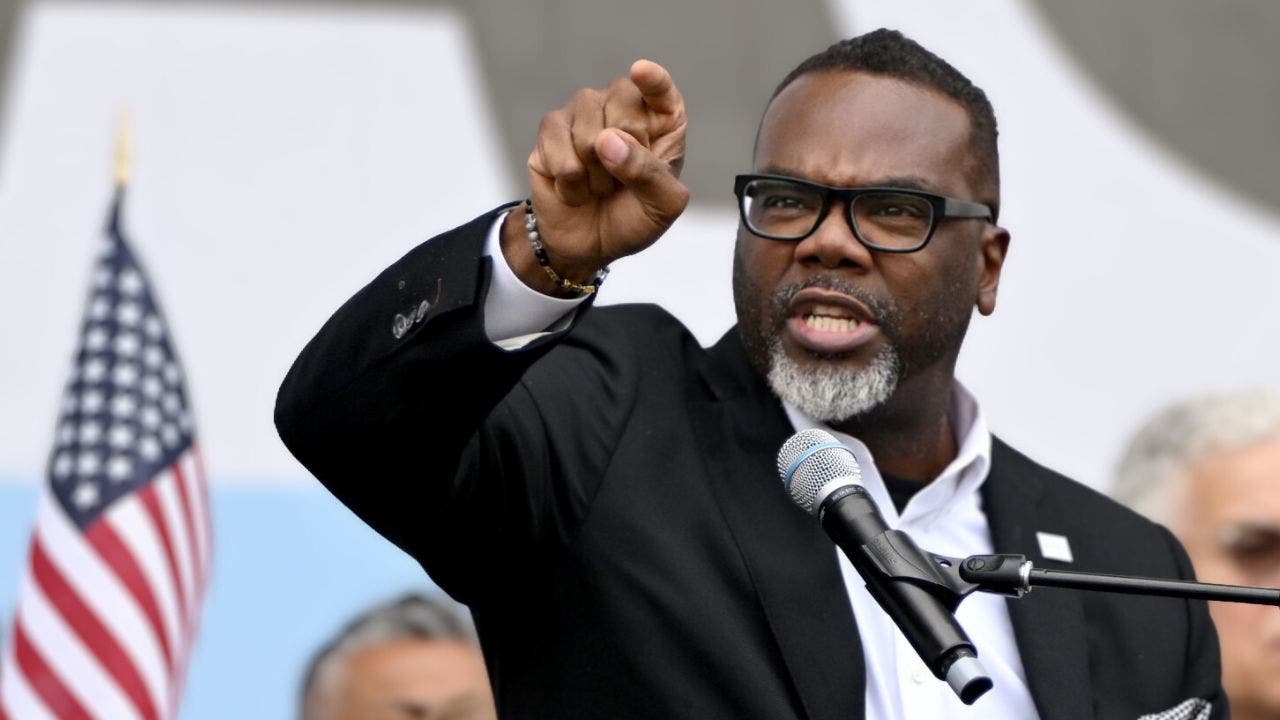
Chicago Financial Crisis: Mayor Johnson Faces $1 Billion Budget Gap & Debt Concerns
Chicago Mayor Brandon Johnson’s administration is grappling with a deepening financial crisis, facing a corporate fund budget gap exceeding $1 billion and projections of a $150 million deficit for the 2025 fiscal year, according to city estimates. The financial strain comes as the city allocates roughly two-fifths of its budget to debt service and pension obligations.
The situation has prompted concern from financial analysts. Austin Berg, executive director of the Illinois Policy Institute, stated that markets are “really concerned” about Chicago’s financial health, noting that the spreads on the city’s debt are widening. Berg likened the city’s predicament to someone seeking financial advice while deeply in debt, emphasizing the need to cease “bad decisions” and establish a framework for sound financial management.
Berg specifically criticized the practice of using one-time revenues, such as federal COVID-19 relief funds, for ongoing operational expenses and the recent issuance of bonds to cover operational costs, characterizing both as “huge no-nos” and red flags for investors. He also pointed to a historical precedent, the 75-year parking meter lease negotiated under former Mayor Richard M. Daley in 2008, as an example of a long-term financial burden imposed on the city.
Johnson, speaking in April, acknowledged the city was “at a crossroads” and needed to “essentially do more with less.” He also criticized the Trump administration for allegedly threatening federal funding, framing it as a different set of circumstances than those currently faced by the city.
The Johnson administration recently proposed a corporate “head tax” of $21 per employee per month for businesses with over 100 workers, with adjustments for inflation. The proposal, intended to help close the $1.2 billion budget shortfall and generate an estimated $100 million annually, was ultimately rejected by the City Council, with critics arguing it would harm businesses and stifle economic growth.
Adding to the financial pressures, the city has faced scrutiny over expenditures on social justice initiatives while core city services struggle. Independent journalist William J. Kelly highlighted this tension in January, questioning Mayor Johnson about the city’s response to a major snowstorm while unplowed streets hampered residents.
Berg further argued that Chicago’s financial constraints are exacerbated by its limited ability to address long-term liabilities. He suggested the city should seek permission from the state of Illinois to declare Chapter 9 bankruptcy, a rarely used option nationally, to gain leverage in negotiations with public sector unions. He also noted that Chicago is one of only two major cities – alongside Latest York – that does not require voter approval for new general obligation debt.
The Washington Post editorial board recently criticized Chicago’s financial situation, stating that it “takes a long time to kill a city” and that Chicago’s “public servants” were accelerating that process. The Post noted that the city’s bond rating was downgraded in February by both Kroll and Fitch. The board predicted that minor adjustments made by the City Council in December would not alter the city’s overall fiscal trajectory.
In a separate development, Deputy Mayor Garien Gatewood, a key figure in the city’s violence reduction efforts, was abruptly fired by Mayor Johnson on Thursday. Gatewood stated he received no clear explanation for his dismissal and defended his record, citing declining homicide rates. He alleged internal issues within the mayor’s office, specifically citing concerns about the leadership of Chief of Staff Cristina Pacione Zayas and political advisor Jason Lee. The mayor’s office released a statement affirming its commitment to public safety efforts and plans to appoint a replacement.
Mayor Johnson’s office did not respond to a request for comment from Fox News Digital.