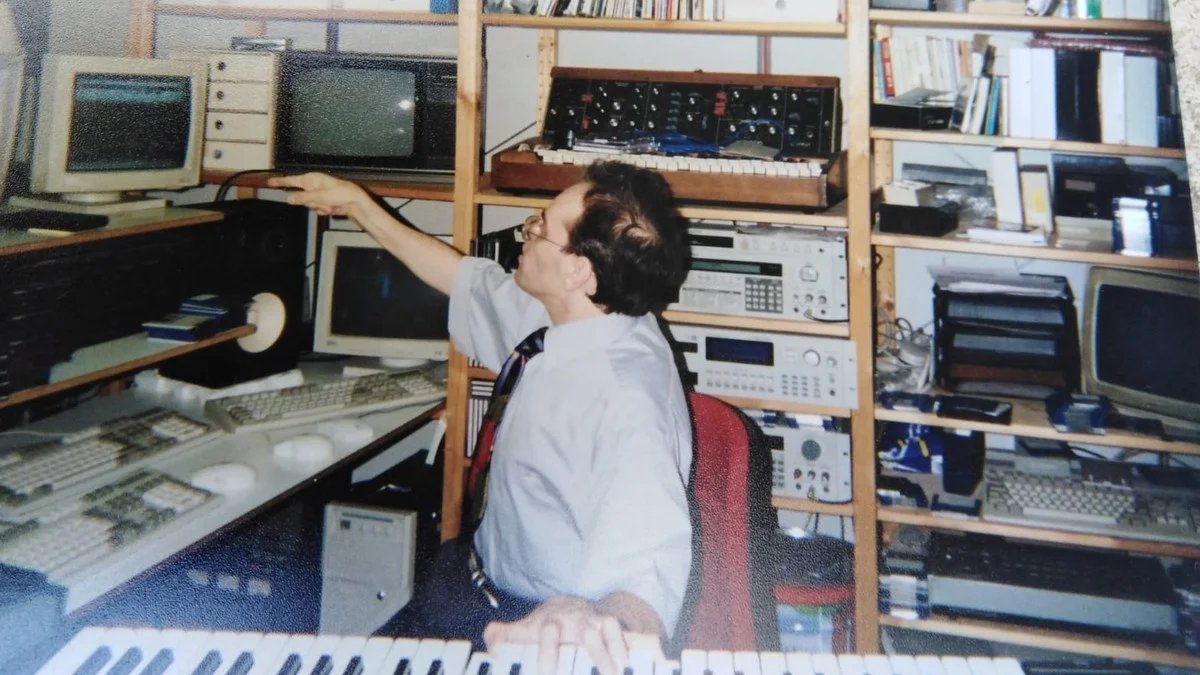
Charles Callet Launched Amstradeus Music Software via Musiciel in March 1986
Composer Charles Callet transitioned into software development in the mid-1980s by establishing the company Musiciel to produce Amstradeus, a music notation program for the Amstrad CPC computer, which officially launched in March 1986, Rom Game reported.
Operating from his Paris address at 31, rue Esquirol, Callet managed both the production and manufacturing of his software line. His initial business strategy targeted a release schedule of four software titles per year, focusing on educational tools for piano, guitar, and saxophone. The company initially aimed for a Christmas 1985 release, but the project ultimately reached the market the following spring, priced at under 500 francs.
The program offered users multiple modes, including a beginner setting that displayed note names above a digital piano keyboard. In a review titled “Enough to make Mozart pale,” Amstrad Magazine praised the interface, noting that the Mozart depicted on the packaging was actually Callet himself. By November 1986, the publication described the software as “certainly one of the best in its category.”
Callet maintained that his software was intended as a supplement to, rather than a replacement for, traditional musical instruction.
Charles Callet stated in 1990.
He suggested that beginners could improve by purchasing the sheet music of their favorite artists and entering it into the program note by note.
The development process for Amstradeus involved work outside of the rue Esquirol headquarters. Henri Steimen recalled that his friend developed his programs at a company in Issy-les-Moulineaux, where they would meet to discuss songwriting ideas.
Amstradeus experienced a resurgence in 1990, four years after its debut. The magazine Amstrad Cent Pour Cent published the program’s source code across its 25th, 26th, and 27th issues, leading readers to write in with reports of input errors. This period marked a transition in home computing, as these early composition tools paved the way for more complex software, such as trackers on the Amiga and sequencers on the Atari ST.
While the software market of the 1980s operated on a different scale, the challenges faced by independent developers like Callet—managing intellectual property, production logistics, and technical support—remain relevant.