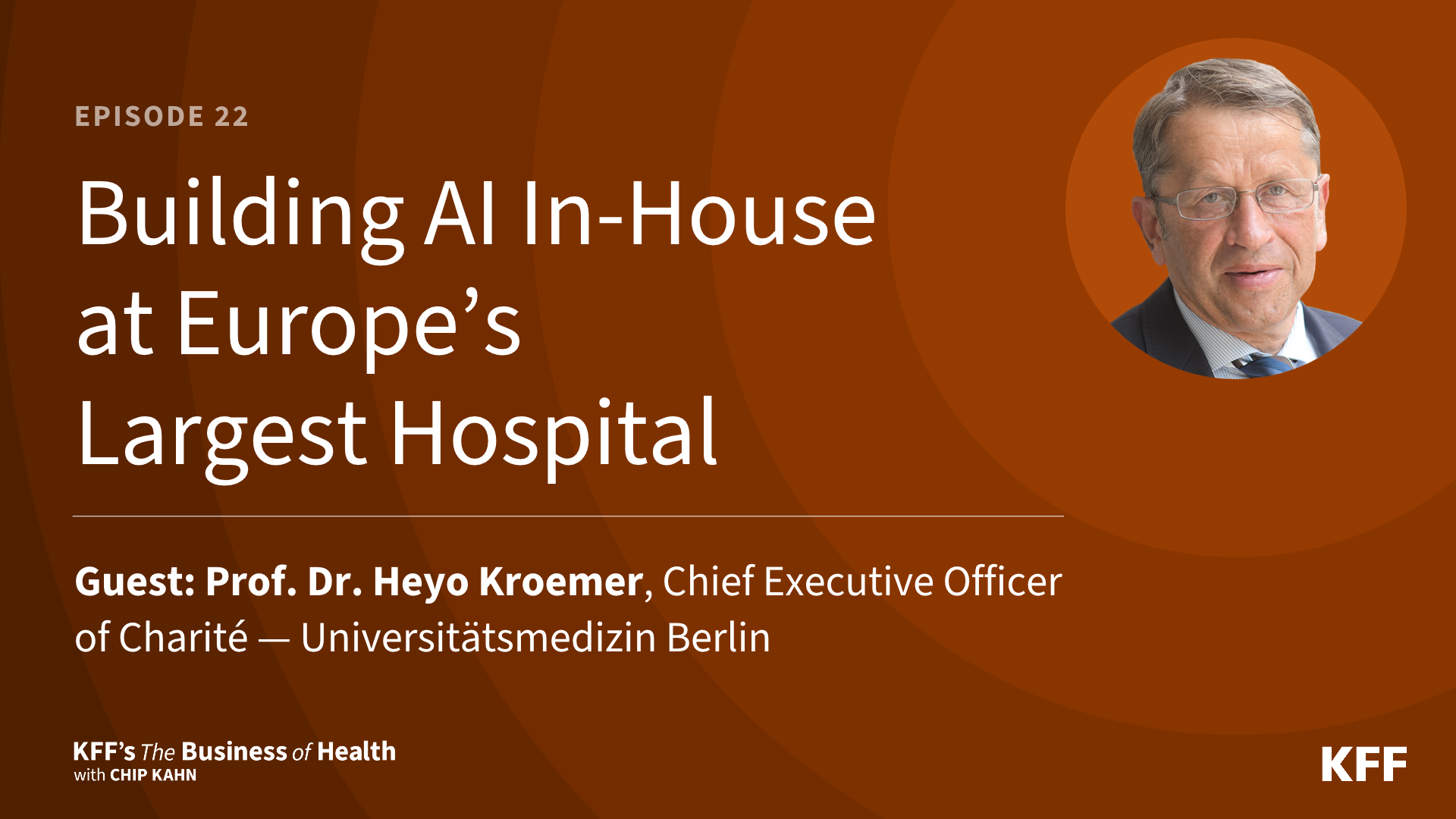
Charité builds in-house AI platform Clé for research and care
Charité – Universitätsmedizin Berlin, ranked eighth in the world by Newsweek and operating as Europe’s largest academic medical center, is building its artificial intelligence platform in-house rather than purchasing commercial systems, kff.org reported on November 3, 2026.
-
Key Clinical Takeaways:
- Charité consolidated scattered artificial intelligence projects into a single Institute for Artificial Intelligence in Medicine.
- The medical center switched on an in-house platform named Clé, which runs across research, teaching, patient care, and administration.
- Chief Executive Officer Prof. Dr. Heyo Kroemer stated that the platform’s success will depend on whether it improves care, supports staff, and makes innovation usable in everyday work.
Consolidating Artificial Intelligence Operations Across Europe’s Largest Academic Hospital
Most hospitals buy their AI. Charité chose a different operational model by developing its own. To anchor this strategy, the institution established the Institute for Artificial Intelligence in Medicine. This centralized body coordinates technology development, moving away from scattered AI projects.
At the center of this initiative is Clé, an in-house platform built to operate across research, teaching, patient care, and administration. Chief Executive Officer Prof. Dr. Heyo Kroemer explained the institutional strategy during an episode of the podcast The Business of Health with Chip Kahn. Kroemer, a pharmacologist who has led Charité since September 2019 and previously served as Chief Executive Officer of University Medical Center Göttingen, noted that owning an AI platform rather than licensing one carries distinct stakes.

Evaluating the Practical Impact on Clinical Staff and Daily Workflows
The development of internal health technology requires focus on usability in everyday work. According to Kroemer, the success of the platform depends on whether it improves care, supports staff, and makes innovation usable in everyday work.
He is also a member of the German National Academy of Sciences Leopoldina and co-authored its 2026 policy brief on agentic artificial intelligence in health care, covering its opportunities and the conditions required for responsible implementation.
While most hospitals buy their AI, hospitals building proprietary systems must manage development. Charité has not yet detailed the financial investment required to build and maintain Clé, nor has the institution released comparative performance metrics contrasting Clé’s performance against commercial software suites.
Disclaimer: The information provided in this article is for educational and scientific communication purposes only and does not constitute medical advice. Always consult with a qualified healthcare provider regarding any medical condition, diagnosis, or treatment plan.