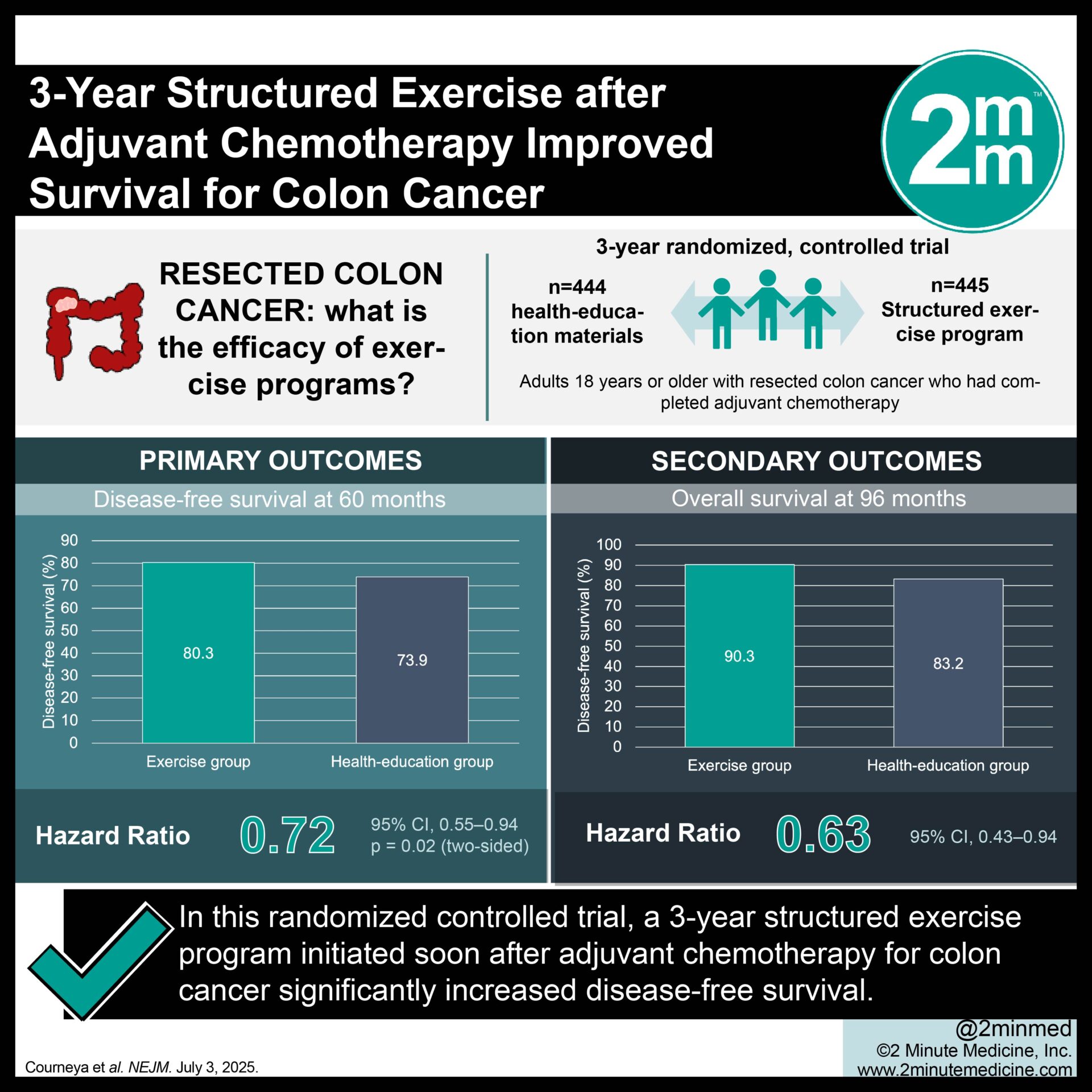
Challenge trial shows structured exercise extends colon cancer survival
Structured exercise programs can reduce the long-term risk for cancer recurrence and extend survival, moving physical activity from a method for managing side effects into a direct component of life-saving oncology care, according to findings discussed by clinical experts on September 29, 2026.
- The CHALLENGE trial demonstrated that structured exercise programs can lower cancer recurrence rates and extend survival in patients with colon cancer.
- Despite strong clinical evidence, barriers such as tight clinic schedules and a lack of onsite programs limit routine integration in community oncology settings.
- Oncology specialists recommend an “assess, advise, and refer” framework, utilizing simple lifestyle inquiries during routine appointments to encourage physical activity.
Evidence Shift From Symptom Management to Survival
The publication of the CHALLENGE trial shifted the role of physical activity in oncology. Prior research focused primarily on how exercise helps mitigate brain fog, fatigue, and surgical recovery. The CHALLENGE trial, however, randomly assigned patients with colon cancer to either a 3-year structured exercise program consisting of 50 to 70 hours of structured support or a control group receiving standard educational materials.
The trial demonstrated that structured intervention can reduce long-term recurrence risks and extend survival. Karen H. Schmitz, PhD, MPH, professor at the University of Pittsburgh and deputy director of the Hillman Cancer Center, noted that the trial places exercise in a fundamentally new evidentiary category, stating that physical activity is now a life-saving intervention.
Barriers to Implementation in Everyday Oncology Practice
Translating clinical trial protocols into standard practice remains challenging. Most oncology practices operate similarly to the trial’s control group, providing basic educational materials rather than dedicated exercise infrastructure. Clinical appointment times are constrained, and discussions regarding physical activity often take lower priority against acute treatment toxicities.
Most community oncology clinics lack onsite, philanthropy-funded exercise programs, and third-party payers rarely cover structured exercise interventions. Patient-reported data indicates a distinct support gap as well. While many patients want oncologists to discuss exercise, only 27% in recent surveys feel capable of independently ramping up their activity levels without guidance.
Frameworks for Incorporating Exercise Into Oncology Care
To bridge the gap between clinical trial data and community practice, Jessica Scott, PhD, director of the exercise oncology program at Memorial Sloan Kettering Cancer Center in New York City, recommends an “assess, advise, and refer” framework. Clinicians can integrate physical activity assessments alongside routine evaluations of pain, weight loss, and treatment toxicities by simply asking patients how many days per week they are active.
Timing discussions strategically can also improve patient receptiveness. Jennifer Ligibel, MD, professor at Harvard Medical School and director of the Leonard P. Zakim Center for Integrative Therapies and Healthy Living at Dana-Farber Cancer Center in Boston, points out that windows of opportunity emerge throughout the cancer care continuum. These include initial consultations when patients express concerns about treatment disruptions, periods when side effects like fatigue subside, and aftercare visits when patients ask about next steps.
Ligibel, who serves as the lead author of the American Society of Clinical Oncology guideline on exercise and diet during cancer treatment, emphasizes that a recommendation from a trusted clinician strongly influences patient participation. Clear medical guidance also helps steer patients away from unproven dietary supplements or restrictive diets that lack strong clinical backing.
Disclaimer: The information provided in this article is for educational and scientific communication purposes only and does not constitute medical advice. Always consult with a qualified healthcare provider regarding any medical condition, diagnosis, or treatment plan.