
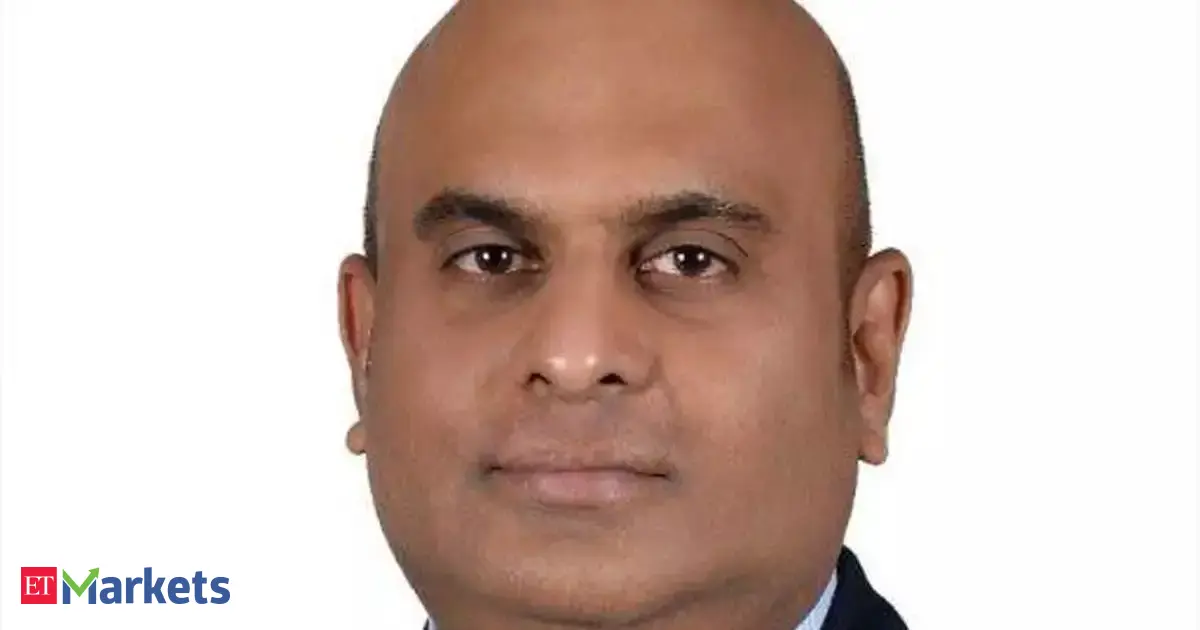
Navigating Indian Equity Markets: A Wait-and-Watch Approach with Selective Opportunities – Insights from LGT Wealth’s Chakri Lokapriya
Published: 2026/01/18 02:09:12
Indian equity markets are currently experiencing a period of consolidation, grappling with a blend of global economic headwinds and domestic policy uncertainties. According to chakri Lokapriya, CIO-Equities at LGT Wealth, the market is largely in a ‘wait-and-watch’ mode. In a recent conversation with ET Now, Lokapriya shared his detailed viewpoint on the factors influencing market performance, the outlook for key sectors, and potential investment opportunities for those willing to navigate the current volatility. this article delves into Lokapriya’s insights, providing a complete overview of the investment landscape and strategic recommendations for investors.
Broader Market Outlook: resolution of Key Uncertainties is Key
Lokapriya emphasized that the Indian market is highly sensitive to resolution of global trade tensions, specifically regarding tariffs.“The market is kind of waiting for that one word called tariff. Until there is a kind of resolution, we are going to be range-bound as that creates a lot of uncertainty,” he stated. The anticipation of the upcoming Union Budget further contributes to the cautious sentiment. A renewed focus on capital expenditure (capex) is deemed crucial, as it has been lacking over the past two years. Lokapriya believes that a strong capex announcement in the budget is a prerequisite for breaking out of the current range-bound trading pattern.
Sector-Specific analysis and Investment Recommendations
Insurance: Navigating Competition and Margin pressures
The insurance sector, encompassing major players like ICICI Lombard and ICICI Prudential, faces both structural and short-term challenges. One significant factor is the recent changes to the labor code, which Lokapriya views as a one-off event that the market will eventually absorb. However, intense competition continues to exert downward pressure on margins, especially due to rising motor claims and increased provisioning requirements. Lokapriya suggests that the sector’s fortunes are closely tied to overall economic recovery, which would drive higher volumes and potentially offset margin pressures.
IT sector: A Turnaround on the Horizon
After a challenging 2025, the IT sector is poised for a potential turnaround in 2026. While the current quarter is expected to remain soft, underlying trends suggest improvement.Lokapriya highlights the growing impact of Artificial Intelligence (AI), noting that investments in AI infrastructure are now translating into demand for integrated IT systems. This positions Indian IT services companies to capitalize on the emerging opportunities. Furthermore, emerging margin stability and sustained deal flows provide additional positive signals. “Given last year’s underperformance, IT should do much better this year,” Lokapriya affirmed.
Reliance vs. L&T: A Selective Approach to Heavyweights
Recent market corrections in heavyweight stocks like Reliance Industries and L&T have prompted debate about weather to accumulate shares during the dip. Lokapriya clearly favors reliance, citing its strong potential in the new energy sector and the buying prospect presented by recent political events impacting the stock.He advises caution with L&T, emphasizing that its outlook is heavily dependent on the capital expenditure allocations announced in the upcoming Union Budget.“Until than, I would rather buy Reliance,” he stated.
Bharat Coking Coal IPO: A Strong Business with Short-Term Potential
Commenting on the highly successful Bharat Coking Coal IPO, Lokapriya described it as a fundamentally strong business with long-term growth prospects fueled by consistent coal demand within India. He noted that the robust subscription levels reflect investor confidence in the company’s market leadership and expansion plans. For long-term investors,he recommends holding the stock post-listing. Though, for those seeking short-term gains, he suggests considering profit-taking opportunities once the stock price appreciates by around 40%.
Banking Sector: Solid Fundamentals Despite Recent Volatility
Despite recent pressure on private sector banks such as HDFC Bank, Kotak Mahindra Bank, and Axis Bank, Lokapriya attributes the fluctuations to company-specific issues rather than systemic weakness. He maintains a positive outlook, emphasizing the strong balance sheets, reasonable valuations, and the sector’s inherent ability to thrive during an economic recovery. He also highlights the potential of Public Sector Undertaking (PSU) banks, particularly SBI and Canara bank, to benefit from increased capital expenditure driven by government initiatives.
Speedy Commerce: From High-Growth to Trading Play
The quick commerce sector, following the relaxation of the 10-minute delivery mandate, remains a complex landscape.Lokapriya believes this change is largely neutral across the board. Though, ongoing intense competition and pressures on profitability continue to weigh on valuations. As an inevitable result, he characterizes the sector as more of a “trading stock” in the current environment, suggesting smaller gains rather than large long-term investments.
Metals: Continued strength Despite Recent Gains
Despite recent strong performance, Lokapriya remains optimistic about the metals sector, citing robust demand across both ferrous and non-ferrous segments. companies like Tata Steel, Hindalco, and Hindustan Copper are well-positioned to benefit from accelerating global growth. He suggests valuations remain reasonable, indicating further potential for performance.
Concluding Thoughts: Navigating the Volatility
Chakri Lokapriya’s outlook underscores the complexities of the current Indian equity market. While short-term direction remains uncertain due to global and domestic factors,his analysis reveals selective opportunities for investors who adopt a medium- to long-term perspective. By focusing on fundamentally strong companies and aligning investment strategies with broader economic trends, investors can navigate the prevailing volatility and capitalize on emerging growth prospects.
