ChainTrade PQTIC Advance Fee Fraud Warning Lawyer Analysis Frozen Accounts Fake Loan Demands
The $400 arrives as a gift. That is where the trouble starts: a message in the name of the “official Chain Trade Team” promises selected recipients a $400 test balance for a “PQTIC Intraday Trading Program” — and, according to a legal warning published this week, ends with frozen accounts and demands for repayment of loans the victims never actually received.
On Reddit and in online fraud-warning portals, the pattern is being classified as advance-fee fraud, anwalt.de reported.
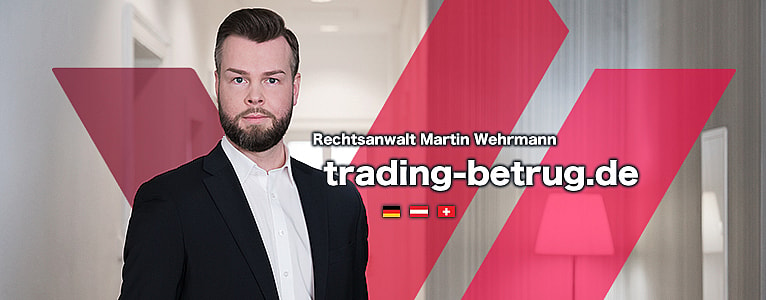
Hamburg-based lawyer Martin Wehrmann, a specialist in digital and business law, laid out the pattern in detail for anwalt.de. The operations behind ChainTrade and PQTIC present themselves as related: ChainTrade claims to be an “official partner” of PQTIC, and the warning portals list the domains chaintrade.net and pqtic.com as crypto trading and investment platforms that demand fees or taxes from investors before any payout is released.
The numbers tell the story better than any label could. In one case described in a publicly accessible legal-advice forum, a woman’s ChainTrade account displayed a balance above $240,000. To unlock a supposed “allocation,” the platform said, $400,000 was required — a gap of roughly $160,000 the user was pressed to fill from her own pocket. When she could not, ChainTrade offered a loan, without a credit check and without proof of income.
After she signed the credit contract, the account was frozen. Now, anwalt.de reported, she is being pressed to repay a loan she never received in money or crypto.
How the gift turns into a debt
The mechanics are worth reading closely, because each step is designed to widen the victim’s exposure. The unsolicited message welcomes the recipient as a “lucky participant,” grants $400 in test capital, promises they may keep all trading profits, and asks only that the starting capital be returned. A trading app is installed. A personal “trading assistant” takes over by chat.
The first trades show impressive gains. To withdraw them — or to join “exclusive” trading rounds — real money is suddenly required. The psychology, Wehrmann wrote, is deliberate: a gift creates obligation, and the requirement to return the “principal” builds a sense of debt toward the platform from the very first day.
The message also claims the test capital comes from PQTIC and a “Defi Foundation.” No verifiable organization of that name is identified anywhere in the message — a hallmark of deception letters that lean on respectable-sounding but undefined institutions, anwalt.de reported, according to Anwalt.
One line of defense, for anyone weighing a similar offer: legitimate brokers do not send free trading capital to strangers by SMS. Wehrmann’s advice on anwalt.de treats every unsolicited offer of “free” trading capital as a warning signal in its own right.
The $240,000 that never existed
The fake balance is the pivot of the whole scheme. A number like $240,000 on a screen is not wealth; it is bait. It exists to justify the next demand — the $400,000 “allocation,” the loan contract, the frozen account — and to make those demands feel proportionate.
Crypto investment fraud cases follow this structure repeatedly, Wehrmann wrote: a supposedly high credit balance is used to extract higher deposits or to manufacture an apparent debt.
The legal position on the loan itself is, for many victims, relieving. Under Section 488(1) of the German Civil Code, a lender is obliged to actually hand the borrowed amount to the borrower; a repayment obligation arises only once the money has been provided.
If the “credit” existed solely as a number on the platform’s screen — with no transfer to the victim’s bank account or wallet — there is strong reason to argue nothing was ever made available, anwalt.de reported.
Two further provisions can apply. A contract signed under fraudulent misrepresentation can be voided under Section 123 of the Civil Code, and depending on its structure it may be immoral and void from the outset under Section 138. Wehrmann’s advice, as he gave it: pay no loan installments, no “returns,” and no fees to ChainTrade or PQTIC, and have the supposed contract reviewed before anything is signed or settled.
Collection threats, and what they are worth
Once the account is frozen, the pressure campaign typically follows. Threats of debt-collection agencies, lawsuits and negative credit-bureau entries are standard. Each has a fixed legal weight — and Wehrmann sized them up one by one for anwalt.de.
A German credit agency (SCHUFA) entry can only be triggered by a contracting party of the agency, and only under statutory conditions; a foreign platform without a license does not qualify. Debt collectors operating in Germany must be registered in the legal services register, which can be checked. And a lawsuit has to be filed with a court that formally serves the claim on the defendant.
His guidance: do not respond to threatening letters, but store them in full. If genuine mail arrives from a court or a registered collection firm, have it reviewed immediately by a lawyer and observe the deadlines stated in it.
The credentials that mean nothing
The contacts in the described case pointed to a US registration as a “Money Services Business” and a certificate of good standing from a US state. Those documents sound official. They do not grant what they appear to grant.
An MSB registration serves anti-money-laundering oversight, not investor protection; it is not a license to offer investment or trading services. A certificate of good standing confirms only that a company exists in the register and has met its formalities.
For investors in Germany, the only relevant question — per anwalt.de — is whether the provider holds a BaFin license or a European passport. None was identifiable in this case. Wehrmann found no European supervisory warning against ChainTrade or PQTIC either; his conclusion was nonetheless that the publicly documented course of events matches a known fraud pattern.
Positive “test reports” of trading robots circulate online under similar names. Whether they are linked to ChainTrade or PQTIC remains unclear, according to anwalt.de — and paid or auto-generated positive reviews are widespread in crypto offerings, so they should not be read as counterevidence.
What the evidence file should hold
The practical steps Wehrmann listed on anwalt.de form a checklist for anyone already in contact with the platforms:
- Sign nothing — no credit, allocation or settlement contracts.
- Pay nothing — no deposits, fees, taxes or loan installments.
- Document the app and account with screenshots and a screen recording before deleting anything.
- Save the original invitation message and the entire chat history with the trading assistant.
- Record the hash, network, destination address and amount of every crypto transfer.
- Check the phone for configuration profiles or test certificates installed with the app, and remove them after documentation.
- Report the suspected fraud to the bank and ask about recovery options.
- Have the alleged credit claim reviewed by a lawyer.
The trading assistant deserves particular attention: his messages document the deception step by step, and phone numbers, messenger accounts and profile pictures can be matched to the operators in an investigation, Wehrmann wrote.
Genuine bank loan remains binding despite fraud
Some victims finance their deposits with a genuine bank loan. That contract remains binding even when the money ended up on a fraudulent platform, so the installments should not simply be stopped.
What can be reviewed, per anwalt.de: whether a revocation of the consumer loan under Sections 495 and 355 of the Civil Code is still possible, and whether the bank breached special duties when granting it. Early contact with the bank, and a joint review of the loan documents and payment records, is the recommended route.
Family members were the ones who flagged the case described in the legal forum before further payments were made. That is the typical sequence, Wehrmann wrote: outsiders spot the pattern faster, because they are not caught in the emotional pull of the platform.
For retail investors scanning the next quarter of crypto offers, the arithmetic of this case is the lesson: a $400 gift that produced a displayed balance above $240,000, a demanded allocation of $400,000, and a frozen account — no European license at any point in the chain, and no supervisory body anywhere in it to appeal to until the money is gone.