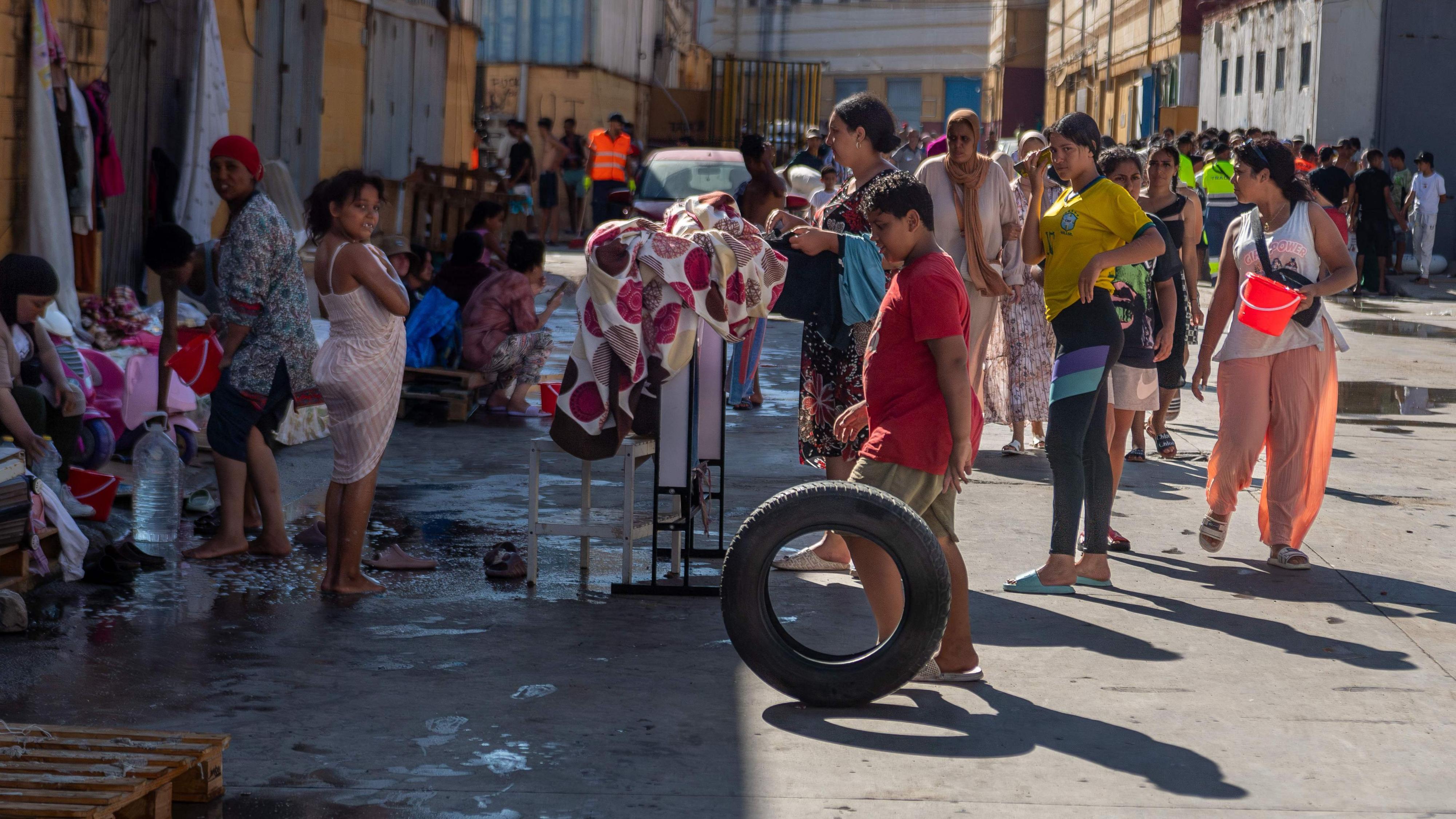
Ceuta Religious Communities Protest Amid Migration Crisis
On August 9, 2026, the four religious communities of Ceuta—Christian, Muslim, Hebrew, and Hindu—called for a public demonstration at the Plaza de la Constitución to demand immediate government action against a severe migration crisis that has brought the Spanish autonomous city to its limit, according to reporting by Cadena SER and Euronews.
A Unified Stand at the Plaza de la Constitución
The convergence of all four religious confessions marks a show of social cohesion within the Mediterranean enclave. According to coverage from Cadena SER, the demonstration scheduled for 20:00 hours seeks to challenge what organizers describe as an inoperative border and depleted local resources. Local labor unions CCOO and UGT have thrown their weight behind the mobilization, aligning with the civic call for relief.
The city’s leadership has actively backed the movement. Juan Jesús Vivas, president of the autonomous city of Ceuta, urged residents across all neighborhoods to attend the gathering. Vivas emphasized that the protest belongs strictly to the citizens of Ceuta, remaining entirely independent of partisan politics, as reported by El Pueblo de Ceuta and Vozpopuli. During the event, participants plan to read a joint manifesto drafted by the cultural and religious entities to articulate a unified regional stance.
Infrastructure Strain and Political Friction Over Unaccompanied Minors
The mobilization follows the mass arrivals of migrants from Morocco on July 30, 2026, which intensified long-standing logistical challenges across the territory. Euronews notes that the influx has strained municipal reception facilities and triggered acute political debates between regional and national authorities regarding unaccompanied minors. Following a visit to the city by Sira Rego, the Minister of Youth and Childhood, the central government identified 1,342 minors within the local system, though officials acknowledge uncounted arrivals remain.
President Vivas maintained during discussions with national ministers that the sole viable remedy involves returns to Morocco through the Tarajal border crossing, characterizing the current reality as completely unsustainable. Conversely, the Ministry of Youth and Childhood stressed individual case assessments, family reunification efforts where feasible, and regional coordination. This tension precedes the upcoming Sectorial Commission on Childhood and Adolescence scheduled for August 13, where leaders will debate minor transfers—a mechanism already rejected by Vox representatives in several regions.
Institutional Demands and Central Government Response
Organizers of the Sunday demonstration have framed their demands around three core pillars: enhanced central government intervention, reinforced deployments of the National Police and Guardia Civil, and stricter protective controls along the Moroccan border. Outlets including El Español and RTVE.es reported that local stakeholders feel the boundary infrastructure lacks the necessary capacity to manage ongoing migratory surges.
Despite his sharp criticism of central authorities—whom he accuses of repeating past administrative failures following the 2021 border crisis—President Vivas affirmed that his administration will preserve institutional loyalty and state responsibility. Yet, as the community gathers to voice its collective frustration, the pressure on state agencies continues to mount. Navigating these administrative hurdles demands robust institutional cooperation.
As Ceuta confronts the long-term economic and social fallout of these border pressures, the endurance of its multi-confessional social fabric remains its primary anchor.