CERN Recreates Primordial Universe Matter and Overturns Past Assumptions
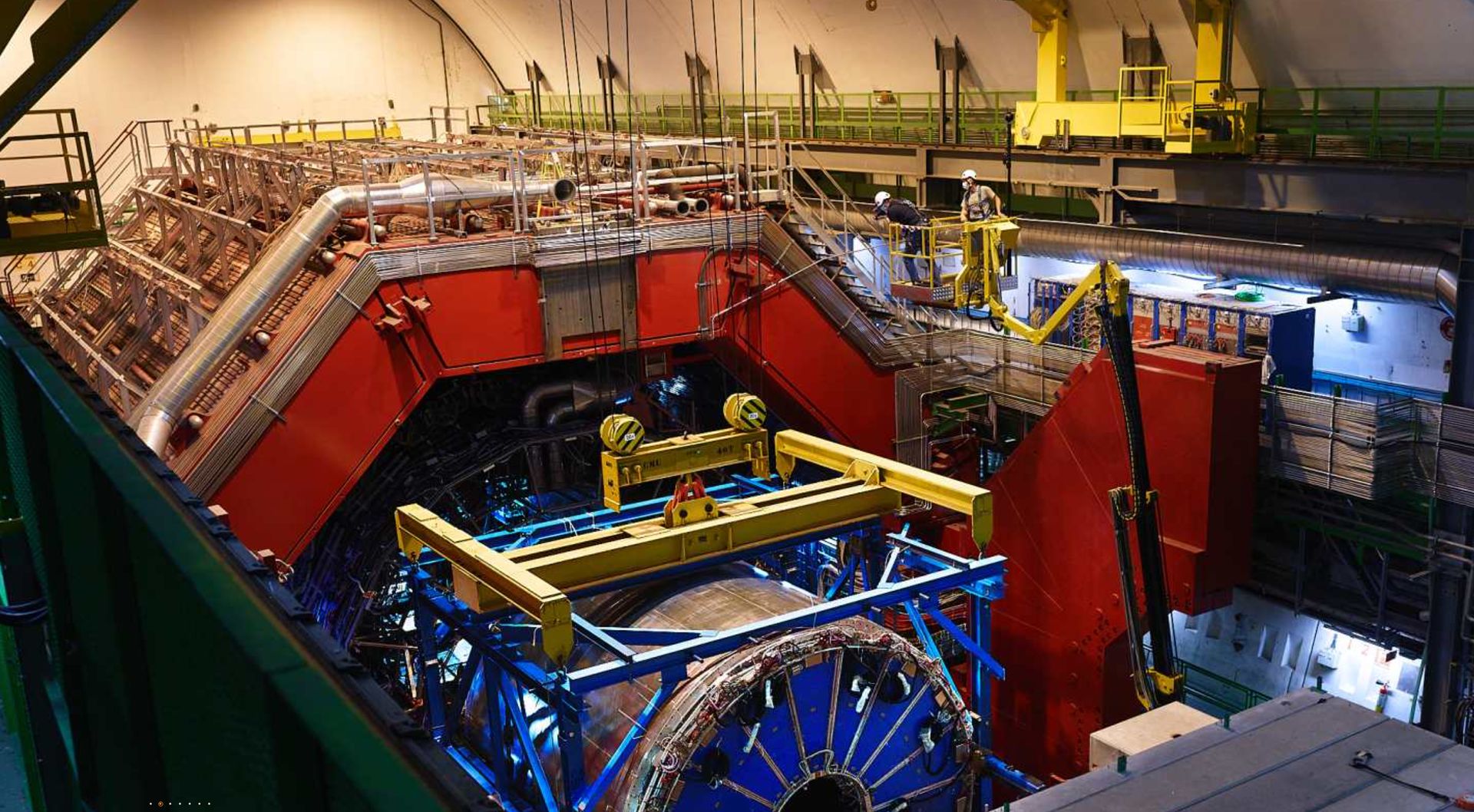
Scientists at CERN have successfully recreated a primordial state of matter known as quark-gluon plasma, challenging longstanding assumptions about how the universe evolved fractions of a second after the Big Bang. According to reporting by WP Tech, researchers operating the Large Hadron Collider observed properties in this ultra-dense fluid that upend previous theoretical models regarding early cosmic expansion and subatomic interactions.
Recreating the Primordial Universe at CERN
The experiments, conducted using the accelerator complex near Geneva, involved smashing lead ions together at nearly the speed of light to generate temperatures exceeding several trillion degrees Celsius. WP Tech noted that these extreme conditions briefly liquefy protons and neutrons, freeing quarks and gluons from their usual confinement inside atomic nuclei. This state mirrors the composition of the universe roughly microsecond after its inception, offering physicists a direct window into conditions that predate the formation of stable atoms.

Data gathered from these high-energy collisions reveal that the resulting plasma behaves more like a nearly perfect liquid than an expanding gas. WP Tech reported that this unexpected fluidity challenges established theoretical frameworks that previously assumed early cosmic matter would act as a weakly interacting gas of particles. The findings force a reassessment of the hydrodynamic properties governing the primordial soup, showing that strong nuclear forces operate with unexpected efficiency at microscopic scales.
Implications for Subatomic Physics
The overturned assumptions center on the viscosity and thermalization rates of quark-gluon plasma. According to the WP Tech coverage, previous models failed to predict how rapidly the generated matter achieves thermal equilibrium. By documenting these precise dynamics, the CERN collaboration provides a benchmark for theoretical physicists attempting to map the cooling and condensation phases that eventually led to baryonic matter.
The research program at the Large Hadron Collider continues as teams analyze secondary collision datasets to refine these fluid-dynamics models. Further experimental runs are scheduled to test whether similar plasma states occur in lower-energy collisions involving lighter atomic nuclei.