
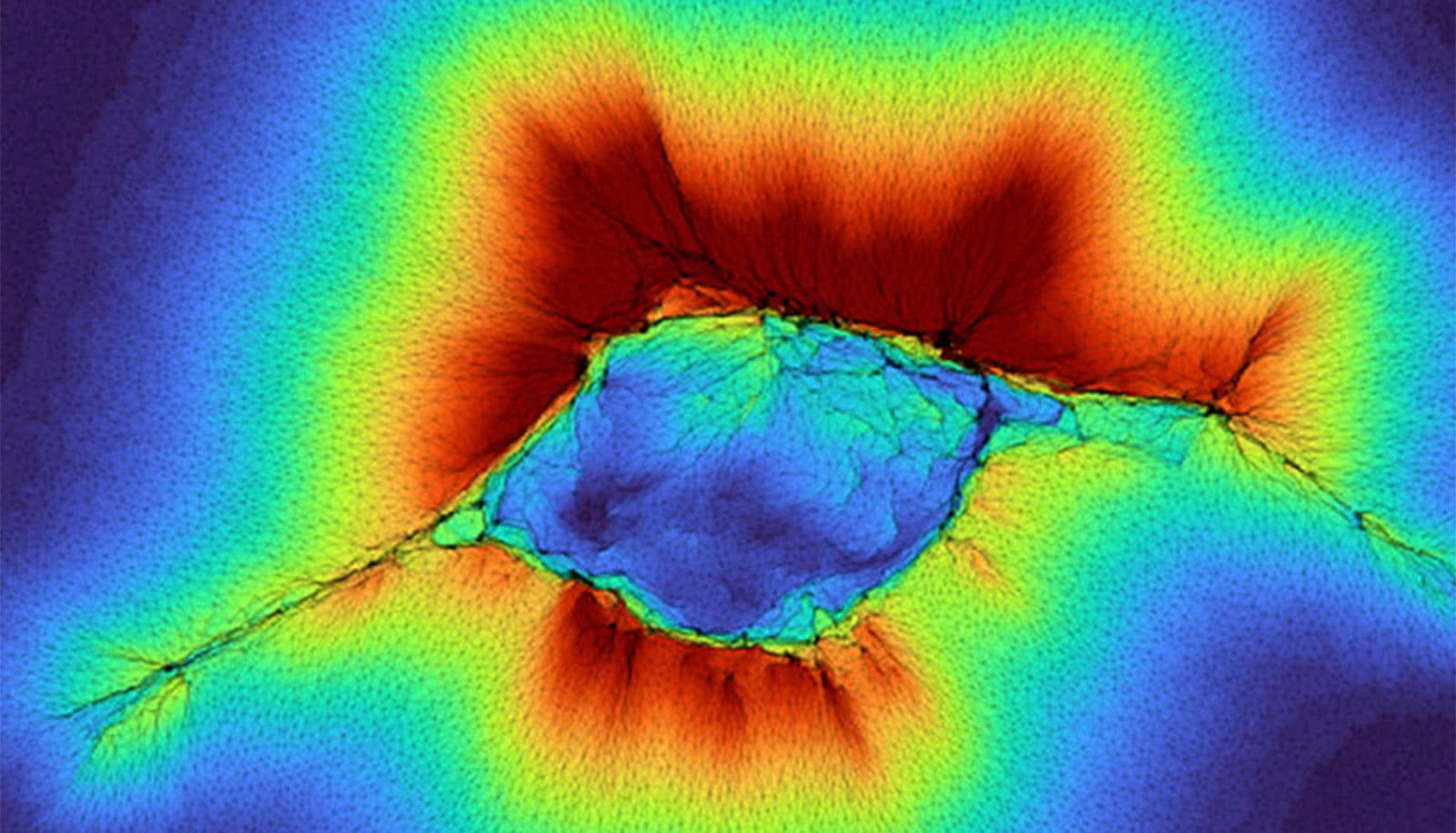
St.Louis, MO – Researchers at Washington university in St. Louis have discovered that groups of cells can extend their ability to sense their surroundings dramatically, potentially explaining how cancer cells navigate and spread. The findings, published in PNAS, reveal that collective epithelial cells can “feel” up to 100 microns beyond their immediate environment, a significant leap from the 10-micron range detected by individual, abnormal cells.
The phenomenon,termed “depth mechano-sensing,” involves cells deforming surrounding collagen fibers to probe the extracellular matrix (ECM) for stiffness,guiding their movement toward tumors,soft tissue,or bone. “Because it’s a collective of cells, they are generating higher forces,” explains Amit Pathak, a professor of mechanical engineering and materials science at the McKelvey School of Engineering.
The research, conducted with PhD student Hongsheng Yu, identifies two phases – cell clustering and migration – where this extended sensing occurs, influencing how cells disperse.This enhanced sensory capability allows cancer cells to evade detection and migrate more effectively, even in soft environments.
Researchers are now focused on identifying the regulators that control this extended sensing range, with the goal of developing potential cancer therapies that disrupt a cell’s ability to “feel” it’s way forward, thereby halting its spread.The research was funded by the National Institutes of Health (NIH) and National Science Foundation, Civil, Mechanical, and Manufacturing Innovation.
