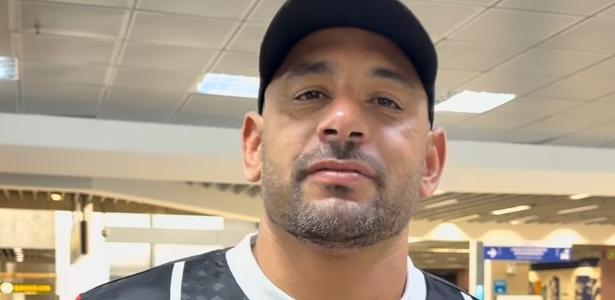
CBF Cancels Diego Souza’s Coaching Registration Over Falsified License
The Brazilian Football Confederation (CBF) has officially canceled the coaching registration of Diego Souza in the national player and coach database (BID) following the discovery that his professional license was falsified. The cancellation stems from an investigation into a fraudulent scheme involving the illicit sale of coaching credentials to former professional athletes.
Fraudulent Licensing Scheme Involving Alejandro Mancuso
The investigation centers on Alejandro Mancuso, a former Argentine midfielder who played for Flamengo and Palmeiras during the 1990s and later served as an assistant to Diego Maradona. According to reporting by UOL, Mancuso allegedly posed as an international director for the Association of Argentine Football Coaches (ATFA) to solicit payments from retired players. Participants were charged significant sums of money for credentials that purported to grant them coaching eligibility across various professional tiers, including in Europe. Born in Ciudadela in Greater Buenos Aires, Mancuso began his professional career at Ferro Carril Oeste. After stints at Vélez Sarsfield and Boca Juniors, he joined Palmeiras in 1995 to replace César Sampaio. The following season, he moved to Flamengo, winning the Campeonato Carioca and the defunct Copa de Ouro. He also played for Santa Cruz, Independiente, Badajoz, and Bella Vista. A member of the 1993 Copa América-winning squad and the 1994 World Cup team, he later served as Maradona’s assistant for Argentina between 2008 and 2010.
Diego Souza, who was serving as the coach for Joinville, stated in an interview with UOL that he obtained the documentation in 2023 while still an active player with Grêmio. He claimed that Mancuso assured him the process was a legitimate shortcut for high-profile athletes, circumventing traditional multi-year training requirements. “He said he had a license he could get for renowned athletes that would give them the right to work anywhere,” Souza told UOL. He further noted that the presence of other well-known South American football figures in a shared WhatsApp group with Mancuso influenced his decision to proceed with the transaction. In recorded audio, Mancuso claimed, “I closed with our president of the Argentine Federation, so that all these beasts, who played football, have a way not to do this online course.”

CBF Holds Clubs Responsible for Verifying Professional Credentials
The CBF has maintained that the responsibility for verifying the authenticity of professional credentials lies with the clubs hiring the staff. Under Article 13 of the CBF General Regulations for Registration, clubs must ensure all submitted documents are valid. While Joinville had registered Souza for the Copa Santa Catarina, the club has not provided specific details regarding their internal verification process for his credentials, as noted by UOL. The CBF confirmed that the department of records checked the documents and subsequently canceled Souza’s registration.
The Association of Argentine Football Coaches (ATFA) and the Argentine Football Association (AFA) have both denied any involvement with Mancuso or his operations. Reports from the newspaper Olé indicate that the fraudulent diplomas provided to some athletes were signed by an individual who had not been associated with the entity since 2020. This discrepancy suggests that basic due diligence could have exposed the invalidity of the papers.
Legal and Professional Consequences for Participants
The fallout from the investigation extends beyond Diego Souza. Numerous other high-profile figures are alleged to have purchased these non-valid documents. The legal implications for these individuals remain fluid, as authorities must determine the level of knowledge and participation each person had regarding the falsification. Souza, who expressed shock at the discovery, stated, “I never imagined this. Whatever needs to be done to reverse this, I will do. I want it to be resolved so I can work. Let the person pay for everything she did.”
Under the Brazilian Code of Sporting Justice (CBJD), specifically Article 234, the use of false documentation before a sporting entity can result in suspensions ranging from 180 to 720 days, alongside financial penalties between R$ 100 and R$ 100,000. However, legal experts emphasize that automatic punishment is not guaranteed; a formal inquiry must be conducted to establish whether the individuals were knowing participants or victims of a fraud.

For clubs like Joinville, the administrative consequences could involve investigations into their failure to comply with league registration regulations. Article 191 of the CBJD provides for fines of R$ 100 to R$ 100,000 for failing to comply with regulations or determinations from sports entities.
The situation highlights the necessity for clubs and professional organizations to implement more rigorous background checks and credential verification protocols. The ongoing investigation into Mancuso continues as authorities examine the full scope of the forged credential network, with potential charges for embezzlement and document forgery pending.
