
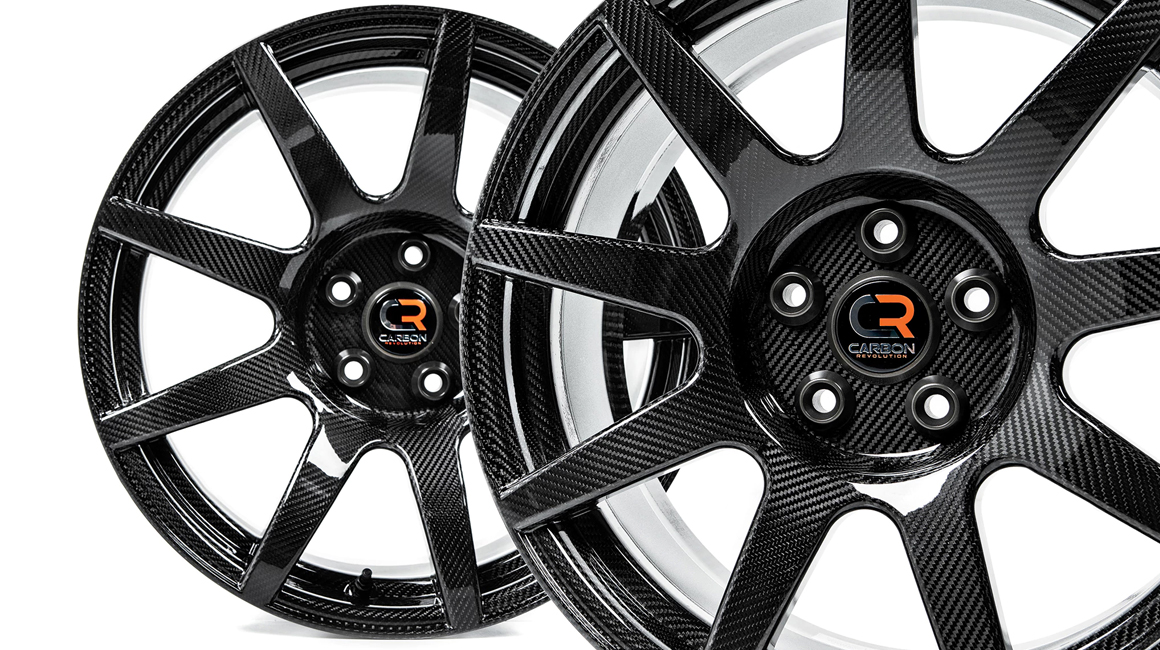
Carbon Revolution Geelong Enters Voluntary Administration for Strategic Restructuring
Carbon Revolution plc has initiated Voluntary Administration for its Australian subsidiaries to deleverage its balance sheet, effectively separating its operational assets from its public parent entity. This strategic restructuring aims to卸下 legacy debt obligations, allowing the Australian business to re-emerge as a private, nimble leader in carbon fiber wheel technology by Q2 2026, while the publicly traded parent company faces liquidation.
The decision to place Carbon Revolution Pty. Ltd. And Carbon Revolution Operations Pty Ltd into Voluntary Administration is not a surrender; it is a surgical financial maneuver. For mid-cap manufacturers grappling with high-interest environments and capital-intensive R&D cycles, the path to solvency often requires drastic capital structure surgery. This move highlights a critical fiscal problem: the misalignment between public market expectations for quarterly growth and the long-term capital requirements of advanced manufacturing. Solving this requires more than just operational tweaks; it demands the expertise of specialized corporate restructuring and insolvency firms capable of navigating cross-border legal frameworks between Ireland, Australia, and the US.
The Mechanics of the Australian Exit
Under Australian law, Voluntary Administration offers a breathing space for companies to negotiate with creditors, distinct from the Chapter 11 process familiar to Wall Street. By entering this phase, Carbon Revolution has secured a Restructuring Support Agreement (RSA) with substantially all senior secured lenders. This agreement is the linchpin of the strategy, ensuring that upon exit, the Australian entity will be unburdened of senior secured debt. The result is a cleaner balance sheet, but it comes at the cost of the parent company’s equity. Carbon Revolution plc, listed on the OTC Expert Market (CREVF), will cease to have any continuing equity interest in the Australian subsidiaries.
This separation creates a bifurcated reality for stakeholders. Operational continuity is preserved—production schedules and deliveries remain intact—but the equity value of the public shell is effectively wiped out to satisfy creditor claims. This is a classic “good asset, bad balance sheet” scenario. As the company transitions toward a privately-held structure, the focus shifts from public disclosure compliance to operational efficiency. This pivot often necessitates engaging international corporate law firms to manage the complex winding down of the Irish public entity while simultaneously restructuring the Australian operating company.
Strategic Realignment: The Four Pillar Framework
Emerging from administration in Q2 2026, the restructured business plans to execute a “Four Pillar Framework.” This isn’t just marketing fluff; it is a roadmap for margin expansion in a sector where lightweighting is no longer optional but regulatory imperative. The framework emphasizes “Right Geography,” signaling a move to manufacture closer to customers. This near-shoring strategy addresses the supply chain bottlenecks that plagued the automotive sector in the early 2020s.
According to data from the SEC EDGAR database, Carbon Revolution’s previous filings highlighted the heavy capital expenditure required to scale production. By reducing the supply chain length, the restructured entity aims to improve working capital cycles. Though, executing this geographic shift requires robust logistics planning. Companies undergoing similar supply chain reorganizations often consult with global supply chain and logistics providers to optimize freight costs and reduce lead times, ensuring that “speed of delivery” matches the promise of the new strategy.
“The market’s appreciation for the value that carbon fiber wheels deliver continues to grow. The restructured business will be well set up to be a prime beneficiary of this trend at just the right time.” — Bob Lutz, Chairman of Carbon Revolution plc.
Lutz’s comment underscores the timing of the restructuring. The global automotive industry is aggressively pursuing weight reduction to meet stringent emissions standards, particularly as the transition to EVs accelerates. Every kilogram saved extends range. Yet, the adoption of carbon fiber wheels has been hindered by cost. By deleveraging, the new private entity can price its products more competitively, attacking the total cost of ownership rather than just the unit price.
Market Implications and Investor Outlook
For the broader market, Carbon Revolution’s move signals a maturation of the advanced materials sector. Early-stage growth companies in deep tech often burn through public capital before achieving scale. The shift from public to private allows management to focus on long-term industrialization without the quarterly earnings pressure. However, this leaves public shareholders with little recourse as the parent company liquidates.
Industry analysts note that while the technology is proven—Carbon Revolution is a Tier 1 OEM supplier—the financial engineering required to sustain it is equally critical. “We are seeing a trend where deep-tech hardware companies are opting for private equity-style restructurings to survive the ‘valley of death’ between prototype and mass production,” noted a Senior Automotive Analyst at a leading investment bank, speaking on condition of anonymity regarding the sector’s capital intensity. “The technology works; the public market funding model often doesn’t.”
The roadmap ahead involves strict adherence to the RSA and the approval of Administrators. If successful, the Australian business will emerge with a “de-leveraged balance sheet,” a term that implies significant equity value transfer from old shareholders to creditors. This is a harsh but necessary reset. As the company prepares to “win with winners,” the focus will be on customer satisfaction and technological depth.
The Path Forward
The liquidation of Carbon Revolution plc marks the complete of a public chapter, but the operational story is entering a new volume. The “Right Technology” and “Right Products” pillars rely on continued innovation in carbon fiber manufacturing processes. As the company targets a Q2 2026 re-emergence, the market will be watching for signs of new customer acquisitions and improved gross margins.
For B2B service providers, this restructuring offers a case study in navigating corporate distress. It highlights the need for agile legal and financial partnerships that can execute complex cross-border transactions under time pressure. As the automotive supply chain continues to consolidate, the ability to restructure efficiently will be as valuable as the technology itself. The World Today News Directory remains the premier resource for identifying the financial advisory and legal partners capable of steering companies through such transformative periods.