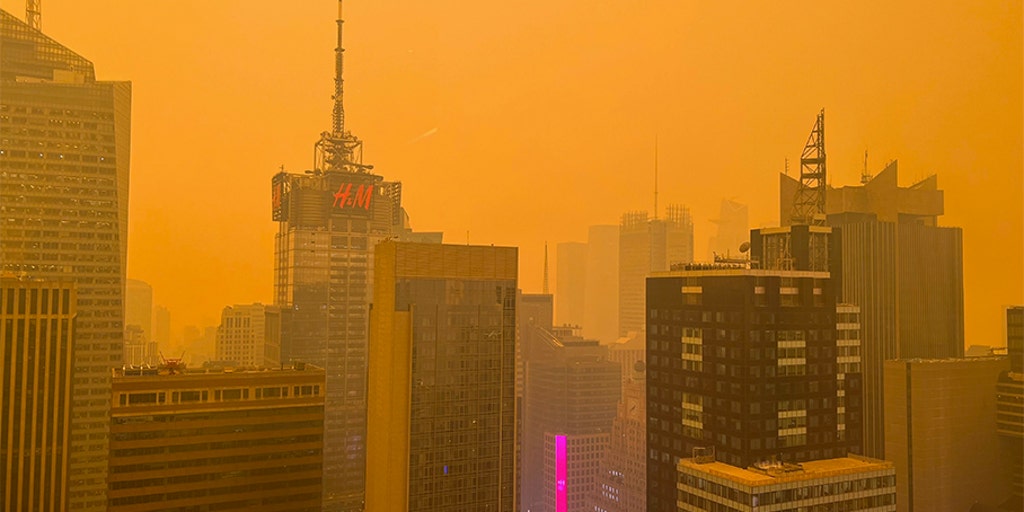
Canadian Wildfire Smoke to Bring Poor Air Quality to Millions in US
Thick plumes of wildfire smoke originating from Western Canada are drifting into the United States, triggering widespread air quality alerts for millions of residents across the Midwest and Great Lakes regions. According to the National Weather Service, the smoke is expected to linger as shifting wind patterns push particulate matter across the border, creating hazardous atmospheric conditions that pose significant risks to public health and outdoor infrastructure.
The Atmospheric Mechanics of Transboundary Smoke
The current influx of smoke is not an isolated event but a continuation of a volatile wildfire season in British Columbia and Alberta. Meteorologists track these plumes using satellite data from the National Oceanic and Atmospheric Administration (NOAA), which monitors the dispersion of fine particulate matter, known as PM2.5. These particles are small enough to bypass the body’s natural defenses, entering the bloodstream and causing respiratory distress.
Unlike standard urban smog, wildfire smoke contains a complex cocktail of chemicals released by burning forests and peatlands. As this haze settles over densely populated metropolitan areas, it creates a persistent, low-visibility environment. For municipalities, this necessitates the activation of emergency response protocols that are rarely utilized outside of peak fire months. When air quality index (AQI) levels reach the “unhealthy” or “hazardous” thresholds, local governments are often forced to trigger mandatory school closures and halt municipal maintenance projects.
The economic impact of such events is rarely limited to health costs alone. Businesses that rely on outdoor operations—ranging from construction sites to logistics hubs—face significant productivity losses. In these environments, establishing contact with professional environmental remediation and air quality consultants becomes a necessity rather than an elective measure for facility managers attempting to maintain safe, code-compliant air circulation within large-scale industrial and commercial properties.
Infrastructure Vulnerability and Public Health Strain
The primary concern for public health officials is the cumulative impact of these smoke events. While a single day of poor air quality may be manageable for healthy adults, prolonged exposure correlates with increased hospital admissions for asthma, chronic obstructive pulmonary disease (COPD), and cardiovascular issues.
Local health departments are currently advising residents to utilize high-efficiency particulate air (HEPA) filtration systems. However, the surge in demand for these units often outstrips local supply chains. For commercial property owners, the mandate is clear: ensure HVAC systems are upgraded to meet MERV-13 or higher filtration standards. Organizations failing to address these environmental standards may find themselves in the crosshairs of local labor boards or liability litigation if employees are forced to work in hazardous, unmitigated air conditions.
“The frequency of these transboundary events is forcing a rethink of how we manage regional air quality. It is no longer a seasonal concern; it is a structural challenge for urban planning and public health infrastructure,” stated a senior official involved in regional emergency management planning.
Managing the Legal and Operational Fallout
Navigating the regulatory requirements during an air quality crisis is a logistical minefield for businesses. Developers and facility managers are increasingly consulting commercial real estate and environmental law firms to shield their assets and ensure compliance with emerging municipal safety ordinances. As cities implement stricter “Right to Breathe” policies, the burden of proof for maintaining safe indoor environments rests squarely on the employer.
This reality extends to the construction sector, where site managers must strictly adhere to OSHA guidelines regarding outdoor work during hazardous air quality events. Failure to do so can lead to substantial fines and project delays. Engaging with vetted emergency restoration and industrial hygiene contractors is now the critical first step for companies looking to maintain business continuity while mitigating potential health liabilities.
A Long-Term Trend in North American Air Quality
Climate modeling suggests that the conditions fueling these fires—extended droughts and higher average temperatures—will likely persist. This means the US will continue to face “smoke season” risks that defy traditional seasonal boundaries. The historical data provided by the Environmental Protection Agency indicates that while overall air quality in the US has improved over the last few decades, the uptick in wildfire-related pollution is effectively reversing those gains in specific geographic corridors.
The challenge for the coming decade is not just adaptation, but the systemic integration of disaster resilience into the fabric of urban and corporate life. As the haze settles over the horizon, the focus for business leaders and municipal officials must remain on proactive mitigation. The cost of inaction is increasingly measured not just in health outcomes, but in the growing complexity of the legal and operational environments that govern our cities.
As smoke events become a recurring feature of the regional landscape, the necessity for robust, professional-grade mitigation services grows. Whether through specialized legal counsel or technical environmental engineering, securing the right support structure is the only way to navigate the uncertainty of a shifting climate.