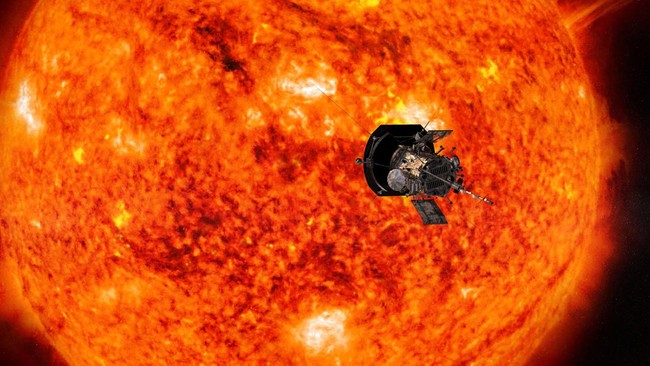
Can Solar Storms Trigger Earthquakes? Scientists Weigh In on the Debate
The intersection of heliophysics and terrestrial seismology has long been viewed with skepticism, yet a provocative new theoretical model is challenging the boundary between space weather and planetary stability. By examining the electrical coupling between the upper atmosphere and the Earth’s crust, researchers are exploring whether solar activity can act as a catalyst for seismic rupture.
Key Clinical Takeaways:
- Researchers at Kyoto University propose that solar flares may trigger earthquakes by altering electrical forces within the ionosphere, which then penetrate the Earth’s crust.
- The mechanism relies on “supercritical fluids” within fault zones acting as capacitors, making critically stressed faults susceptible to additional electrostatic pressure.
- This research is theoretical and does not provide a method for earthquake prediction; established scientific consensus continues to maintain that seismic events are primarily driven by internal geological processes.
The traditional understanding of seismology posits that earthquakes are the result of tectonic stress accumulation and release, a process entirely independent of external atmospheric or solar influence. However, the study published February 3 in the International Journal of Plasma Environmental Science and Technology introduces a conceptual shift. It suggests that the Earth and its ionosphere—a layer of electrically charged gas roughly 250 miles above the surface—function as two ends of a massive, leaky battery.
The Mechanism of Electrostatic Induction and Supercritical Fluids
At the core of this theory is the behavior of fluids trapped within the Earth’s crust. In highly stressed fracture zones, water can reach temperatures and pressures so extreme that it enters a supercritical state, neither fully liquid nor gas. These supercritical fluids are rich in charged ions, effectively transforming deep crustal cracks into capacitors capable of storing electrical energy.

When a solar flare erupts, it disturbs the ionosphere, rearranging charged particles and generating electric fields. The Kyoto University model suggests these fluctuations can induce electrostatic forces that penetrate deep into the crust. If a fault is already at a critical threshold of mechanical stress, this additional electrical nudge may be sufficient to trigger a rupture.

“The integration of space weather data into terrestrial risk models represents a frontier in preventative safety. While the causal link remains theoretical, the potential for electrostatic triggers to influence critically stressed geological zones necessitates a multidisciplinary approach to disaster preparedness.”
From a public health perspective, the potential for “triggered” events highlights a critical gap in infrastructure resilience. When seismic events occur, the immediate medical burden falls upon acute care systems. For healthcare facilities located in high-risk zones, ensuring that structural integrity meets current seismic codes is a regulatory necessity. Facilities often engage healthcare compliance attorneys to navigate the complex overlap of building safety mandates and medical operational continuity.
Scientific Skepticism and the Consensus Gap
Despite the elegance of the “planetary battery” model, the scientific community remains cautious. Critics argue that the model is overly simplified and fails to account for the immense dampening effect of the Earth’s various geological layers. The notion that an electrical charge from the ionosphere could maintain enough potency to influence a fault miles underground is viewed by many as improbable.
This tension is mirrored in the official stance of organizations like the U.S. Geological Survey (USGS), which maintains that no causal relationship between space weather and earthquakes has ever been demonstrated. The USGS points to the Sun’s 11-year solar cycle, noting that while solar flares wax and wane with predictable periodicity, earthquake frequency shows no such correlation.
The medical implications of this debate are not found in the “prediction” of quakes—which remains currently impossible—but in the management of the aftermath. The morbidity associated with large-scale seismic events is often compounded by a lack of immediate surgical intervention. In the wake of such disasters, the demand for board-certified trauma surgeons spikes instantaneously, often overwhelming local triage capacities.
Addressing the Psychological Sequelae of Seismic Anxiety
The dissemination of theories linking solar flares to earthquakes can inadvertently trigger widespread anxiety, particularly in populations already traumatized by previous seismic events. The “prediction” of a disaster, even when framed as a theoretical possibility, can lead to heightened states of hypervigilance and acute stress responses.
This psychological burden is a significant public health concern. The transition from acute stress to chronic post-traumatic stress disorder (PTSD) is a well-documented pathway following natural disasters. To mitigate this, it is essential for affected individuals to seek support from clinical psychologists specializing in trauma-informed care to process the uncertainty associated with environmental risks.
The Kyoto University research does not claim direct causation for every earthquake, but rather suggests a subtle interaction that may influence how fractures develop in already weakened areas. This distinction is vital to avoid sensationalism and “quackery” in the realm of disaster forecasting.
The Future of Integrated Terrestrial-Solar Monitoring
As we move toward a more integrated understanding of planetary systems, the synergy between heliophysics and geophysics may yield insights into the “triggering” mechanisms of the Earth’s crust. While the International Journal of Plasma Environmental Science and Technology paper provides a theoretical framework, empirical validation will require longitudinal data correlating specific ionospheric disturbances with micro-seismic activity.

The path forward involves rigorous, peer-reviewed observation and the rejection of simplistic correlations. For the medical community, the priority remains the optimization of emergency response frameworks and the hardening of healthcare infrastructure. Whether a quake is triggered by a solar flare or a tectonic shift, the clinical requirement for rapid-response trauma care and psychological support remains constant.
As these theories evolve, the most prudent course of action for healthcare administrators and public health officials is to maintain a state of readiness through vetted professional networks. Ensuring access to specialized emergency care and regulatory guidance is the only reliable safeguard against the unpredictability of the natural world.
Disclaimer: The information provided in this article is for educational and scientific communication purposes only and does not constitute medical advice. Always consult with a qualified healthcare provider regarding any medical condition, diagnosis, or treatment plan.