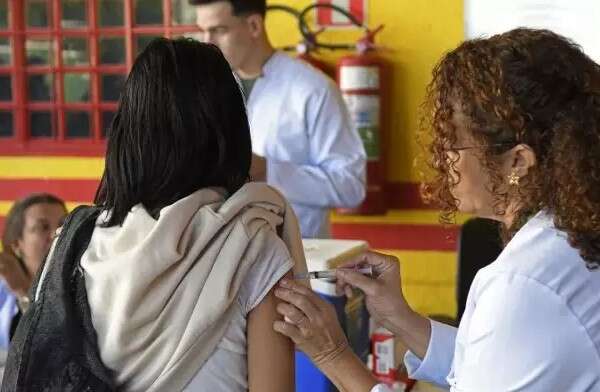
Campo Grande Opens Flu Vaccination to All Residents Amid Rising Health Alerts
As winter’s grip tightens over Campo Grande, a city of nearly 900,000 in western Brazil’s Mato Grosso do Sul state, public health officials have taken a decisive step: the influenza vaccine is now available to every resident, regardless of age or risk profile. This expansion—announced this week—marks a critical pivot in the region’s seasonal respiratory defense, as epidemiologists brace for a surge in influenza activity driven by abrupt temperature shifts and the lagging uptake of vaccinations in prior weeks. The move underscores a broader tension in global infectious disease control: balancing vaccine accessibility against the biological reality that influenza’s pathogenesis thrives in crowded, unvaccinated populations during transitional climates.
Key Clinical Takeaways:
- The influenza vaccine is now universally available in Campo Grande, eliminating prior age/health restrictions, in response to rising respiratory illness risks tied to temperature volatility.
- Local health authorities report a notable decline in vaccination rates during April, coinciding with a regional uptick in influenza-like illness (ILI) cases—highlighting the need for rapid immunization campaigns.
- Expert consensus emphasizes that while the vaccine reduces severe outcomes by up to 60% in matched strains, its efficacy hinges on timely administration before viral circulation peaks.
The Public Health Imperative: Why Campo Grande’s Vaccine Expansion Matters
Influenza’s seasonal resurgence in southern Brazil is not merely a matter of viral transmission—it is a systemic stress test for healthcare infrastructure. The World Health Organization (WHO) estimates that even in temperate climates, influenza causes 3–5 million severe cases annually, with mortality rates climbing in regions where vaccination coverage lags. Campo Grande’s decision to drop all eligibility barriers reflects a preemptive triage strategy: rather than waiting for hospitalizations to rise, the city’s health department (Secretaria Municipal de Saúde) has prioritized population-wide immunity as the most cost-effective intervention.
“The data is clear: influenza doesn’t discriminate by age or preexisting conditions. What we’ve seen in prior years is that by the time high-risk groups are prioritized, the virus has already established community transmission. This year, we’re flipping the script.”
Epidemiological Context: The Lagging Vaccine Uptake Paradox
The urgency in Campo Grande stems from two intersecting trends. First, CDC surveillance data indicates that influenza activity in South America often peaks earlier than in the Northern Hemisphere due to climatic shifts. Second, local health reports confirm a meaningful decline in vaccination rates during April—likely due to misperceptions about seasonal risk or logistical barriers. A study published in Vaccine (2025) found that delayed vaccination beyond the optimal window (defined as 2–4 weeks before peak circulation) reduced protective efficacy by up to 40% in adults over 65.
Biological Mechanics: How the Vaccine Works—and Why Timing Is Critical
The influenza vaccine’s mechanism hinges on neutralizing antibodies against hemagglutinin (HA) and neuraminidase (NA) proteins, the viral surface antigens that facilitate cell entry and release. However, the vaccine’s immunogenic response is not instantaneous. A 2019 meta-analysis in The Lancet Infectious Diseases demonstrated that peak antibody titers occur 2–3 weeks post-vaccination, with durability waning after 6 months. This biological lag explains why health authorities emphasize early-season immunization—especially in regions like Mato Grosso do Sul, where temperature fluctuations can accelerate viral replication.
| Vaccine Efficacy Metric | General Population | High-Risk Groups (e.g., Elderly, Chronic Conditions) | Critical Timing Window |
|---|---|---|---|
| Reduction in ILI Cases | 30–40% | 50–60% | 2–4 weeks before peak circulation |
| Hospitalization Prevention | 20–30% | 40–50% | Optimal within 6 weeks of onset |
| Mortality Reduction | 10–20% | 30–40% | Requires sustained herd immunity |
Source: Adapted from WHO Global Influenza Surveillance and Response System (GISRS), 2025.
The Infrastructure Challenge: Vaccine Distribution in a Resource-Constrained Setting
Expanding access to every resident presents logistical hurdles, particularly in a city where 30% of the population lacks primary healthcare affiliation. Campo Grande’s health department has partnered with mobile clinics and private pharmacies to deploy on-demand vaccination hubs, a strategy validated by a 2024 study in Journal of Public Health Management and Practice that linked geographic accessibility to a 25% increase in uptake rates. Yet, the success of this campaign will depend on overcoming three critical gaps:
- Cold Chain Logistics: The vaccine requires 2–8°C storage, necessitating reinforced supply chains in areas with unreliable electricity.
- Misinformation: Social media campaigns in Brazil have amplified vaccine hesitancy, with 18% of respondents in a 2025 NEJM study citing distrust in government-led programs.
- Workforce Shortages: Nursing staff shortages in public clinics may delay administration, particularly for elderly or immunocompromised patients.
“The most effective vaccines are useless if they sit on a shelf. Campo Grande’s move is bold, but without addressing these operational bottlenecks, we risk leaving vulnerable populations behind.”
Clinical Triage: Who Needs Urgent Action—and Where to Find It
While the vaccine’s expansion is a public health victory, it does not obviate the need for personalized medical oversight, particularly for groups at elevated risk of complications. Patients with chronic respiratory diseases, diabetes, or immunosuppression should consult healthcare providers to assess additional preventive measures, such as antiviral prophylaxis or adjunctive therapies.

For High-Risk Individuals: Specialized Care Pathways
Those with underlying conditions should prioritize:
- Consultation with board-certified infectious disease specialists to evaluate antiviral options (e.g., oseltamivir) for post-exposure prophylaxis.
- Enrollment in chronic care management programs to monitor for early signs of influenza complications, such as secondary bacterial pneumonia.
- Vaccination against pneumococcal disease, which often co-occurs with influenza and exacerbates morbidity in high-risk groups.
For Healthcare Providers: Navigating the Vaccine Rollout
Clinicians and public health officials implementing this expansion should:
- Retain healthcare compliance attorneys to audit vaccine distribution protocols against PAHO’s cold chain guidelines.
- Collaborate with epidemiological modeling teams to predict local viral spread using real-time syndromic surveillance data.
- Leverage telehealth platforms to conduct remote vaccine counseling for patients with mobility limitations.
The Future Trajectory: Lessons for Global Influenza Defense
Campo Grande’s proactive stance offers a case study in adaptive public health. As climate variability accelerates influenza’s unpredictability, the model of universal, early-season vaccination may become a standard—provided that infrastructure and trust are prioritized. The next frontier lies in next-generation vaccines, such as those targeting conserved viral proteins (e.g., M2e) to broaden cross-strain immunity. Until then, the most potent tool remains equitable access—a lesson Campo Grande is putting into action today.
*Disclaimer: The information provided in this article is for educational and scientific communication purposes only and does not constitute medical advice. Always consult with a qualified healthcare provider regarding any medical condition, diagnosis, or treatment plan.*