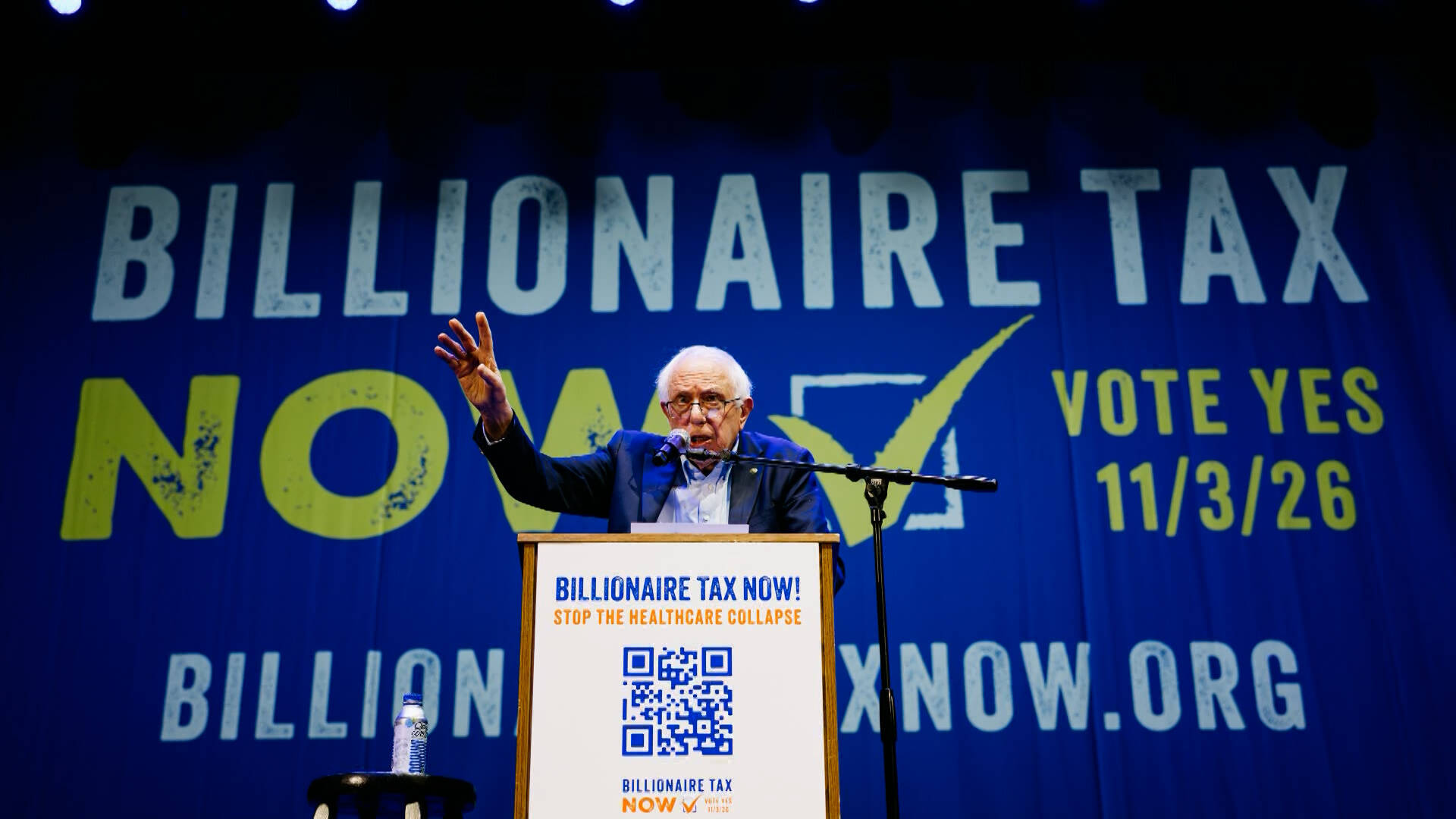
California voters to decide Prop 40 wealth tax
California voters will decide in November whether to approve Proposition 40, a ballot initiative that would impose a one-time 5% wealth tax on the state’s roughly 230 billionaires to fund public healthcare services and offset federal cuts. As democracynow.org reported, the measure has ignited an intense political battle across the state, drawing massive financial opposition from wealthy tech executives while exposing sharp divisions among leading Democrats.
If passed, the measure targets individuals and couples whose net worth exceeds $1 billion as of December 31, 2026. Supporters estimate the tax could raise up to $100 billion, with roughly 90% dedicated to public health care services and the remaining 10% allocated toward education and food assistance. Proponents argue the revenue is urgently needed to backfill sweeping federal healthcare cuts and protect roughly 3 million working-class Californians from losing coverage under Medi-Cal.
Billionaire Resistance and Countermeasures on the Ballot
The ballot initiative has drawn fierce financial pushback from some of the nation’s wealthiest individuals. Google co-founder Sergey Brin has poured over $100 million into opposing Prop 40, according to democracynow.org. Other tech leaders contributing millions to defeat the measure include former Google CEO Eric Schmidt, Palantir co-founder Peter Thiel, venture capitalist John Doerr, and Tony Xu of DoorDash.
Opponents also successfully qualified competing measures for the ballot. Proposition 41 would nullify any new state taxes enacted after January 1, 2026, that do not count toward California’s spending cap. Meanwhile, Proposition 42 seeks to ban new state taxes on personal property such as stocks and artwork, effectively aiming to block future wealth taxes.
Political Divisions Within the Democratic Party
Proposition 40 has fractured Democratic leadership in California. The California Democratic Party endorsed the ballot measure, aligning with figures like Senator Bernie Sanders and Representative Ro Khanna. Khanna argued that Governor Gavin Newsom’s opposition stems from alignment with wealthy donors, stating that Newsom is literally siding with Sergey Brin, Peter Thiel and Elon Musk, because they don’t want to be taxed
as broadcast by democracynow.org.
Conversely, Governor Gavin Newsom and gubernatorial candidate Xavier Becerra oppose Prop 40. Newsom argued that while billionaires should pay more, a state-level wealth tax puts California at a competitive disadvantage because capital moves easily. The nonpartisan Legislative Analyst’s Office noted that while the tax would provide a temporary revenue boost, it could eventually reduce future state revenues by around $1 billion annually if wealthy residents relocate, alongside costing tens of millions of dollars each year to administer.
Revenue Helps Prevent Rural Hospital Closures
Labor leaders and healthcare advocates emphasize that the revenue is critical for keeping struggling medical facilities open. Lorena Gonzalez, president of the California Federation of Labor Unions, stated that 89 hospitals are already at risk of closing services, with rural facilities shutting down maternity wards and emergency rooms. Over 50% of children in the state and 67% of children of color are born under the Medi-Cal system, making secure healthcare funding an urgent priority for working families managing insurance and medical billing complexities.
With the November election fast approaching, voters remain divided on whether a one-time wealth tax offers a viable safety net or a long-term economic risk for the state.