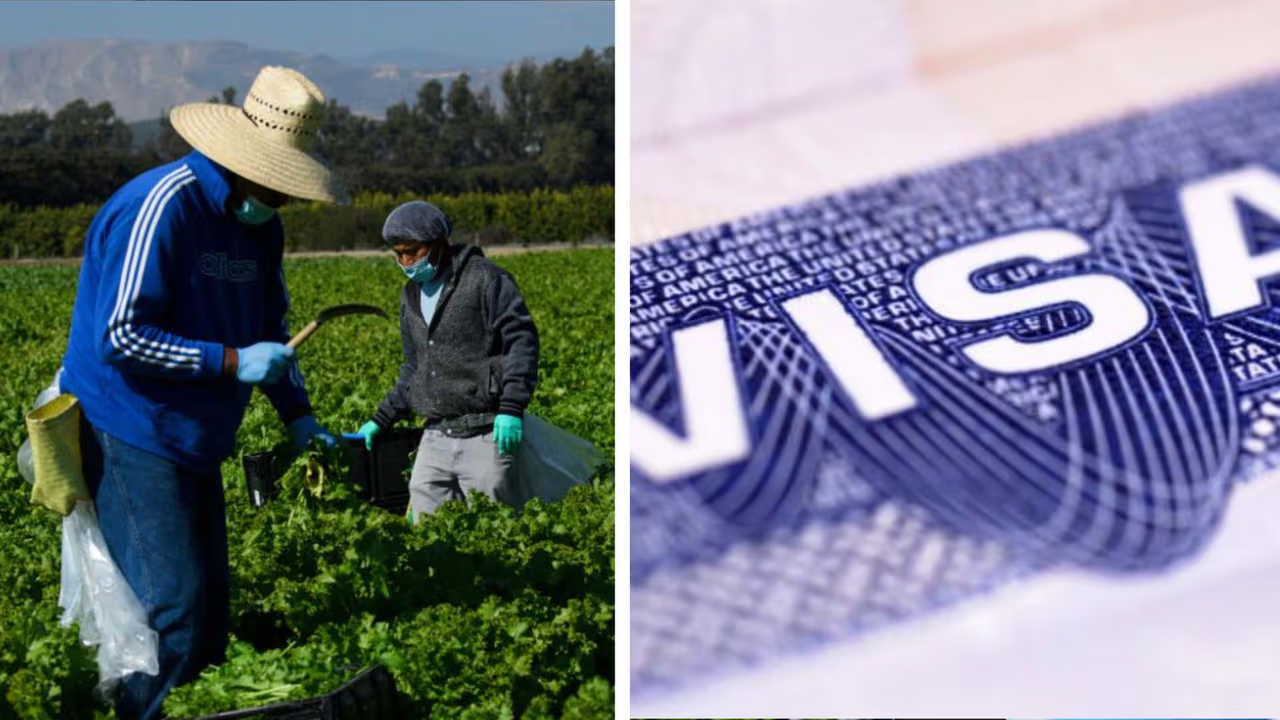
California and Arizona Immigration: Requirements and Step-by-Step Process
Residents of San Luis Río Colorado seeking H-2A or H-2B temporary work visas must navigate a federal process managed by U.S. Citizenship and Immigration Services (USCIS) and the Department of State. The procedure requires a verified job offer from a U.S. employer, an approved labor certification from the Department of Labor, and a successful interview at a U.S. Consulate or Embassy.
The Regulatory Framework for H-2 Visas
The H-2 visa program is divided into two primary categories: H-2A for seasonal agricultural work and H-2B for non-agricultural seasonal work. According to USCIS guidelines, the process is employer-driven, meaning the petitioner must initiate the filing by obtaining a temporary labor certification from the U.S. Department of Labor.

For applicants in San Luis Río Colorado, the proximity to the Arizona border creates a high demand for these visas, particularly in the agricultural sector. However, the legal burden remains on the employer to prove that no qualified U.S. workers are available for the position. Once the labor certification is granted, the employer files Form I-129, Petition for a Nonimmigrant Worker.
Steps to Secure Legal Authorization
- Employer Petition: The U.S. employer must secure a temporary labor certification from the Department of Labor.
- USCIS Filing: The employer submits Form I-129 to USCIS.
- Consular Interview: Once the petition is approved, the applicant applies for the visa at a U.S. consulate, usually in Nogales or Ciudad Juárez, depending on specific scheduling requirements.
- Biometrics and Screening: Applicants undergo rigorous background checks and biometric data collection.
The Role of Professional Representation
Navigating the complexities of U.S. immigration law often requires professional oversight to avoid common pitfalls, such as incomplete applications or failure to meet strict filing deadlines. Many applicants utilize the services of specialized immigration law firms to ensure that their documentation complies with the most recent federal updates.
“The H-2 program is not a lottery, but a rigorous compliance exercise. Employers must demonstrate they have exhausted local labor markets. For the worker, the primary risk is misrepresentation or falling victim to fraudulent recruitment agencies that promise visas in exchange for illegal fees,” says Elena Rodriguez, a consultant specializing in cross-border labor mobility.
Those who encounter difficulties during the application process often find it necessary to consult with accredited civic advocacy groups that monitor labor rights and provide guidance on avoiding recruitment fraud in border regions.
Comparative Analysis of Visa Requirements
Understanding the distinction between H-2A and H-2B is essential for applicants, as the documentation requirements differ significantly based on the industry.

| Feature | H-2A (Agricultural) | H-2B (Non-Agricultural) |
|---|---|---|
| Labor Certification | Dept. of Labor (ETA) | Dept. of Labor (ETA) |
| Nature of Work | Seasonal/Temporary Agriculture | Seasonal/Temporary Non-Ag |
| Housing Requirement | Employer must provide free housing | No housing requirement |
Managing Risks and Avoiding Fraud
The U.S. Department of State frequently warns against “visa consultants” or unauthorized agents who claim to have special access to the U.S. consulate. Official information regarding visa status is available exclusively through the U.S. Department of State’s official visa portal. Applicants are encouraged to verify that their prospective employer is a legitimate business entity before providing personal or financial information.
Failure to comply with visa terms can lead to permanent inadmissibility to the United States. For individuals facing complex legal hurdles or potential denials, engaging qualified immigration counsel is often the most effective way to secure a favorable outcome.
Economic Impact on the Border Region
The movement of labor between San Luis Río Colorado and the U.S. is a cornerstone of the regional economy. As of June 20, 2026, the demand for seasonal labor remains high, yet the administrative barriers continue to be a point of friction. Local infrastructure, including transportation and temporary housing facilities, often struggles to keep pace with the seasonal influx of workers preparing for their departure.
Effective management of these labor flows requires a combination of legal diligence and access to verified information. As enforcement protocols evolve, the necessity for transparent, expert-led guidance becomes even more pronounced. Whether seeking to secure a new contract or appealing a rejected petition, the path to legal work authorization is paved by those who prioritize compliance and seek assistance from vetted professionals.