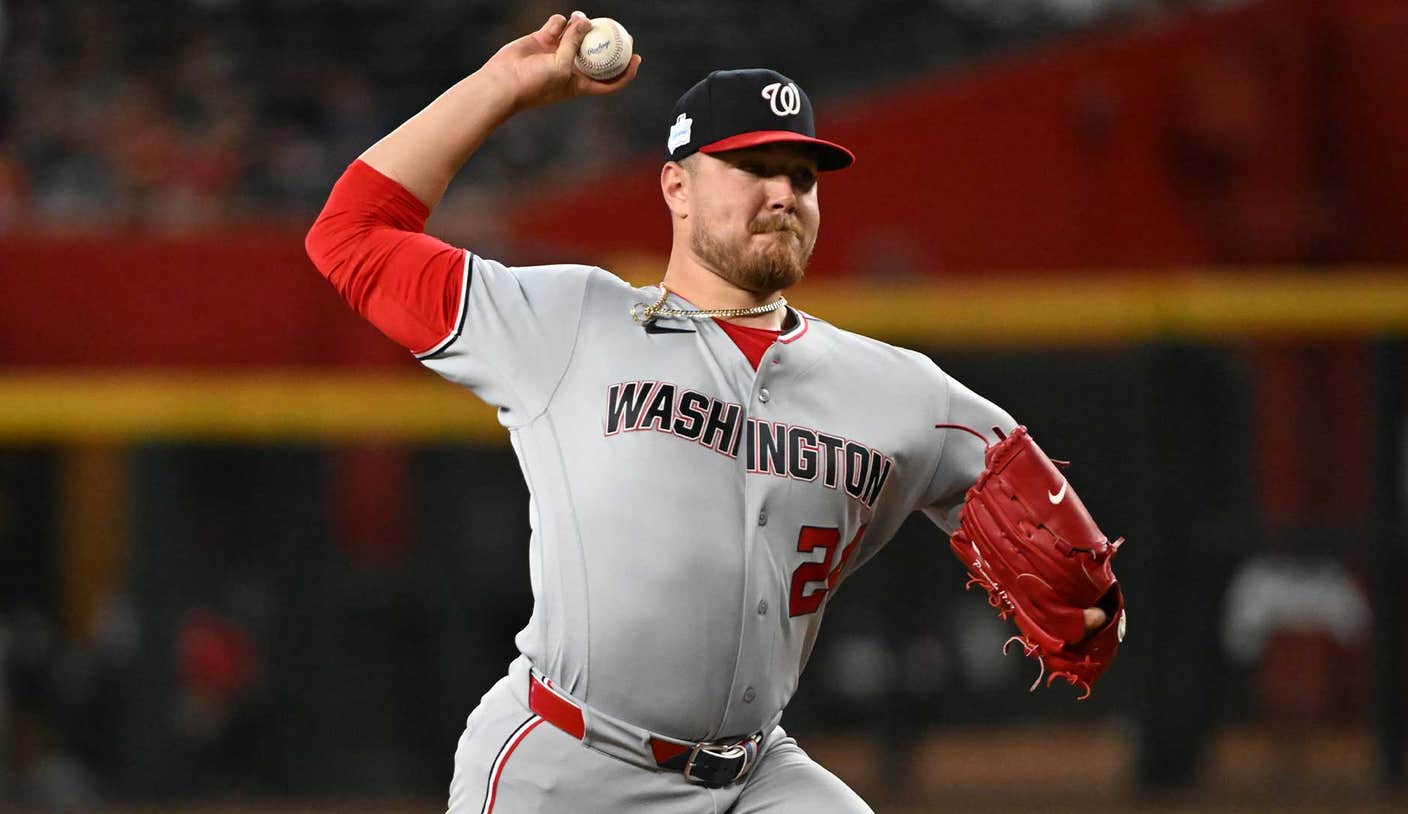
Cade Cavalli Apologizes for Comments Toward Willson Contreras
Washington Nationals pitcher Cade Cavalli issued a public apology Wednesday following a racially charged on-field altercation with Boston Red Sox first baseman Willson Contreras during Tuesday night’s game at Nationals Park. Cavalli, who shouted “sit down, boy!” after a fourth-inning strikeout, cited a lack of awareness regarding the phrase’s historical context.
The Mechanics of the Confrontation
The incident occurred during the fourth inning of the Nationals’ 10-2 victory over the Red Sox. After striking out Contreras looking on a full-count pitch, Cavalli directed the phrase toward the batter. Contreras, who is Venezuelan, immediately responded by questioning the pitcher before attempting to charge the mound, leading to a benches-clearing scrum. The sequence resulted in the ejections of Contreras, Red Sox interim manager Chad Tracy, outfielder Nate Eaton, and Nationals pitcher Miles Mikolas.
While the on-field intensity of a mid-season series often pushes players toward the edge of the team’s tactical discipline, the use of racially charged language introduces a significant reputational risk. In modern professional baseball, where franchise valuations are increasingly tied to community engagement and corporate partnerships, such outbursts can trigger internal disciplinary reviews under the Collective Bargaining Agreement (CBA) regarding conduct detrimental to the team.
Contextualizing the Language and Intent
Cavalli, 27, addressed the media Wednesday, expressing remorse for the perception caused by his word choice. “I’m extremely torn up about the way that things were perceived,” Cavalli stated. He acknowledged the historical weight of the term, noting that his upbringing in competitive sports environments—such as football, basketball, and wiffle ball—left him ill-equipped to understand the racial implications of the phrase. “There’s a history behind that word, and that’s just something that as a competitor… you don’t understand it,” Cavalli said.
The pitcher emphasized that the reaction on social media, which he discovered after returning to his hotel, highlighted a disconnect between his intent and the reality of how the words were received by fans, particularly young Black supporters in the D.C. area. “It hurt my heart, knowing that, if there’s a 13-year-old Black kid in D.C. that sees that… and then he’s not looking up to me anymore—that hurts my heart,” he added.
Analytical Impact on Team Dynamics
From an analytical perspective, the loss of composure during a pivotal series impacts more than just the box score. With the mid-summer trade deadline approaching, teams are hyper-focused on roster stability and the “clubhouse culture” metric. Cavalli currently remains a key component of the Nationals’ pitching rotation, but the distraction caused by this event creates a drag on team focus during a critical stretch of the schedule.
Managing such incidents requires a high degree of organizational oversight. For teams, maintaining a professional standard is non-negotiable, as front offices often lean on [Professional Crisis Management & PR Firms] to mitigate the long-term damage to player branding and organizational equity. Similarly, athletes often rely on [Sports Law & Arbitration Counsel] to navigate the nuances of league-mandated conduct policies when public backlash reaches a fever pitch.
Infrastructure and Local Economic Considerations
Incidents that spark large-scale bench-clearing incidents often necessitate increased security deployments for subsequent games. The stadium infrastructure at venues like Nationals Park is designed to manage high-density crowds, but localized escalations require constant coordination with [Regional Event Security & Logistics Providers]. As the season progresses, the Nationals’ front office must ensure that the fan experience remains insulated from player-level conduct issues to protect local broadcast revenues and ticket sales, which remain the primary drivers of regional sports economy health.
While Cavalli has not yet reached out to Contreras, he expressed hope that the Red Sox first baseman would understand that the comment lacked ill intent. “I have not reached out to him. I know that we’re both competitors, I hope that he hears this and he understands that was not what was intended at all,” Cavalli stated. For the Nationals, the focus must now shift back to the diamond, as the team attempts to maintain momentum in a crowded league standing.
Disclaimer: The insights provided in this article are for informational and entertainment purposes only and do not constitute medical advice or sports betting recommendations.