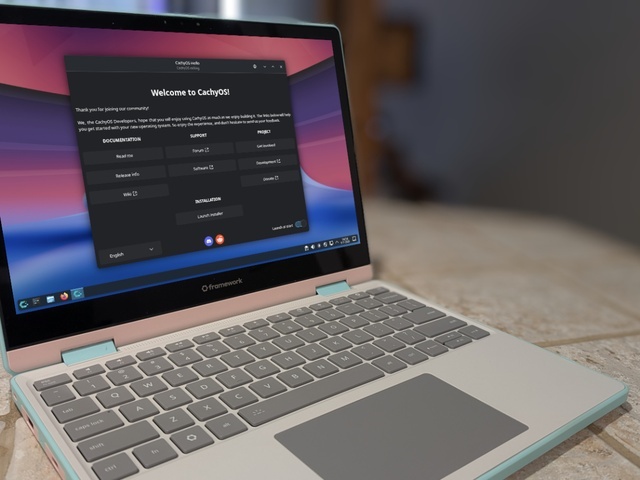
CachyOS vs. Arch Linux: Which Distribution Should You Choose?
CachyOS and Arch Linux are both respected Linux distributions, but they serve different users: Arch Linux suits power users who want total control and are comfortable with the command line, while CachyOS targets gamers who want a performance-tuned kernel that works out of the box, according to reporting by ZDNET.
That is the verdict from a comparison published by ZDNET, which notes the two are closely related: CachyOS is based on Arch Linux. The choice between them comes down to how a person plans to use the operating system, not which one has the longer pedigree. Arch Linux has existed since March 11, 2002, while CachyOS first appeared on July 3, 2021, according to ZDNET Japan.
Why Arch Linux exists
Arch Linux began as, and remains, a standalone distribution — it was not built on top of an existing one. Its founding philosophy was to keep things simple. Judd Vinet created it after growing frustrated with the operating systems available at the time, seeking a minimalist, lightweight and flexible alternative.
ZDNET lists several specific grievances behind Vinet’s decision: the slow and difficult upgrade process on Red Hat servers, the limitations of Slackware, dissatisfaction with how other lightweight distributions handled software, and the lack of complete user control over a system.

At the core of Arch is the pacman package manager, which Vinet developed to keep the system lightweight while automatically handling dependency tracking. He wanted to shed the bloat that had accumulated in enterprise tools, gain a faster application manager and make full-system upgrades easier. ZDNET describes pacman as much lighter and faster than most package managers.
The trade-offs Arch demands
New users hit an immediate obstacle: Arch ships with no default graphical user interface. GUIs are available, but installing one often requires setting up another tool first, ZDNET’s report states. Without comfort with the command line, a newcomer to Linux can struggle to get up to speed.
What Arch gives back is control. It installs without making assumptions about the user beyond wanting Linux, offering no opinion about desktop environment, gaming stack or hardware tuning.
ZDNET adds several practical details: it ships the upstream kernel, installs minimally, uses the Core, Extra, Community and Multilib repositories, follows a rolling-release model, supports only 64-bit systems, has no default desktop environment, and carries one of the most thorough documentation sites in the world in the ArchWiki. Installation itself is described as challenging.
Where CachyOS fits in
CachyOS, released in 2021, is aimed at a different audience. ZDNET’s short version: gamers who want a distribution that works out of the box, with a kernel tuned for performance, should pick CachyOS. It inherits Arch’s foundation but removes much of the setup work.
Neither report names the other as the outright winner.

Who should choose which
For users who have come through Ubuntu, Linux Mint, elementaryOS or Zorin OS and now want more power over the OS alongside something lightweight, ZDNET suggests Arch Linux may be a strong option, according to WALK NEWS.
There is one caution. Arch hosts the Arch User Repository, a community-uploaded software collection where malware has been found in applications in recent years, according to ZDNET. The outlet recommends avoiding the AUR, or at minimum limiting its use to packages known to be safe — which means manually checking a package’s PKGBUILD to confirm nothing untrusted is being downloaded.
Arch’s two decades of history, dating back to its March 2002 launch, have not settled the question.