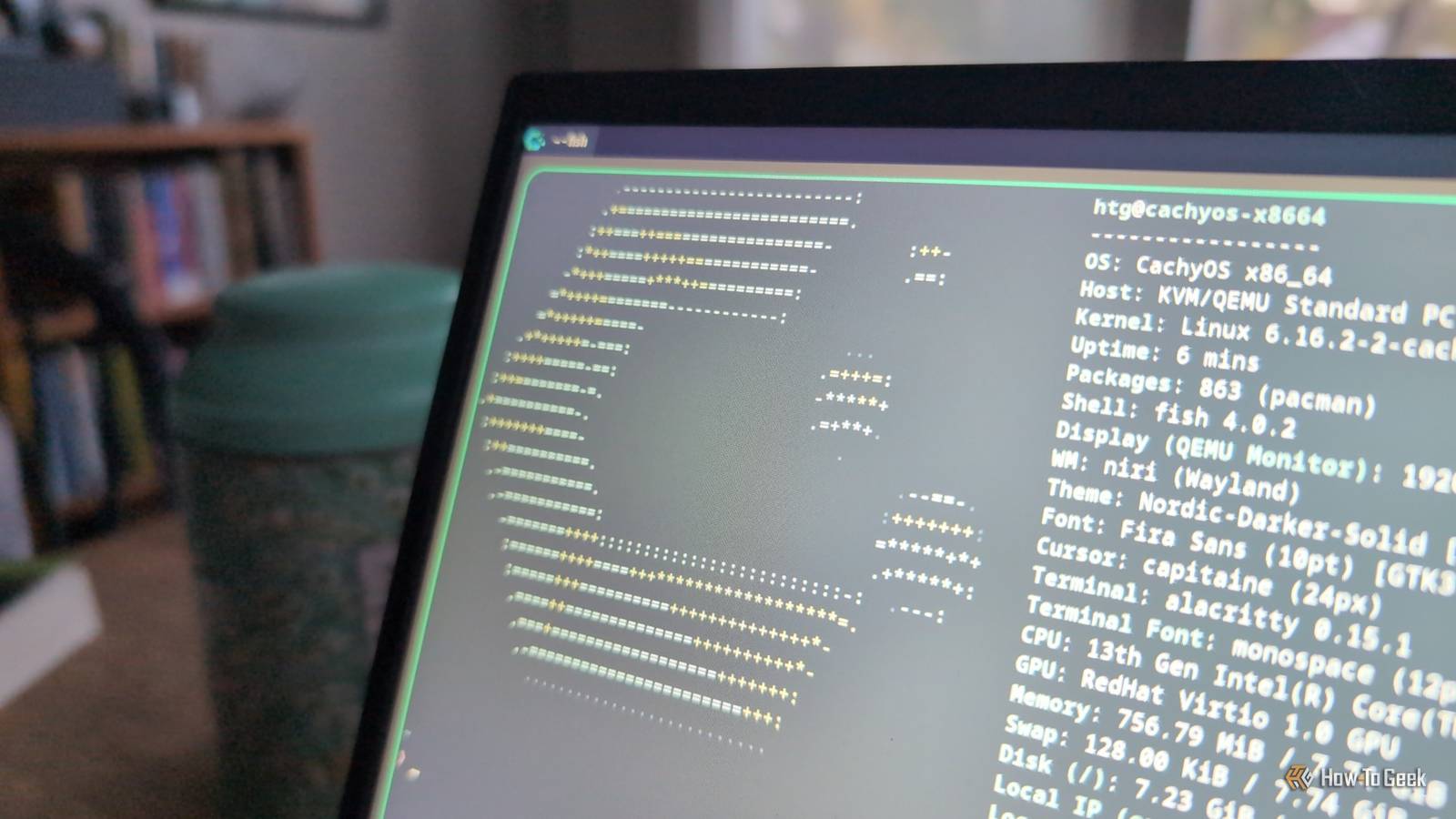
CachyOS Review: The Arch-Based Linux Distro Built for Maximum Speed
CachyOS Review 2026: Why This Arch-Based Distro Delivers More Than Just Gaming Speeds
Published: August 19, 2026 | By Rachel Kim, Technology Editor
CachyOS has earned a reputation across the open-source community for delivering exceptional system speed, but because raw processing performance is most easily benchmarked through frame rates, discussions often default strictly to gaming. According to official developer documentation at CachyOS — Blazingly Fast OS based on Arch Linux, the distribution is engineered around a much broader objective: extracting maximum instruction-level efficiency from modern consumer and workstation hardware through aggressive compilation practices and specialized kernel schedulers.
The Tech TL;DR: What General Workstation Users Need to Know
- Optimized Binaries: Core packages are compiled with x86-64-v3, x86-64-v4, and Zen4 instruction sets, alongside LTO and BOLT optimizations to eliminate CPU pipeline bubbles.
- Responsive Interactivity: The custom kernel ships with advanced scheduler choices like TIP and BORE, maintaining low input latency even under heavy, multi-threaded compile jobs.
- Rolling Release Trade-Offs: While it outperforms stock Ubuntu on identical hardware per technical evaluations by FossLinux, users must weigh raw performance gains against the maintenance overhead inherent to Arch-based rolling-release models.
Under the Hood: LTO, BOLT, and CPU-Specific Optimization Repositories
Most mainstream Linux distributions compile their software stacks with conservative, generic flag sets to ensure compatibility across aging hardware architectures. CachyOS takes a fundamentally different path by splitting its package repositories into strict instruction-set tiers. Per the CachyOS repository specifications, builds target x86-64-v3 (requiring AVX2 and 256-bit SIMD) and x86-64-v4 (requiring AVX-512) instruction sets.

According to testing published in the FossLinux Review 2026, running this OS on modern Ryzen 5000-series or Intel 12th-generation hardware unlocks immediate hardware-level parallelism. Furthermore, the distro implements Link Time Optimization (LTO) across the userspace stack, letting compilers strip dead code across module boundaries. For core binaries, the Meta-developed Binary Optimization and Layout Tool (BOLT) reorders memory layouts using profiling feedback from actual workloads, yielding measured throughput boosts between 5 and 15 percent on compute-bound routines.
Kernel Schedulers and Responsiveness Under Load
For developers, system administrators, and content creators running intense local workloads like containerization clusters, Kubernetes pods, or large Rust compilation pipelines, background CPU saturation often ruins desktop interactivity. Standard Linux kernels can suffer from input lag when threads saturate core capacity. CachyOS addresses this architectural bottleneck by offering multiple alternative kernel variants during and after installation.

The default linux-cachyos kernel incorporates Time-Slice Priority (TIP) scheduler patches alongside specialized latency adjustments. According to technical documentation analyzed by FossLinux, these modifications ensure that interactive tasks—such as window rendering or typing input—retain CPU priority over background compilation tasks. Users can also select the Burst Oriented Response Enhancer (BORE) scheduler for burst-heavy workloads, or configure transparent hugepages with the madvise policy and zstd-compressed zram swap devices.
# Check current active kernel scheduler on CachyOS
cat /sys/kernel/debug/sched/features
# Verify active instruction-set optimization level
gcc -Q --help=target | grep march
Deployment Realities: Who Should Skip the Distro?
Despite the measurable performance advantages on compilation and daily desktop tasks, CachyOS is not an ideal fit for every user profile. Rolling-release distributions demand active system maintenance, regular log auditing, and familiarity with pacman package management.
For developers and power users operating modern x86-64 hardware who want to squeeze every drop of performance out of their local silicon without manually compiling Gentoo from source, CachyOS provides a streamlined, highly tuned environment straight out of the box.
Editorial Kicker
CachyOS demonstrates that compiler-level optimization and modern scheduler tuning yield genuine productivity dividends outside the gaming arena.