
BYD Surpasses Tesla in Sales, But Profits Decline in 2025
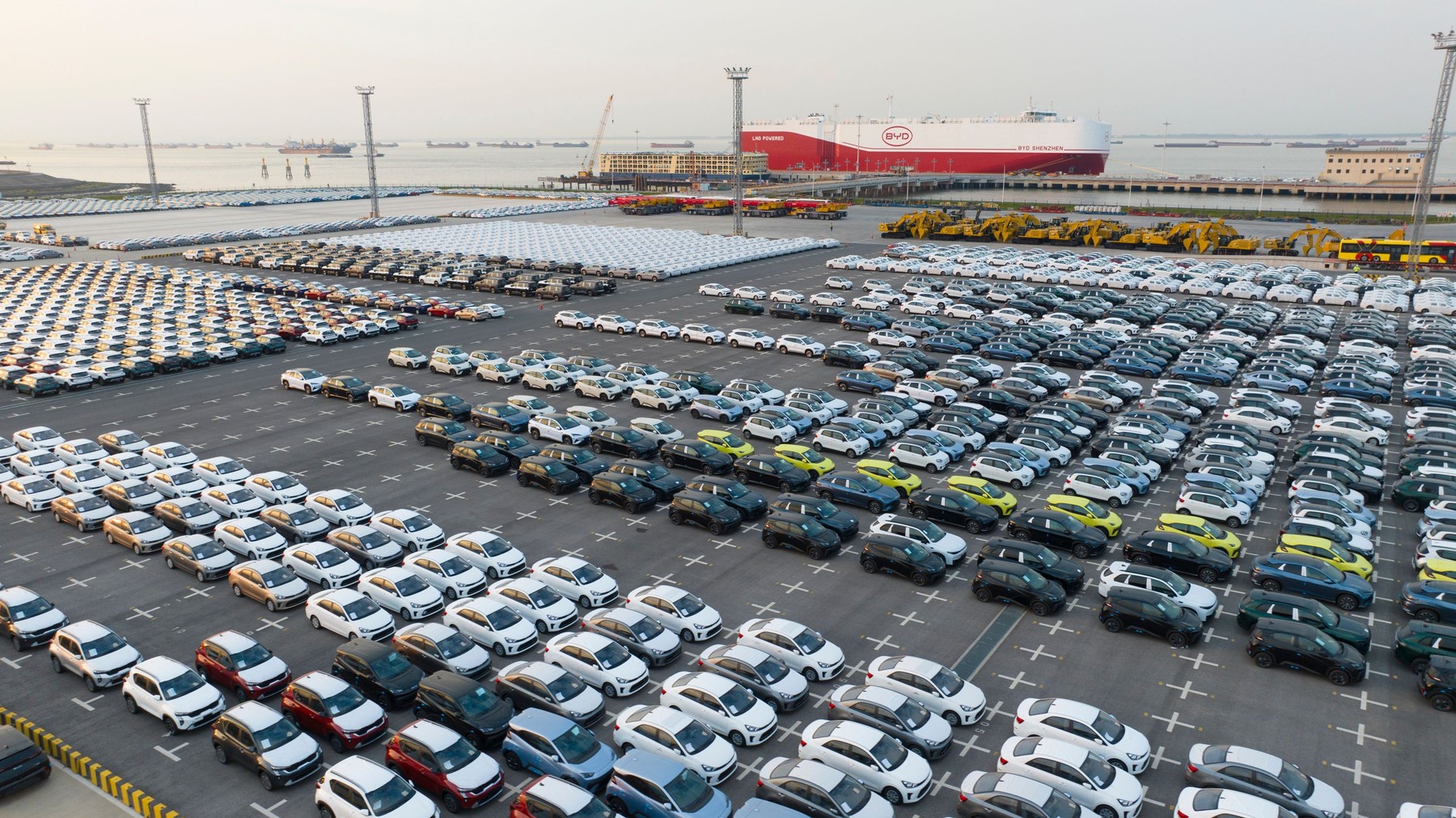
BYD Company Ltd reported record 2025 revenue of $116 billion, surpassing Tesla’s $94.8 billion, though net profit fell 19% to $4.7 billion due to aggressive pricing wars and reduced Chinese government subsidies.
Volume dominance no longer guarantees bottom-line health. BYD’s latest financial disclosure reveals a critical inflection point for the electric vehicle sector: market share acquisition is cannibalizing profitability. As the Shenzhen-based automaker ships 2.26 million units globally, the erosion of margins signals a desperate scramble for efficiency. Corporate treasurers and operational leaders face immediate liquidity pressure. This shift forces mid-market suppliers and competitors to seek financial restructuring services to weather the volatility of a price-sensitive demand curve.
Revenue Scale Versus Profitability Compression
The divergence between top-line growth and net income highlights the brutal reality of the 2026 automotive landscape. BYD’s 28% year-over-year volume increase contrasts sharply with Tesla’s 9% delivery contraction. While Tesla struggles with saturation in key demographics, BYD floods the market with lower-priced models to maintain momentum. This strategy works for unit counts but devastates earnings per share. Investors scrutinizing the BYD Investor Relations portal will note the margin compression stems directly from domestic competition.
Geely Auto and other domestic rivals have intensified the price war, forcing BYD to slash costs per unit. Simultaneously, Beijing reduced EV subsidies in early 2026, removing a critical cushion for manufacturers. The result is a revenue record built on thinner ice. Operational teams must now pivot from growth-at-all-costs to sustainable unit economics. Supply chain managers are increasingly turning to supply chain optimization consultants to identify waste in logistics and procurement that can restore basis points to the bottom line.
| Metric | BYD (2025) | Tesla (2025) | YoY Change (BYD) |
|---|---|---|---|
| Total Revenue | $116 Billion | $94.8 Billion | +3.5% |
| EV Units Sold | 2.26 Million | 1.64 Million | +28% |
| Net Profit | $4.7 Billion | N/A | -19% |
| Market Focus | China, LatAm, Europe | North America, Europe | Global Expansion |
Geographic Arbitrage and Regulatory Hurdles
Domestic saturation drives the push outward. BYD executives highlighted higher profit margins in Latin America and Europe during the earnings call. These regions offer pricing power unavailable in Shenzhen. Whereas, cross-border expansion introduces complex regulatory friction. Tariffs, local content requirements and compliance standards vary wildly between Brazil, Germany, and China. Navigating this legal labyrinth requires more than internal counsel. Multinational corporations expanding into these jurisdictions frequently retain international corporate law firms to mitigate risk associated with foreign direct investment and local employment laws.
The geopolitical landscape further complicates matters. Rising fuel prices, exacerbated by conflict in Iran, have renewed consumer interest in renewable energy transport. This macro tailwind supports demand but does not solve the margin equation. Capital markets remain skeptical of growth stories lacking cash flow. Institutional investors demand proof of sustainable competitive advantages beyond subsidy reliance.
“The era of subsidy-driven EV growth is over. We are entering a consolidation phase where only manufacturers with vertical integration and positive free cash flow will survive the next cycle.” — Head of Automotive Research, Global Investment Bank
Compliance specialists note that as BYD scales in Europe, scrutiny from the European Commission regarding state aid and dumping margins will intensify. Market risk analysis becomes paramount. Firms failing to hedge currency exposure or anticipate regulatory shifts face existential threats. The treasury function evolves from back-office support to strategic command. Operations and support teams must integrate real-time data analytics to monitor compliance costs across borders.
The Capital Markets Verdict
Wall Street reacts to cash flow, not just headlines. While BYD tops the sales chart, the 19% profit decline triggers alarm bells among value investors. Capital markets origination teams are already seeing increased inquiry from automotive suppliers seeking debt refinancing. The cost of capital rises for companies exposed to low-margin manufacturing. Equity and debt research analysts are downgrading sector outlooks based on these Q4 2025 signals. Sales and trading desks anticipate higher volatility in automotive ETFs as earnings season progresses.
Competition will not abate. Geely’s gains in early 2026 prove that no market share is safe. BYD must now defend its crown while repairing its income statement. This requires a dual strategy of cost containment and premium brand elevation. Companies unable to execute this pivot will become acquisition targets. The directory reflects this shift, with a surge in listings for M&A advisory and operational turnaround specialists.
Market momentum favors the agile. As the industry consolidates, the winners will be those who treat regulatory compliance and supply chain resilience as core revenue drivers rather than overhead. The World Today News Directory tracks these shifts, connecting enterprises with the vetted partners needed to navigate this high-stakes environment. Fiscal health depends on choosing the right allies before the next quarter’s data hits the terminal.