
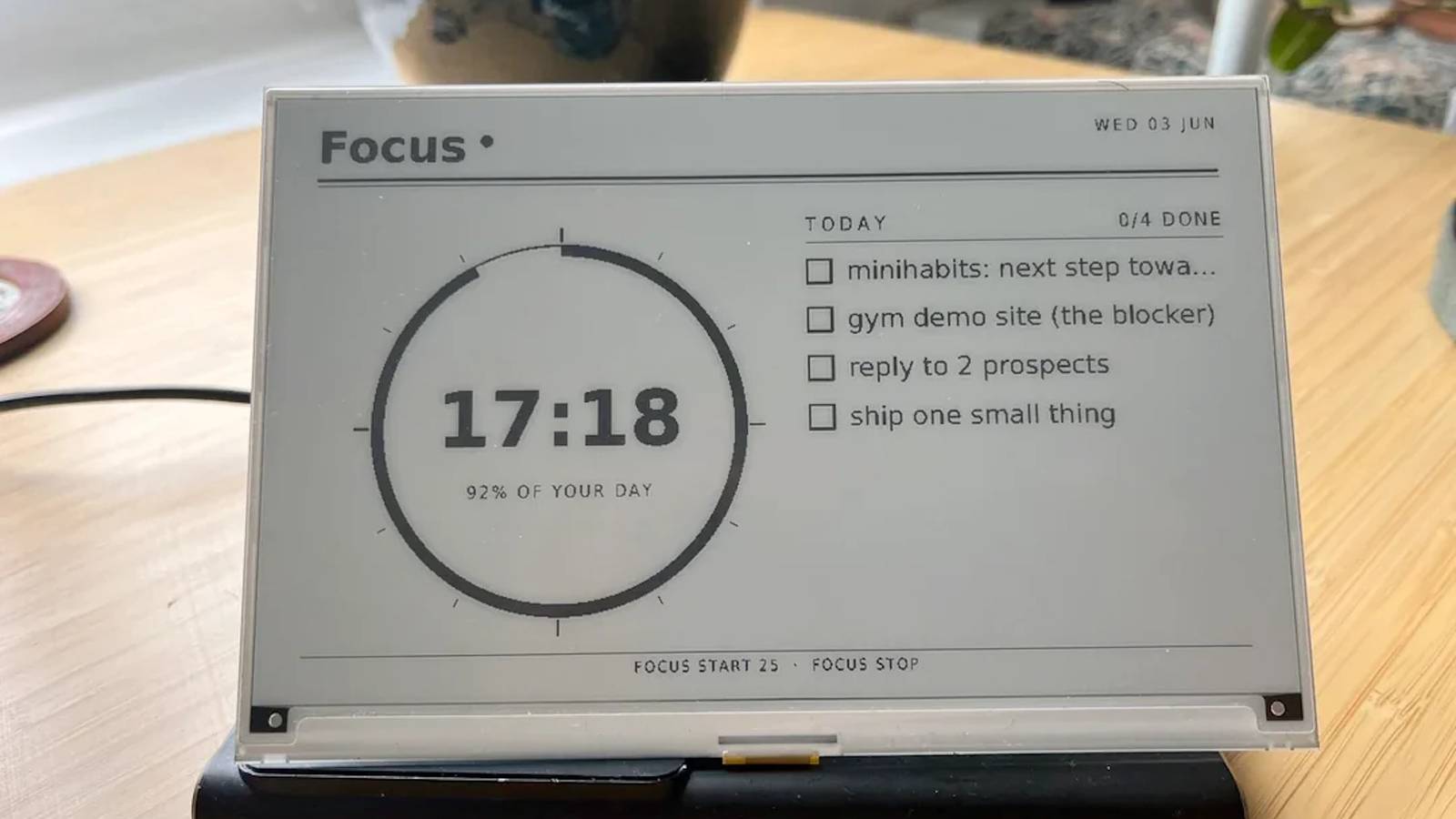
Build QuietDash: A Distraction-Free Raspberry Pi eInk Display
The QuietDash is a specialized hardware intervention designed to mitigate the cognitive load imposed by perpetual notification cycles. By utilizing a Raspberry Pi-driven eInk display, this project replaces high-frequency, light-emitting alerts with a static, low-power interface. It addresses the fundamental issue of digital exhaustion in professional environments, offering a physical layer of separation between the user and their incoming data stream.
The Tech TL;DR:
- Low-Power Persistence: The eInk architecture maintains display state without constant power draw, ideal for long-duration monitoring.
- Reduced Latency Stress: By decoupling the notification from the primary computing device, users gain control over their focus intervals.
- Customizable Integration: Built on the ARM-based Raspberry Pi ecosystem, allowing for custom Python-based API hooks into existing messaging stacks.
Architectural Efficiency and the eInk Advantage
Unlike standard LCD or OLED panels, eInk displays function via electrophoretic technology, which only consumes power when the state of the pixels changes. For a dashboard intended to provide asynchronous updates, this is the superior architectural choice. According to official Raspberry Pi documentation, utilizing the GPIO pins to interface with SPI-based eInk HATs allows for precise control over refresh rates, effectively eliminating the “flicker” and blue-light fatigue associated with traditional monitors. The QuietDash project leverages this by pushing updates only when specific thresholds are met, preventing the device from becoming just another source of visual noise.
Hardware Performance Comparison: eInk vs. Traditional LCD
| Metric | eInk Display | Standard LCD/OLED |
|---|---|---|
| Static Power Consumption | Zero (Bistable) | High (Continuous) |
| Refresh Latency | High (ms to s) | Low (sub-ms) |
| Visual Fatigue | Minimal | High (Blue Light) |
| Ideal Use Case | Asynchronous Alerts | Real-time Video/UI |
The Implementation Mandate: Configuring the SPI Interface
To deploy the QuietDash, you must initialize the SPI communication protocol on your Raspberry Pi. This ensures that the display can receive data from your notification scripts without taxing the CPU. Access the Raspberry Pi Linux kernel source to verify that your SPI modules are loaded correctly. Use the following command to verify the kernel interface:
lsmod | grep spi_bcm2835If the module is inactive, you will need to enable the SPI interface via raspi-config or by editing the /boot/config.txt file. This setup is a prerequisite for any developer aiming to maintain continuous integration of their alert streams without incurring the overhead of a full GUI environment.
Managing Infrastructure and Digital Hygiene
For enterprise-level deployments, managing notification streams requires more than just a hardware dashboard; it requires robust backend filtering. If your team is struggling with “alert fatigue,” you may need to reconsider your infrastructure monitoring tools. In many cases, it is necessary to engage Managed Service Providers (MSPs) to consolidate disparate API feeds into a single, filtered stream before they ever reach the QuietDash. Furthermore, organizations handling sensitive notification data should consult with cybersecurity auditors to ensure that their notification middleware maintains strict SOC 2 compliance and utilizes end-to-end encryption during transit.

“The goal of modern hardware design is not to provide more information, but to provide better information. By moving notifications to a passive medium like eInk, we recover the cognitive cycles lost to high-frequency interrupt handling.” — Senior Systems Architect, Open Source Hardware Initiative.
Future Trajectory of Passive Displays
The QuietDash represents a shift toward “calm technology.” As we look toward future iterations, the integration of low-power NPUs could allow for local, on-device filtering of notifications, removing the need for cloud-based round trips. This would further reduce the attack surface of your notification pipeline. For those looking to scale this project, consider the documentation available on Stack Overflow for optimizing Python-based event listeners that scale across multiple threads without memory leaks.
Ultimately, the success of the QuietDash depends on your discipline in configuring your upstream APIs. If you find your hardware dashboard is still overwhelming you, the problem is likely at the source, not the sink. If you lack the internal resources to architect these filtering layers, consider reaching out to specialized software development agencies that can build custom middleware for your specific notification requirements.
*Disclaimer: The technical analyses and security protocols detailed in this article are for informational purposes only. Always consult with certified IT and cybersecurity professionals before altering enterprise networks or handling sensitive data.*