Buenos Aires Grain Exchange: Argentina faces heat, frost and storms
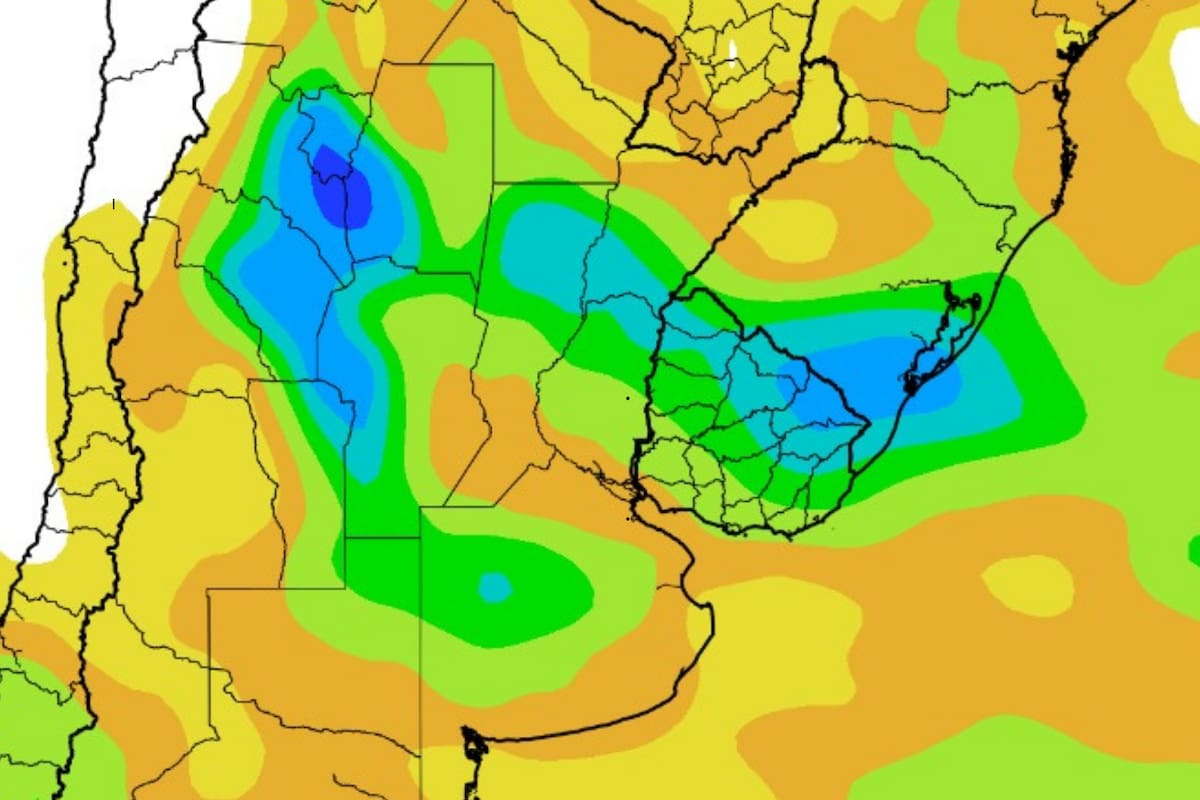
Temperatures climbing past 40 degrees Celsius in parts of Argentina will collide with incoming southern winds and the ongoing El Niño phenomenon, triggering both a severe frost risk in highland districts and localized storms exceeding 100 millimeters by mid-November, according to projections published by the Buenos Aires Grain Exchange.
Thermal Swings and Frost Risks Across Agricultural Zones
The agricultural calendar enters a volatile phase as shifting air masses push minimum and maximum readings across extreme margins. Between November 5 and November 11, precipitation across most productive territories remains below 10 millimeters, concentrated primarily in the northern reaches of the agricultural belt. East of the Northwest region, the Chaco territory, and northern Mesopotamia anticipate between 10 and 25 millimeters, while the rest of the sector stays largely dry.
That dry spell accompanies a sharp temperature drop driven by incoming southern winds. The Buenos Aires Grain Exchange warns of potential frost conditions in the mountainous and cordilleran sectors of the Northwest and Cuyo, the Buenos Aires hill ranges, and central Uruguay. Eastern Buenos Aires faces minimums between 0 and 5 degrees Celsius with localized frost, while higher altitude zones in the Northwest and Cuyo expect general frosts with readings falling below zero.
A contrasting warming trend follows immediately as winds shift from the northeast. Maximums will surge past 30 degrees Celsius across the eastern Northwest, parts of Cuyo, northern and western Pampas, and much of Mesopotamia. Northern sectors, central Cuyo, and western La Pampa will see peaks hit between 35 and 40 degrees Celsius.

Rainfall Brings Regional Divides Across Provinces
Climatic projections for the subsequent window between November 12 and November 18 highlight significant regional divides. While the Buenos Aires Grain Exchange anticipates general rainfall accumulations between 10 and 50 millimeters with isolated storms topping 100 millimeters in the southern Northwest, projections report that November maintains an overall humid tendency with precipitation above historical averages in the northeast.
Leonardo De Benedictis noted that November’s rain distribution remains irregular, with Misiones and Corrientes positioned among the provinces most likely to record surpluses ranging from 30 to 50 millimeters above normal monthly averages. Conversely, parts of Buenos Aires and the Patagonian cordillera stay at the margins of that surplus, receiving below-normal precipitation as the El Niño phenomenon intensifies in the equatorial Pacific.
INTA indicates that further notable storm events will traverse the center and north of the country alongside the southwestern territory between November 12 and November 15.

Impacts on Winter Crops and Regional Water Balances
Agricultural producers face complex operational conditions as temperature extremes and erratic moisture levels affect crops advancing through grain filling, flowering, and maturity stages. Reports indicate that while rains improve water availability in northern areas, they threaten to delay fieldwork where soil moisture is already excessive. In southern regions, where temperatures run 2 to 3 degrees Celsius above normal in parts of Santa Cruz and western Chubut according to Leonardo De Benedictis, lower precipitation and high vegetative demand heighten the risk of moisture loss.
The Buenos Aires Grain Exchange details the broader thermal spectrum across the country during this swing, noting that minimum temperatures will hover between 10 and 15 degrees Celsius across the Chaco region, Mesopotamia, and central Pampas, while maximums in the 25 to 30 degree range will cover most of Buenos Aires and Uruguay. Toward the end of the second week, a fresh surge of maritime air will introduce another cooling cycle, driving minimums below normal and renewing frost threats in western highlands.
How these shifting storm tracks translate into effective soil recharge rather than logistical hurdles for harvesting and sowing remains dependent on localized distribution through the remainder of the month.