
BTS, Jimmy Fallon & Late Night TV’s Week of Surprises & Scandals
Late Night’s Weekly Scorecard: Fleming’s Viral Victory and the BTS Brand Crisis
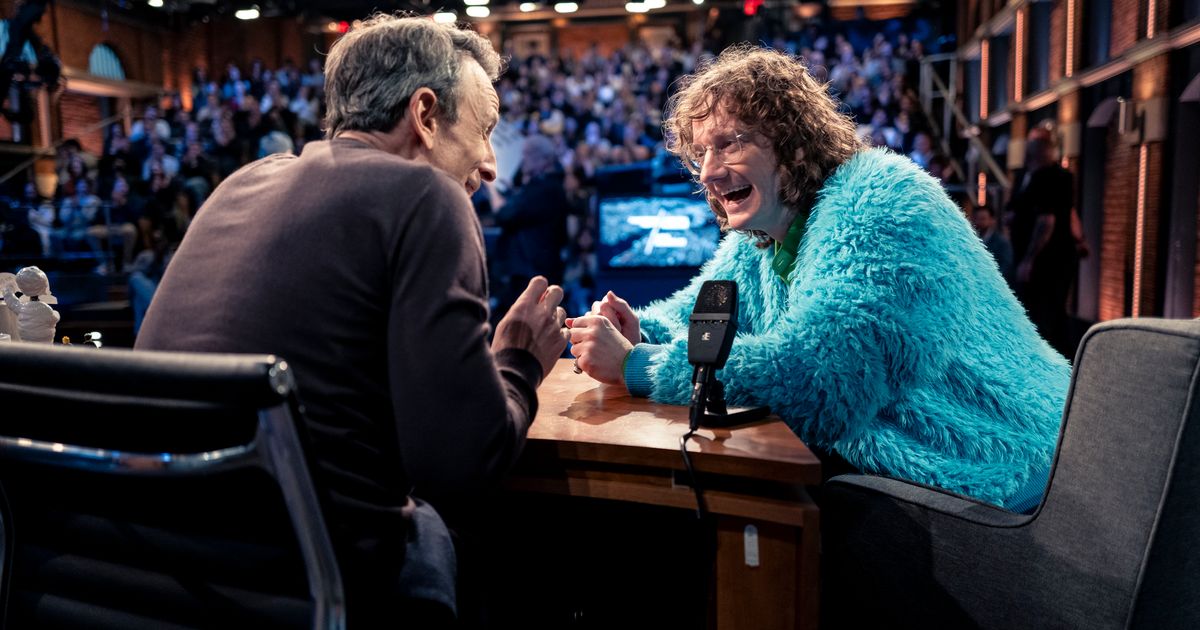
In the high-stakes arena of late-night television this week, Chris Fleming secured the cultural win on Late Night with Seth Meyers through a meta-commentary on comedic ownership, while The Tonight Show faced a significant reputational hurdle involving BTS and a warm-up comic controversy. As streaming metrics fluctuate and social sentiment dictates brand equity, the divergence between authentic comedic risk and corporate misstep defined the landscape.
The late-night landscape is no longer just a monologue and a celebrity interview; It’s a complex ecosystem of intellectual property disputes, brand safety audits, and real-time reputation management. This week, the dichotomy was stark. On one side, you had the organic, chaotic energy of Chris Fleming dismantling Seth Meyers’ own material on Live at the Palace, a segment that felt less like a standard promo and more like a masterclass in comedic deconstruction. On the other, The Tonight Show Starring Jimmy Fallon found itself navigating a PR minefield after a warm-up comic’s alleged joke regarding North Korea sparked immediate backlash from the BTS ARMY.
When a major network show invites a global phenomenon like BTS, the logistical and reputational stakes are astronomical. The incident at the Guggenheim taping, where fans alleged the band was “wrangled” and subjected to insensitive humor, highlights a critical failure in talent relations and cultural sensitivity training. In an era where stan culture is internationally coordinated and militantly protective, a single misstep can tank a segment’s reception before it even airs. This is precisely the moment where a production company should have elite crisis communication firms on speed dial, ready to deploy damage control strategies that go beyond a standard apology tweet. The speed of the backlash on X (formerly Twitter) and TikTok demonstrated that the window for effective reputation management has shrunk from hours to minutes.
The Economics of the “Fact-Check” Segment
Chris Fleming’s appearance on Meyers offered a refreshing counter-narrative to the sanitized, focus-grouped comedy that often plagues the 11:35 PM slot. The segment, wherein Meyers “fact-checked” Fleming’s stand-up special Live at the Palace, was a brilliant subversion of the promotional interview format. Fleming noted that Meyers had mimicked his “mic play” in his own special, Dad Man Walking. This wasn’t just a joke; it was a commentary on the homogenization of comedic voice and the theft of mannerisms in an industry obsessed with branding.
From a business perspective, this interaction underscores the value of unique comedic IP. In a market saturated with content, distinctiveness is the only currency that holds value. Fleming’s ability to command the couch time, riffing extensively without a rigid structure, suggests a level of trust between talent and showrunner that is increasingly rare. It recalls the golden era of talk shows where the host acted as a curator rather than a gatekeeper. For comedians looking to replicate this success, securing representation that understands the nuance of top-tier talent agencies capable of negotiating creative control is essential. You cannot build a brand like Fleming’s if your contract mandates rigid adherence to a promo schedule.
The financial implications of these late-night appearances are often obscured by the glitz, but the data tells a story of shifting viewer habits. While traditional linear ratings continue to decline, the “clip economy” drives the actual revenue through social engagement and SVOD licensing.
| Metric | Traditional Linear Viewership Trend | Social/Clip Engagement Trend | Primary Revenue Driver |
|---|---|---|---|
| The Tonight Show | Declining (-4.2% YoY) | Volatile (High spikes during controversies) | Brand Partnerships & Syndication |
| Late Night with Seth Meyers | Stable (-1.1% YoY) | High (Niche, political comedy clips) | Digital Ad Revenue & Streaming Rights |
| Last Week Tonight | N/A (HBO/Cable) | Consistently Viral (Educational clips) | Subscription Retention & Licensing |
Per the latest Nielsen ratings data, the fragmentation of the late-night audience means that “winning” the night is no longer about raw viewership numbers but about cultural penetration. Fleming’s segment didn’t need to pull in 2 million linear viewers to be a success; it needed to generate the kind of discourse that keeps the show relevant in the algorithmic feed. This shift places a premium on digital marketing strategists who understand how to optimize long-form interview content for short-form consumption.
Beyond the Monologue: The Rise of the “Wonky” Interview
While comedy remains the backbone of the genre, the most resonant moments this week came from the serious end of the spectrum. Jon Stewart’s interrogation of former National Security Adviser Jake Sullivan on The Daily Show was a reminder of the format’s potential for genuine civic discourse. Stewart’s ability to navigate the complexities of the Iran nuclear deal and U.S.-China relations without resorting to “cheap heat” demonstrates a maturity that advertisers crave but executives often fear. It is a high-wire act that requires a production team capable of managing sensitive geopolitical topics without triggering a boycott.
Similarly, John Oliver’s Last Week Tonight continues to prove that ephemera is the key to retention. His tangential deep dives—whether into Meghan Trainor’s side-by-side toilets or the biology of cabbage—serve as cognitive palate cleansers during dense investigative segments. This structural choice is a masterstroke in audience retention, keeping viewers engaged through the “depressing or wonky subject” matter. It suggests that the future of late-night isn’t just about the joke; it’s about the pacing and the psychological management of the viewer’s attention span.
The logistical side of these productions also deserves mention. The BTS taping at the Guggenheim, despite the controversy, was a massive logistical undertaking. Coordinating a global supergroup in a museum setting requires a level of regional event security and A/V production coordination that rivals a small summit. When things go wrong in such a high-profile environment, the liability exposure is immense. Productions of this magnitude are constantly sourcing massive contracts with security vendors and hospitality sectors, bracing for the windfall and the potential fallout.
The Verdict on Late Night’s Identity Crisis
this week highlighted the bifurcation of late night. You have the legacy machines like Fallon and Kimmel, which rely on broad appeal and celebrity access but remain vulnerable to cultural missteps and the “uncanny valley” of forced virality. Then you have the niche players like Meyers and Stewart, who leverage specific comedic voices and political literacy to build loyal, albeit smaller, followings.
Chris Fleming’s victory was a victory for the latter. By allowing a comedian to deconstruct the host’s own IP on air, Meyers signaled a confidence in his brand that feels increasingly necessary. In a media environment where every joke is dissected by algorithms and every gesture is analyzed for subtext, authenticity is the only defensible position. For the industry professionals watching, the lesson is clear: whether you are managing a talent roster or protecting a studio’s IP, the ability to navigate the intersection of creativity and commerce is the defining skill of the decade.
As we move deeper into 2026, the lines between entertainment, news, and legal liability will continue to blur. The winners will be those who treat their content not just as a show, but as a brand asset requiring rigorous legal and PR stewardship. The losers will be those who assume the old rules of “just being funny” still apply in a world where a warm-up comic’s offhand remark can develop into a global headline.
Disclaimer: The views and cultural analyses presented in this article are for informational and entertainment purposes only. Information regarding legal disputes or financial data is based on available public records.