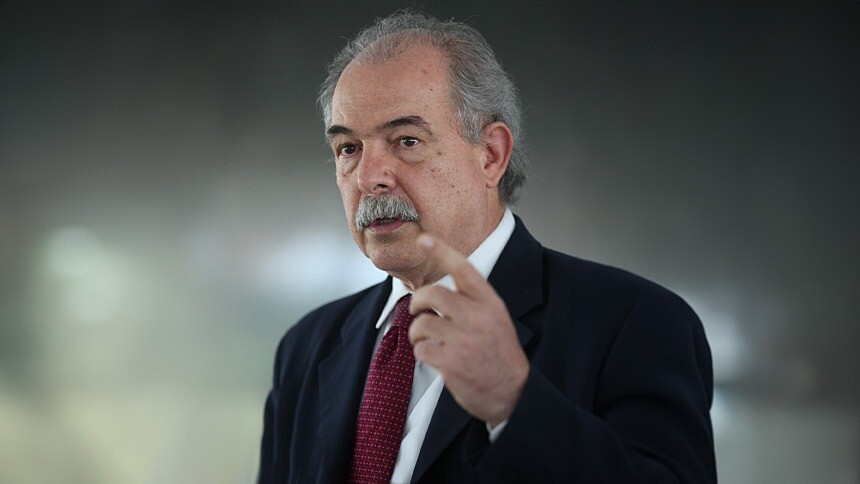
BTG Pactual’s Mercadante Under Scruty: Electronic Ankle Monitors for Two Directors in São Paulo
Brazilian President of the National Bank for Economic and Social Development (BNDES), Aloizio Mercadante, has explicitly warned that the next major financial scandal in Brazil will center on investment funds—following the recent collapse of Banco Master. Speaking alongside BTG Pactual’s chairman, André Esteves, in São Paulo, Mercadante linked the crisis to systemic failures in oversight, with two directors of BTG Pactual already under electronic monitoring. The remarks underscore a broader erosion of trust in Brazil’s financial regulatory framework, threatening regional economic stability and investor confidence.
Why This Matters: A Crisis of Confidence in Brazil’s Financial Guardrails
The warning from Mercadante isn’t just about the next scandal—it’s about the unraveling of Brazil’s financial governance. The Banco Master collapse, which involved fraudulent loans and asset misappropriation, exposed deep flaws in the Central Bank’s supervisory mechanisms. Now, Mercadante’s focus on investment funds suggests the next phase of fallout will target Brazil’s $1.2 trillion asset management industry—an ecosystem that underpins pension funds, corporate savings, and retail investments for millions of Brazilians.
For context, Brazil’s investment fund sector has grown exponentially over the past decade, now managing assets equivalent to roughly 20% of the country’s GDP. But this expansion has outpaced regulatory adaptation. The Brazilian Securities and Exchange Commission (CVM) has faced criticism for its reactive approach, while the Central Bank’s autonomy—already strained by political interference—is now under scrutiny as a root cause of the Banco Master debacle.
“The Central Bank and the CVM must operate with full autonomy, free from political or corporate influence. The current system is a ticking time bomb.”
— Aloizio Mercadante, President of BNDES
The BTG Pactual Connection: Electronic Ankle Monitors and the Shadow of Scandal
BTG Pactual, one of Latin America’s largest investment banks, finds itself at the epicenter of this unfolding drama. The mention of two directors under electronic monitoring—likely related to ongoing investigations—highlights the personal stakes for financial executives in Brazil. While details remain scarce, the implication is clear: regulatory enforcement is intensifying, and compliance risks are skyrocketing for firms operating in this gray zone.
The bank’s chairman, André Esteves, has publicly acknowledged “a failure of control” in past statements, but the broader question is whether BTG Pactual’s troubles are an isolated case or symptomatic of a larger industry-wide rot. Given BTG Pactual’s extensive reach—managing assets for institutional clients and retail investors alike—the fallout could trigger a wave of redemptions, liquidity crises, or even contagion in Brazil’s broader financial markets.
Regional Impact: São Paulo’s Financial Hub on the Brink
São Paulo, home to Brazil’s financial district and the headquarters of BTG Pactual, stands to bear the brunt of this scandal. The city’s economy, which relies heavily on banking and asset management, could face a double whammy: capital flight from institutional investors and a loss of confidence among local businesses and retirees. Municipal authorities are already bracing for potential job losses in the financial sector, with estimates suggesting up to 5,000 roles could be at risk if the crisis deepens.
For São Paulo’s government, the challenge isn’t just economic—it’s reputational. The city has long positioned itself as Latin America’s gateway for foreign investment. But if Mercadante’s warnings materialize, the perception of Brazil’s financial ecosystem as a high-risk jurisdiction could deter capital inflows, particularly from pension funds and sovereign wealth managers in Europe and Asia.
“São Paulo’s financial sector is the engine of the state’s economy. If investors lose faith, the ripple effects will be felt in education, healthcare, and infrastructure—all areas that rely on stable funding.”
— João Doria, Former Governor of São Paulo and current advisor to the state’s economic development agency
The Information Gap: What’s Next for Brazil’s Investment Funds?
Mercadante’s statement raises critical questions about the regulatory landscape. While the CVM and Central Bank have announced investigations into Banco Master, there’s no public roadmap for addressing investment funds. Historically, Brazil’s asset management sector has operated under a patchwork of self-regulation and light-touch oversight. Without clear guidelines, firms may continue to engage in aggressive (or fraudulent) practices, betting on the assumption that enforcement will remain gradual.
To fill this gap, experts are calling for three immediate actions:

- Stronger CVM enforcement: Mandatory audits for all investment funds over a specified asset threshold, with real-time reporting of high-risk transactions.
- Political insulation for regulators: Legislative reforms to shield the Central Bank and CVM from executive branch interference, modeled after the Basel Committee’s independence standards.
- Transparency in electronic monitoring: Public disclosure of ongoing investigations (without compromising legal proceedings) to restore investor confidence.
Yet, even these measures may not be enough. The deeper issue is structural: Brazil’s financial sector has long operated under a “growth-at-all-costs” mentality, where short-term gains often outweigh long-term stability. The question now is whether Mercadante’s warnings will spark the systemic reforms needed—or if Brazil will repeat the mistakes of Banco Master, this time on a far larger scale.
The Directory Bridge: Who Can Help?
As the scandal unfolds, several sectors will be critical in mitigating the fallout:
- Compliance and Risk Management Firms: Financial institutions will need specialized compliance consultants to navigate the evolving regulatory landscape and avoid penalties. Firms with expertise in anti-money laundering (AML) and fraud detection will be in high demand.
- Legal and Investigative Services: With two BTG Pactual directors under electronic monitoring, legal teams specializing in white-collar defense and financial crimes will be essential for executives and firms facing scrutiny. Forensic accountants and investigative journalists may also play a role in uncovering systemic issues.
- Investor Protection Advocacy: Nonprofits and legal aid organizations focused on financial literacy and investor rights will need to step up outreach to retail investors, many of whom may not understand their exposure to high-risk funds.
- Regulatory Technology (RegTech) Providers: As Brazil’s financial sector modernizes, RegTech firms offering AI-driven compliance tools will help institutions adapt to stricter oversight without stifling innovation.
The Long-Term Risk: A Contagion of Distrust
The most dangerous aspect of this crisis isn’t the immediate financial losses—it’s the erosion of trust. When investors, both domestic and foreign, lose faith in Brazil’s ability to enforce its own rules, the consequences are severe. Capital flees, credit dries up, and economic growth stalls. For a country already grappling with inflation and fiscal constraints, this could be the final straw.
Mercadante’s warning is a wake-up call. But without concrete action—from regulators, policymakers, and the private sector—the next scandal won’t just involve investment funds. It will involve the stability of Brazil’s economy itself.
For professionals and businesses looking to navigate this uncertainty, the World Today News Directory offers verified listings of experts equipped to handle compliance, legal, and financial advisory needs in Brazil and beyond. The time to prepare is now.