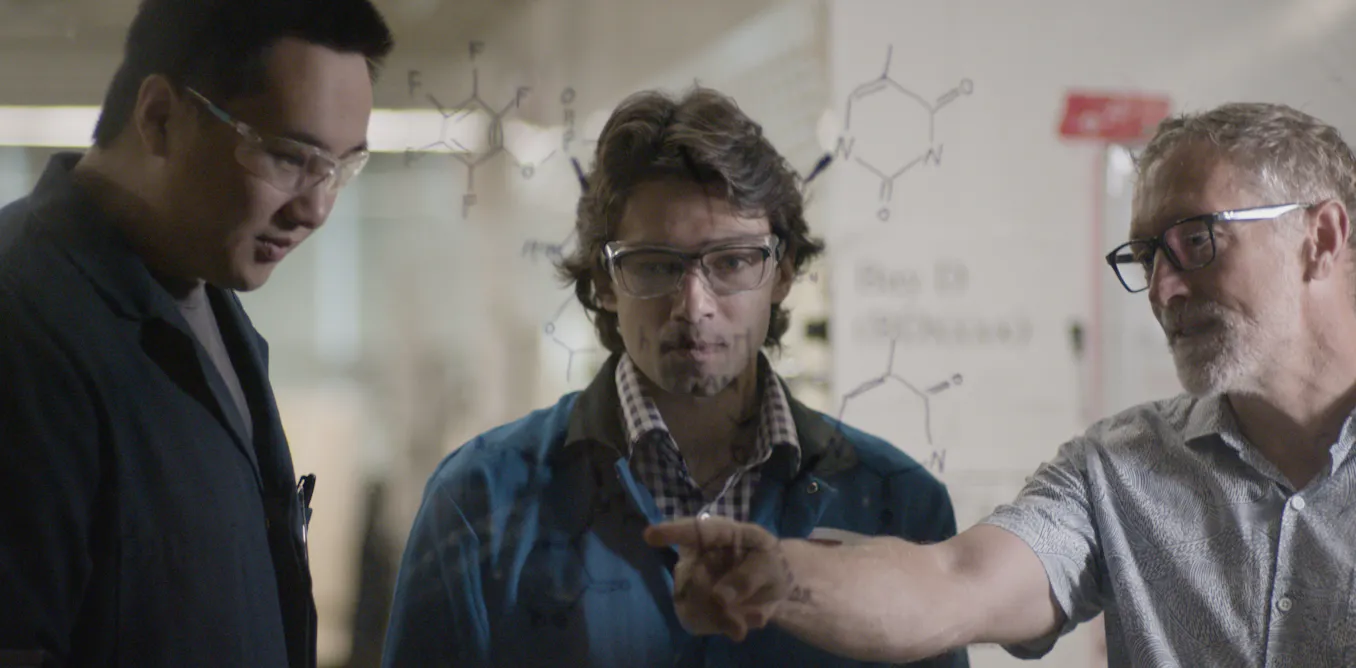
Britton Lab Speeds Up Antiviral Drug Discovery via Modular Synthesis
Scientists at Simon Fraser University and biopharmaceutical firm Merck have developed a modular chemical approach that accelerates the creation of nucleoside analogues, cutting the production timeline down from months or years to weeks, theconversation.com reported.
-
Key Clinical Takeaways:
- Researchers built a library of over 70 nucleoside analogues using an amino acid catalyst and a visible-light-driven reaction, reducing a 16-step synthesis process down to six steps.
- The method generates compound collections 10 to 100 times larger than previously practical, identifying three promising anti-HIV candidates in early cell-based assays.
- The innovation addresses severe pharmaceutical bottlenecks tied to traditional, linear 15-step manufacturing processes used for medications like remdesivir.
The Synthesis Bottleneck in Antiviral Drug Development
When the COVID-19 pandemic emerged, clinicians relied heavily on remdesivir, a nucleoside analogue belonging to a class of medications also deployed against HIV, hepatitis, and specific malignancies. Antiviral therapeutics occupy a remarkably narrow pharmacological arsenal, leaving healthcare systems vulnerable during novel viral outbreaks. Traditional manufacturing requires starting with a naturally occurring sugar molecule and executing a rigid sequence of 15 or more chemical reactions to yield a single target compound. Modifying the molecule to test alternative structural variations forces chemists to restart the entire sequence from the beginning. Early manufacturing efficiency for remdesivir yielded less than two percent of usable drug from the starting material. Assembling the preliminary library of roughly 1,000 candidate molecules required years of dedicated research within a major pharmaceutical enterprise, presenting a stark mismatch against modern high-throughput drug discovery demands.
Modular Chemistry Driven by Amino Acid Catalysts and Light
The research team at The Britton Lab at Simon Fraser University bypassed traditional linear synthesis by employing an amino acid catalyst to construct a versatile core intermediate containing a designated chemical connector. This core intermediate can be produced in large quantities and stored safely until needed. In a final single-step procedure driven by ordinary visible light, this core attaches to multiple molecular fragments to generate several distinct nucleoside analogues simultaneously. This parallel production model generated a library of over 70 unique analogues. The resulting compounds included structural alterations, such as sulfur or nitrogen atoms replacing oxygen atoms within the sugar ring, alongside modifications designed to enhance cellular permeability. Through this streamlined methodology, a compound previously demanding 16 synthetic steps was successfully produced in only six steps.
Three Compounds Block HIV at Levels of Approved Medications
Following synthesis, the newly generated compounds were transferred to Simon Fraser University collaborator Ralph Pantophlet, whose laboratory evaluated their efficacy against HIV using a cell-based assay. Three specific compounds demonstrated notable activity, blocking the virus at levels comparable to several currently approved medications. While advancing these candidates through preclinical testing and potential clinical trials remains an extended journey, establishing a rapid method for generating starting points alters the pace of early-stage pharmaceutical research. By producing compound libraries up to 100 times larger within a matter of weeks, the platform provides researchers with expanded material to screen against emerging viral pathogens before outbreaks escalate.
Disclaimer: The information provided in this article is for educational and scientific communication purposes only and does not constitute medical advice. Always consult with a qualified healthcare provider regarding any medical condition, diagnosis, or treatment plan.