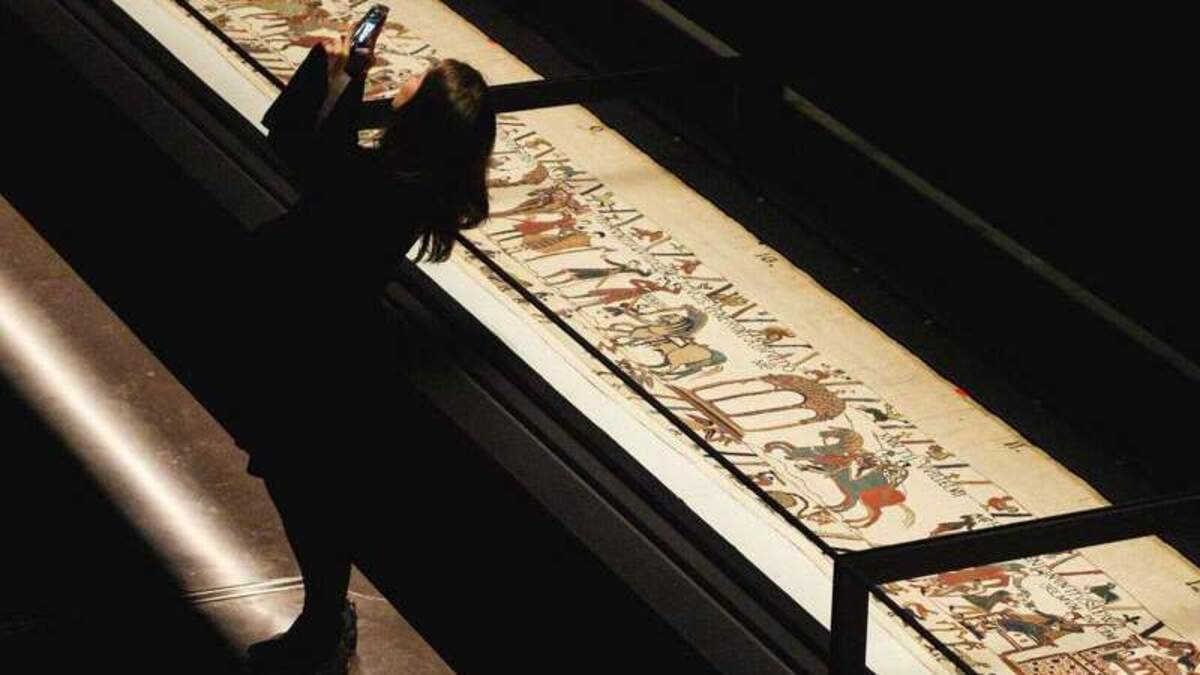
British Museum offers refunds and priority tickets after tapestry crowds
The Bayeux Tapestry exhibition at the British Museum in London has drawn heavy crowds and complaints over long wait times, prompting the museum to take measures. Visitors have faced queues stretching past two hours, prompting hundreds of ticket holders to be turned away after waiting because time slots expired before they could enter the galleries. People who wanted to see the exhibition in recent weeks stood in line so long that the museum closed for the day before ticket holders could get inside.
Public Backlash and Museum Apologies in London
On social media, visitors criticized 40-minute time slots as too brief to move through the dense crowds and read the accompanying explanatory plaques. In response, the British Museum issued broad apologies across social media platforms and established a compensation framework. Visitors who were turned away and missed admission receive refunds alongside priority access for purchasing new tickets.
The institution previously banned photography and video recording in September to accelerate visitor flow, though that restriction ultimately failed to resolve the congestion. Persistent complaints regarding lengthy queues and excessive visitor numbers forced the hand of museum leadership.

Museum Installs Seating and Signage to Reduce Bottlenecks
To mitigate ongoing bottlenecks, the museum is rolling out a series of logistical remedies. Additional seating is being installed for people waiting in queues, alongside clearer directional signage and an introductory audiogid designed to improve the visitor experience.
The exhibition arrived in London in July through a loan from the French government and is scheduled to remain on display until July 2027. Museum director Nicholas Cullinan previously compared the initial ticket demand to Glastonbury, the British music festival that sells out within 40 minutes, noting that the first day of advance sales cleared nearly 100,000 tickets. The 70-meter-long embroidery features 58 scenes depicting the 1066 Norman conquest of England, the Battle of Hastings, and the conclusion of Anglo-Saxon rule, comprising roughly 626 human figures and 200 horses.
Public Shows Extraordinary Interest in 11th-Century Embroidery
The public response to the 11th-century embroidery has been described as “buitengewoon” by a museum spokesperson according to the BBC, while freely admitting that numerous visitors had to wait in line for too long. A museum spokesperson noted that interest in the centuries-old artwork is extraordinary.
William the Conqueror crossed the English Channel and defeated the Anglo-Saxon king Harold. This event is viewed as a turning point in the history of the United Kingdom. According to tradition, a half-brother of William asked the nuns of Canterbury shortly after the battle to record the story of the battle in detail, with the tapestry intended for Normandy in the cathedral of Bayeux.
