
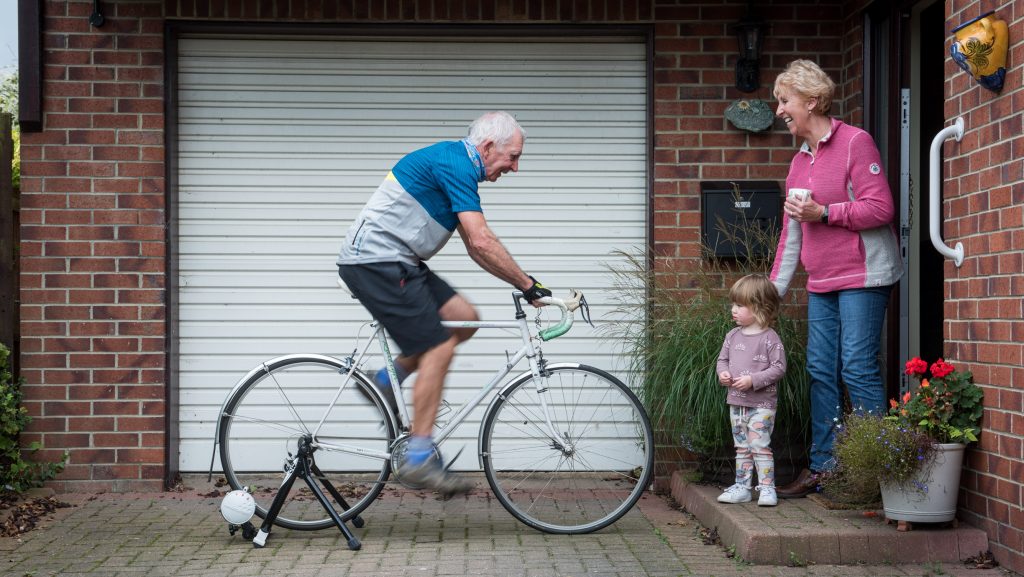
British Cycling Foundation Partners With Parkinson’s UK to Improve Cycling Accessibility
The British Cycling Foundation has partnered with Parkinson’s UK to eliminate barriers for individuals living with the condition. As the foundation’s first funding partner, Parkinson’s UK will support coach training and a four-site pilot project, expanding British Cycling’s “Limitless” disability and para-cycling program to improve health and wellbeing.
The gap between elite athletic performance and community accessibility is often a chasm of specialized knowledge. While the Great Britain Cycling Team recently announced a powerhouse squad of nine Paralympic champions for the 2025 UCI Para-track World Championships in Rio, the tactical infrastructure required to move a civilian with a neurological condition from a sedentary lifestyle to a saddle is vastly different. The primary problem isn’t a lack of desire; it is a lack of qualified pedagogical support at the grassroots level. Most community coaches are trained in standard periodization and aerobic conditioning, but they lack the specific toolkit to manage the motor symptoms and balance challenges inherent in Parkinson’s.
This partnership addresses that operational failure by integrating Parkinson’s UK as the British Cycling Foundation’s first funding partner. This isn’t a mere branding exercise; it is a strategic injection of expertise designed to overhaul how inclusive cycling is delivered. By providing targeted training to coaches and volunteers, the initiative transforms the “Limitless” program—British Cycling’s existing disability and para-cycling framework—into a specialized conduit for neurological health. The focus shifts from general participation to a tailored approach where the coaching staff understands the physiological nuances of the condition.
“We’re thrilled to be working with Parkinson’s UK, as we look to bring the joy of cycling to those who need it most. This partnership gives us the opportunity to create more spaces where cycling is accessible, enjoyable and supportive for all. The impact of this work could be genuinely life-changing for people who may not have seen cycling as an option to support their health and wellbeing.”
Tracy Power, Managing Director of the British Cycling Foundation, emphasizes that fighting inequalities is the core objective. From a tactical standpoint, the “Limitless” program now serves as the blueprint for this expansion. The strategy relies on the co-creation of training modules shaped by lived experience. This is a critical pivot in sports management; rather than imposing a top-down medical model, the program uses the raw data of the participants’ daily struggles to shape the coaching curriculum. This ensures that the inclusive sessions are not just “available” but are functionally effective for the end-user.
The operational rollout begins with a pilot project across four sites nationwide. This phased implementation allows for the iterative refinement of the training modules before a wider scale-up. For the participants, the benefits are multifaceted—physical, social, and psychological. For the sports industry, it creates a new demand for adaptive infrastructure. As more individuals with Parkinson’s enter the cycling ecosystem, there is an immediate need for adaptive sports equipment providers who can supply specialized bikes and stability aids that align with the “Limitless” framework.
The integration of physical activity as a management tool for Parkinson’s is supported by the physical activity leadership at Parkinson’s UK. The goal is to move beyond a “one size fits all” approach to cycling instruction, ensuring that whether a participant is a novice or a seasoned rider, the session is calibrated to their specific needs.
“Being active can be one of the best ways to live well with Parkinson’s and I’m delighted to have agreed this new partnership with British Cycling. The partnership will supply more cycling instructors, coaches and volunteers a better understanding of Parkinson’s as a condition and help them to tailor their sessions more effectively.”
Anna Castiaux, Physical Activity Programme Lead at Parkinson’s UK, highlights the necessity of this tailored approach. When we look at the broader trajectory of British Cycling, this move mirrors the high-performance standards seen in their elite wings. Just as the UCI Road World Championships require meticulous tactical preparation—evidenced by Henderson securing a top-10 time-trial finish in 2025—community health initiatives require a similar level of precision. The “Limitless” program is essentially applying elite para-cycling logic to public health.
This shift toward specialized coaching creates a ripple effect in the local economy of the four pilot sites. Increased participation in adaptive cycling drives traffic to local leisure hubs and increases the demand for specialized neurological rehabilitation clinics that can work in tandem with sports coaches to monitor athlete progress. The synergy between a medical diagnosis and a sports-based intervention is where the real value is unlocked. For the individuals involved, the transition from a clinical setting to a community cycling group is a vital step in maintaining quality of life.
The funding model here is equally significant. By establishing Parkinson’s UK as the first funding partner, the British Cycling Foundation is signaling a shift toward cause-specific partnerships. This moves the financial burden away from the participant and places it on a strategic alliance between a governing body and a health charity. This model is scalable and provides a template for other sports—such as swimming or athletics—to bridge the gap between medical necessity and athletic enjoyment.
As the pilot sites begin to operate, the success of the program will likely be measured by participation rates and the qualitative feedback from the “lived experience” modules. This data will be essential for any healthcare consultancy firms looking to implement similar activity-based interventions on a regional or national scale. The intersection of elite sports infrastructure and public health is no longer a luxury; it is a strategic necessity for an inclusive sporting future.
The trajectory for British Cycling is clear: they are leveraging their dominance in the para-cycling world to elevate the standard of care and activity for the general public. By turning the “Limitless” program into a specialized tool for Parkinson’s, they are ensuring that the path to the saddle is open to everyone, regardless of their neurological profile. To find the vetted medical professionals, adaptive equipment specialists, or legal consultants necessary to support these inclusive initiatives, explore the comprehensive resources available in the World Today News Directory.
Disclaimer: The insights provided in this article are for informational and entertainment purposes only and do not constitute medical advice or sports betting recommendations.