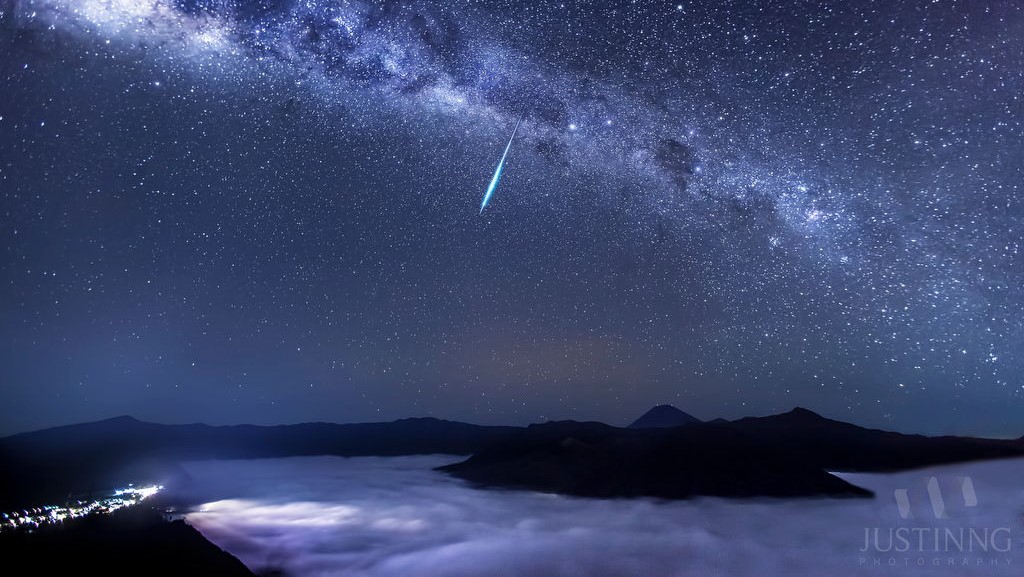
Bright moon reduces visibility of Eta Aquarid meteor shower peak
The timing of the moon’s phase can significantly impact the visibility of celestial events. This year, the Eta Aquarid meteor shower arrives alongside a waning gibbous moon that will be 84% full, meaning the bright lunar light will compete with the faint streaks of comet debris appearing in the night sky.
The shower is scheduled to peak Tuesday night into Wednesday morning. Under ideal, dark conditions, the event is a highlight for astronomers, but the current lunar phase provides significant illumination that makes the meteors harder to glimpse.
The moon’s impact on meteor counts
The quality of a meteor shower is often measured by its hourly rate, but those numbers are highly dependent on the observer’s location and the surrounding light. For those in the Southern Hemisphere, the peak typically yields 50 meteors per hour. However, Associated Press reporting indicates that the interfering moon could cut that number by half this year.
The situation is more muted for observers further north. In the Northern Hemisphere, skywatchers will likely see fewer than 10 meteors per hour. This disparity is a result of the observers’ geographic position relative to the shower and the additional interference caused by the moon.
“For us in the Northern Hemisphere, it’s not going to be as impressive,” Teri Gee, manager of the Barlow Planetarium in Wisconsin
Gee noted that visibility improves as one moves toward the equator and beyond, stating, The farther south you are, the better you’ll see it.
Tracing the debris to Halley’s comet
The Eta Aquarids are not random occurrences but the result of a predictable orbital intersection. Meteor showers happen when the Earth charges through trails of debris left behind from asteroids or comets. As these particles collide with the atmosphere at extremely high speeds, they create the streaks of light commonly known as shooting stars.
The specific debris fueling this shower comes from Halley’s comet, one of the most recognized celestial bodies in astronomy. Halley’s comet follows a trip around the sun that brings it past Earth approximately every 76 years. While the comet itself is not currently visible, its leftover trail provides the material for the Eta Aquarids. The comet is not expected to swing by Earth again until 2061.
While a handful of stray meteors are visible on most nights under dark skies, the predictability of these annual showers allows observers to plan their viewing. This particular event is part of a recurring annual cycle of celestial activity where Earth passes through the same debris stream each May.
Practical strategies for viewing
Because the moon is so bright, success this year depends on strategic positioning. To maximize the chance of spotting a meteor, observers should venture away from tall buildings and city lights. To combat the 84% full moon, it may be helpful to find a physical obstruction—such as a treeline or a building—that blocks the moon’s direct light from the field of vision.
The best time for viewing is just before dawn. Observers are encouraged to bring lawn chairs and blankets to remain comfortable during the wait. A critical part of the process is biological: viewers should avoid looking at their phones to allow their eyes sufficient time to adjust to the darkness.
Once adjusted, the gaze should be directed toward the east, specifically in the vicinity of the constellation Aquarius and the bright star Eta Aquarii. Observers are advised to scan the sky generally rather than focusing on a single point.
“You’re looking for bright streaks that appear in the corner of your eye for a fraction of a second,” Nico Adams, astrophysicist with SSP International
The value of the firsthand experience
Despite the lunar interference and the lower numbers expected in the north, astronomers emphasize the intrinsic value of the effort. Observing these events allows people to see the physical remnants of cometary orbits interacting with Earth’s own atmosphere in real time.
The timing of the streaks is irregular, which keeps observers attentive throughout the night. According to Gee, there is no better way to enjoy the event than through direct observation.
“It almost feels like you’re discovering it yourself,” Teri Gee, manager of the Barlow Planetarium in Wisconsin
As the peak passes from Tuesday night into Wednesday morning, those who manage to block out the waning gibbous moon will be watching fragments of a comet that won’t return to our neighborhood for another few decades.