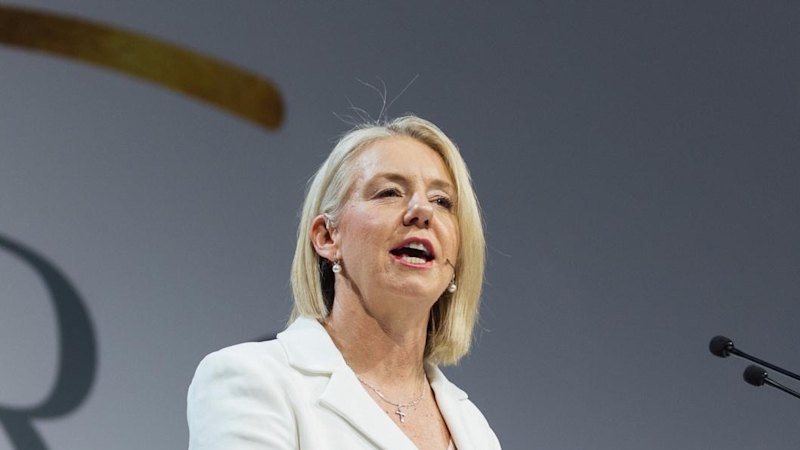
Bridget McKenzie Calls for Tougher Border Policies Based on Migrant Values
Australian Senator Bridget McKenzie has proposed cutting federal funding to universities teaching “white guilt” as part of a broader conservative push to reshape higher education policy. The announcement, made during a London conference, also targets stricter border policies based on “values alignment.” Critics warn the move risks politicizing academia and deepening divisions in multicultural Australia.
What is “white guilt” and why is it now a policy target?
The term “white guilt” has been used in academic and political discourse to describe a perceived discomfort among white Australians about historical injustices, including Indigenous dispossession and colonialism. Universities have increasingly incorporated these discussions into curriculum—particularly in history, sociology, and education programs—as part of reconciliation efforts.
McKenzie, the Nationals’ deputy leader, framed the issue as part of a broader critique of “woke ideology” in education. “We want universities to focus on teaching skills, not ideology,” she told the Daily Telegraph. “If they’re teaching divisive concepts, they shouldn’t get taxpayer dollars.”
“This is about protecting free speech, not suppressing it. But when universities use public funds to push a particular worldview, that’s a problem.”
How would funding cuts work—and what’s the legal precedent?
The proposal mirrors similar moves in the U.S., where states like Florida and Texas have defunded or restricted university programs over curriculum disputes. In Australia, federal funding for higher education is distributed through the Higher Education Support Act 2003, which allows the government to withhold funds for “non-compliance with national priorities.”

Legal experts say McKenzie’s plan would require defining “white guilt” in policy terms—a challenge given its subjective nature. “You’d need a very narrow, legally defensible definition to avoid constitutional challenges,” said Dr. Eleanor Whitaker, a constitutional law professor at the University of Melbourne.
“The real risk is that this becomes a tool to silence debate, not a solution to it. Universities are already underfunded—cutting more will hurt research and student access.”
Which universities are most exposed—and how would they respond?
Universities with strong Indigenous studies programs or critical race theory courses would be prime targets. The University of Sydney, for example, offers a Bachelor of Indigenous Studies that explicitly addresses colonial history. Others, like Monash and UNSW, have faced internal debates over decolonizing curricula.
Institutions could respond in three ways:
- Compliance: Softening or rebranding controversial courses to avoid scrutiny.
- Legal challenge: Arguing the cuts violate academic freedom under the Freedom of Speech (Higher Education) Act 2018.
- Private funding: Seeking donations from philanthropists or corporations to offset losses.
Monash University’s vice-chancellor, Professor Margaret Gardner, has warned that funding cuts would “damage Australia’s global reputation for higher education.”
What happens next—and who benefits from the fallout?
The proposal faces immediate hurdles. The Labor government, which controls the Senate, has not signaled support. But if passed, it would create a funding gap of up to AUD $500 million annually—according to the Grattan Institute. Universities would likely turn to academic policy consultants to navigate compliance, while legal firms specializing in higher education law would see increased demand.
For businesses, the impact is mixed. Textbook publishers may see a shift toward more “neutral” history content, while diversity training firms could face backlash. Meanwhile, border policy consultants would benefit from McKenzie’s parallel push to align migration with “values-based” criteria—a move that could reshape Australia’s immigration intake.
The bigger picture: How this fits into Australia’s culture wars
McKenzie’s remarks reflect a global conservative backlash against “woke” academia. In the U.S., similar policies have led to partisan splits over curriculum, with some states banning terms like “critical race theory.” In Australia, the debate is more nuanced: while some conservatives oppose “divisive” teaching, others argue for more robust reconciliation efforts.

Historically, Australia’s higher education funding has been politically neutral. But the 2023 Higher Education Support Act review already flagged tensions over “political interference” in universities. McKenzie’s proposal could accelerate that trend.
“This isn’t just about funding—it’s about who controls the narrative. If universities can’t teach the full history, we lose a generation that understands reconciliation.”
What’s the timeline for action?
| Month | Key Event | Impact |
|---|---|---|
| July 2026 | Government review of funding criteria | Universities prepare compliance strategies |
| September 2026 | Possible legislative amendments | Legal challenges from universities |
| December 2026 | Funding allocations announced | Budget shortfalls for targeted programs |
The real question isn’t whether the policy will pass—it’s how deeply it will fracture Australia’s academic and political landscape. With universities already underfunded and reconciliation efforts stalled, McKenzie’s proposal risks turning a debate about education into a culture war.
For institutions and professionals navigating this shift, the time to act is now. Whether it’s securing higher education attorneys to challenge funding cuts or rebranding curriculum to avoid scrutiny, the stakes are high—and the clock is ticking.