Brexit Fallout: UK Braces for Seventh Prime Minister in 10 Years
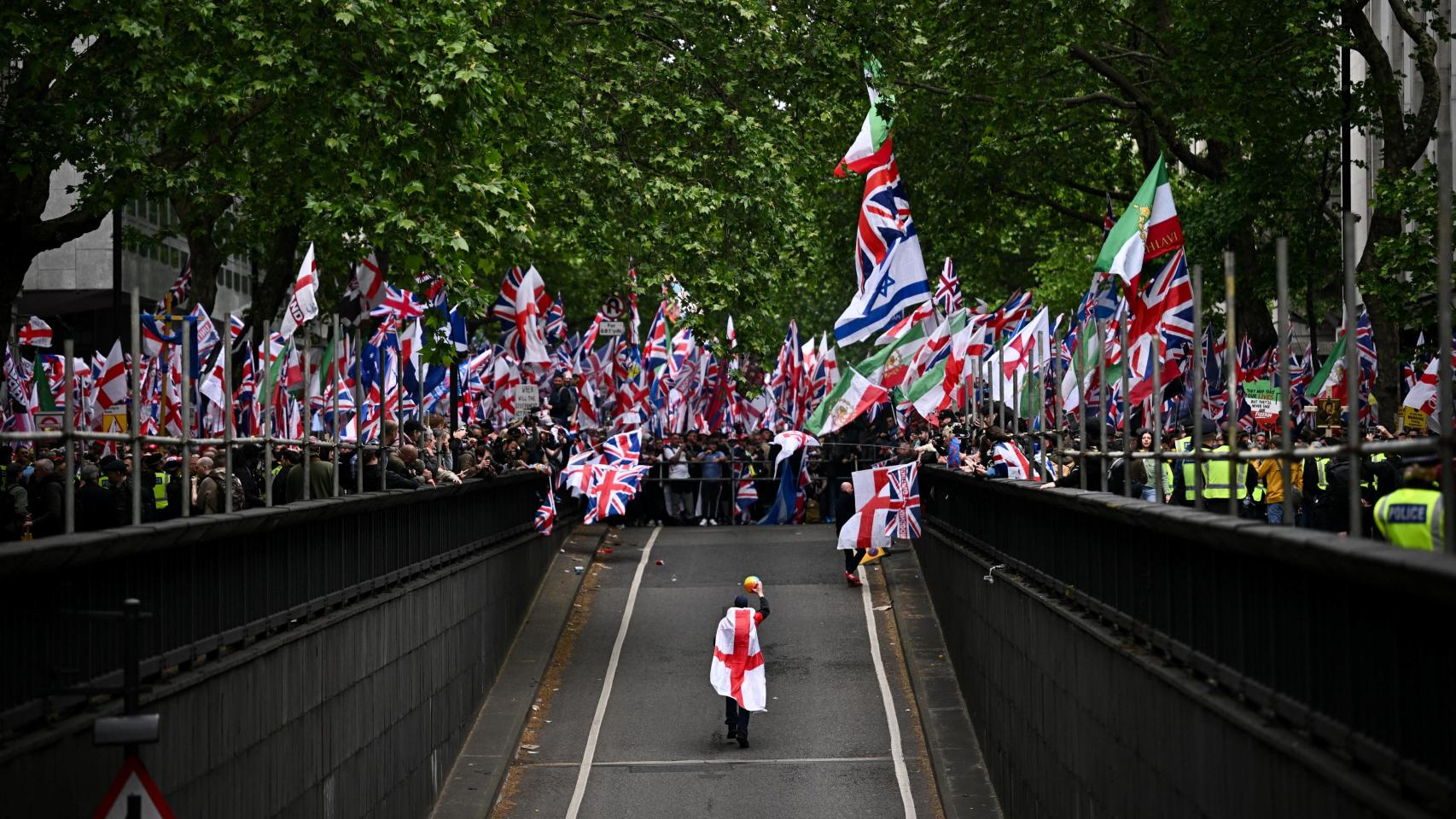
Thousands of demonstrators converged on the streets of London on May 16, 2026, triggering a volatile confrontation between pro-Palestinian activists and surging waves of Islamophobic sentiment. The unrest underscores a deepening societal fracture within a United Kingdom currently paralyzed by extreme political instability and the lingering socio-economic fallout of the post-Brexit era.
The atmosphere in the capital is more than just a clash of geopolitical opinions; it is a symptom of a systemic collapse. As the city grapples with these opposing tides of protest and prejudice, the overarching narrative is one of a nation adrift. The United Kingdom is currently teetering on the edge of appointing its seventh Prime Minister in a single decade, a revolving door of leadership that has left a power vacuum where cohesive national policy should be.
This political void has effectively turned the streets of London into the primary arena for political expression. When the halls of Westminster are viewed as a “shredder” for ambition and governance, the public square becomes the only place where voices feel they can be heard, however loudly or violently.
The Intersection of Global Conflict and Domestic Fragility
The current unrest is not happening in a vacuum. The intersection of the conflict in Gaza and the domestic tension in the UK has created a combustible environment. For many in London’s diverse boroughs, the protests are a necessary stand against humanitarian crises. For others, these demonstrations have become a lightning rod for xenophobia and targeted hate.
The volatility is compounded by the perceived failure of the state to protect marginalized communities. We are seeing a pattern where political instability at the top filters down into a lack of confidence in local policing and municipal safety. This is where the human cost becomes visceral.

“We are witnessing a dangerous erosion of the social contract. When the central government is in a state of perpetual transition, the mechanisms for community mediation and hate-crime prevention begin to atrophy, leaving the most vulnerable to fend for themselves.”
This sentiment is echoed by legal experts who argue that the current climate has made the right to protest a high-risk endeavor. With the UK Government’s evolving stance on public order, the line between a peaceful demonstration and a criminal offense has become perilously thin. For those caught in the crossfire, the immediate need is no longer just political advocacy, but urgent legal protection. Navigating these arrests requires the expertise of seasoned civil liberties attorneys who can challenge the overreach of emergency policing powers.
Falling into the ‘Brexit Shredder’
The phrase “the Brexit shredder” has become a shorthand for the political and economic attrition that has defined the last several years. The withdrawal from the European Union did not just change trade agreements; it fractured the British psyche. The economic stagnation and the perceived betrayal of various voting blocs have created a fertile ground for populism and polarization.
The current instability—the prospect of a seventh premier in ten years—is the direct legacy of this era. The UK is struggling to redefine its identity on the global stage, and that identity crisis is playing out in the streets of London. The economic anxiety resulting from years of volatility makes people more susceptible to the “us vs. Them” narratives that fuel both Islamophobia and aggressive counter-protests.
This is a macro-economic tragedy manifesting as a micro-social conflict. When people feel their economic future is being shredded by incompetent leadership, they often seek targets for their frustration. The result is a cycle of escalation that the current fragmented government is ill-equipped to handle.
The Municipal Burden and the Search for Stability
Local infrastructure in London is feeling the strain. From the closure of major thoroughfares to the increased pressure on emergency services, the city’s municipal systems are operating at a breaking point. Small businesses in the affected areas are facing a dual crisis: the physical risk of property damage during clashes and the economic loss of foot traffic during lockdowns.
To survive this environment, many local business owners are moving beyond municipal reliance and investing in private risk management specialists to secure their premises and protect their staff from targeted harassment.
However, security is only a temporary bandage. The long-term solution requires a return to community cohesion. There is a desperate need for verified interfaith outreach organizations that can facilitate dialogue before the tension reaches a boiling point on the pavement.
The legal landscape is equally treacherous. The use of the Public Order Act to curtail protests has led to a surge in litigation. Many activists and counter-protesters alike find themselves facing charges that could permanently alter their professional lives, highlighting the necessity of proactive legal counsel in an era of “policing by decree.”
A Nation in Search of a North Star
The scenes in London are a mirror reflecting a broken political system. The “seventh premier” is not just a statistic; it is a symbol of a country that has lost its way. The oscillation between leaders has prevented any long-term strategy for integrating the UK’s diverse populations or mitigating the economic scars of the last decade.
As the protests continue, the world is watching to see if the UK can stabilize itself or if the “shredder” will eventually claim the very fabric of its social cohesion. The tension between pro-Palestinian sentiment and Islamophobia is a symptom, not the disease. The disease is a systemic failure of leadership that has left the citizenry to fight for meaning and safety in the streets.
The reality is that the streets of London are currently more honest than the halls of Parliament. They reveal a society that is exhausted, divided, and desperate for a stability that the current political class seems unable to provide.
If the UK continues to cycle through leaders without addressing the underlying societal fractures, the protests of today will be the baseline for the unrest of tomorrow. In such a volatile climate, relying on the state for protection or guidance is a gamble many can no longer afford to take. Finding verified, independent professionals—from legal advocates to community mediators—via the World Today News Directory is no longer a luxury; it is a necessity for survival in a city under pressure.