Brazil’s Supreme Court Postpones Rio Governor Ruling
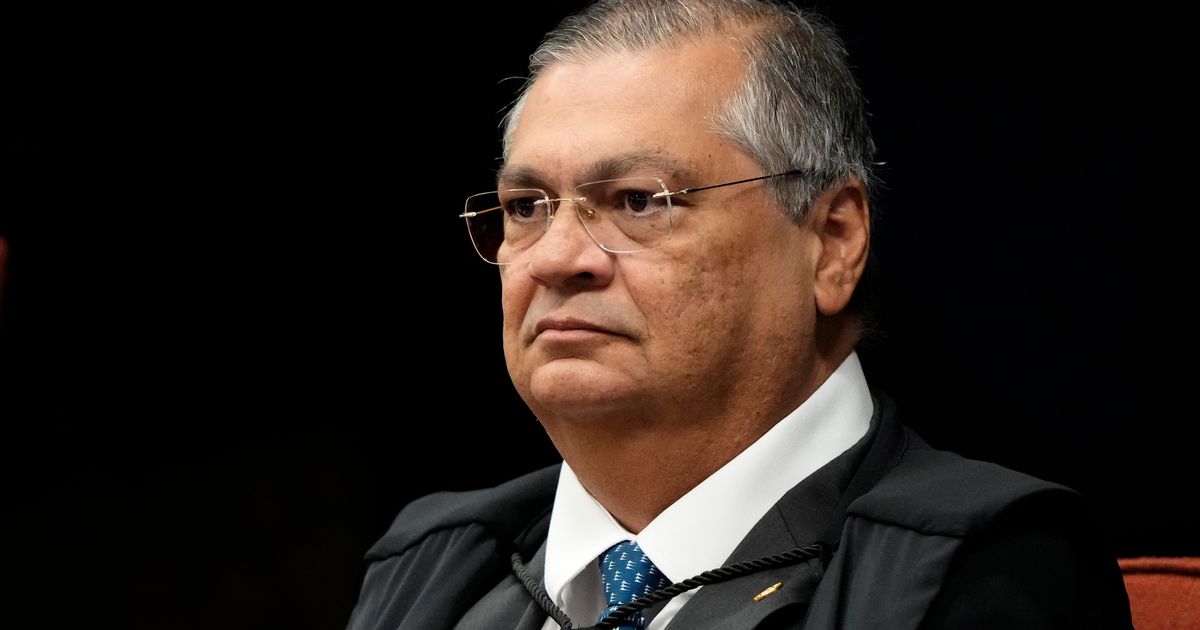
Brazil’s Supreme Court has postponed a critical ruling on the governorship of Rio de Janeiro state, extending a three-week political vacuum. The delay leaves the state’s executive leadership in limbo, stalling key administrative decisions and intensifying instability within one of South America’s most economically vital regions.
This isn’t just a procedural hiccup in Brasília. It is a systemic failure that paralyzes the machinery of government in Rio de Janeiro.
When the head of a state is contested or absent, the “administrative void” creates a ripple effect. From the release of public health funds to the signing of infrastructure contracts, the state’s operational capacity is effectively frozen. For the residents of Rio, this means a precarious suspension of governance in a city already battling deep-seated security crises and fiscal volatility.
The Legal Quagmire: Why the Court Hesitated
The core of the dispute lies in the interpretation of electoral legitimacy and the specific sequence of succession. The Supreme Court (STF) is tasked with deciding whether the current interim leadership holds legal standing or if a new election/appointment process is mandatory. By pushing the date, the Court is attempting to avoid a precedent that could destabilize other state legislatures across Brazil.
However, this caution comes at a cost. The uncertainty creates a “governance gap” that opportunistic political factions are already attempting to fill. In the short term, this leads to a paralysis of the state budget. Without a recognized governor, the ability to authorize large-scale spending is severely curtailed, leaving municipal leaders to scramble for resources.
“The postponement is a tactical move by the judiciary, but for the administration of Rio, it is a strategic disaster. We are seeing a state without a captain while the storm is still hitting the coast.”
The quote above reflects the sentiment of legal analysts in São Paulo, where the economic fallout of Rio’s instability is felt most acutely. As the second-largest economy in Brazil, Rio’s inability to govern affects national GDP and investor confidence.
Macro-Economic Fallout and Regional Paralysis
Rio de Janeiro is not merely a tourist hub; it is the heart of Brazil’s oil and gas industry. The uncertainty regarding the governorship threatens the stability of regulatory environments for energy giants. When the executive branch is in flux, the risk premium for long-term investments rises.
Local businesses are now facing a logistical nightmare. Contracts that require state-level signatures are stalled, and the lack of a clear authority makes it impossible to negotiate new public-private partnerships. For companies operating in the region, the only way to mitigate this risk is by engaging specialized corporate law firms capable of navigating the intersection of Brazilian administrative law and constitutional crises.
The impact extends to the municipal level. Cities like Niterói and Duque de Caxias rely on state transfers for security and transportation. With the governorship in dispute, these funds are often delayed or frozen in bureaucratic limbo.
Key Points of Contention in the Rio Succession
- Constitutional Precedent: Whether the STF’s ruling will apply to future contested elections in other Brazilian states.
- Fiscal Authority: Who has the legal right to sign off on the 2026 state budget and emergency expenditures.
- Public Security: The coordination between the State Military Police and federal forces during a leadership vacuum.
The tension is palpable. The state’s security apparatus, specifically the Brazilian Federal Government’s oversight mechanisms, must now step in to ensure that the lack of a governor doesn’t lead to a total collapse of law and order in the favelas and urban centers.

Navigating the Vacuum: The Professional Solution
For the international community and local enterprises, the “Rio Chaos” is a lesson in risk management. The problem is no longer about who wins the governorship, but how to survive the period of instability. This represents where the reliance on vetted professional networks becomes critical.
Investors are currently pivoting toward risk management consultants to hedge against the volatility of Rio’s local markets. Similarly, civic organizations are stepping in to provide the social services that the state government is currently unable to guarantee. Those seeking to maintain operational continuity in the region are increasingly turning to government relations specialists who can navigate the informal power structures that emerge when formal leadership vanishes.
The legal complexity is further compounded by the Supreme Federal Court (STF)‘s tendency to issue “monocratic” decisions—rulings by a single judge that can be overturned by the full plenary, adding another layer of unpredictability to the timeline.
The Long-Term Outlook: A State in Transition
If the STF continues to delay, we are looking at a constitutional crisis that could trigger a federal intervention. While the court seeks a “clean” legal solution, the reality on the ground is messy. The lack of a governor means there is no one to hold accountable for the rising crime rates or the decaying infrastructure of the city’s transit systems.
Historically, Brazil has seen similar periods of instability, but the current digital age accelerates the panic. Market reactions are instantaneous, and the perception of a “failed state” in Rio could deter foreign direct investment for years to reach.
To understand the full scope of the crisis, one must look at the Associated Press coverage of the regional tensions, which highlights the deep divide between the legislative assembly and the judicial branch. This is not just a fight over a seat; it is a fight over the definition of executive power in the 21st century.
The postponement of the decision is a symptom of a larger ailment: a judiciary that is increasingly acting as the final arbiter of political will, often at the expense of administrative efficiency.
As the clock ticks toward the next court date, the residents and businesses of Rio are left in a state of suspended animation. The only certainty is that the vacuum will be filled—either by a legitimate legal resolution or by the opportunistic forces that thrive in the absence of law. For those operating within this volatility, the only safeguard is a network of verified, expert professionals. Whether you need legal shielding or strategic financial guidance, the World Today News Directory remains the essential bridge to the professionals equipped to navigate the storm of Brazilian geopolitics.