
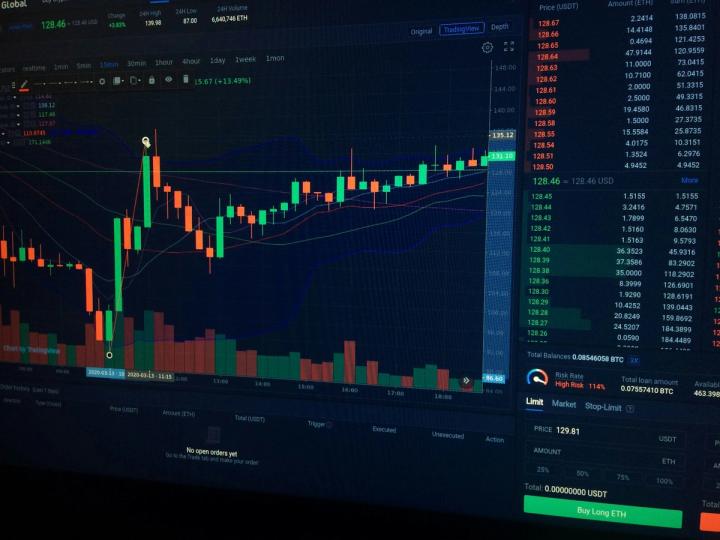
Brazil’s B3 stock exchange to launch bitcoin-linked ‘event contracts’
B3’s Regulatory Gamble: How Event Contracts Redefine Brazilian Liquidity
Brazil’s B3 stock exchange is set to launch six federally regulated ‘event contracts’ on April 27, 2026, allowing professional investors to speculate on Bitcoin prices, the Ibovespa index, and USD/BRL movements. Unlike unregulated prediction markets, these cash-settled derivatives operate under CVM oversight, marking a pivotal shift from gray-area gambling to institutional risk management tools.

The distinction between a casino and a clearinghouse often comes down to a single signature: regulatory approval. For years, Brazil’s financial sector has watched the explosion of global prediction markets—platforms like Polymarket and Kalshi capturing nearly $160 billion in notional volume—with a mix of envy and caution. Now, B3 is closing that gap. By introducing event contracts tied to crypto and fiat volatility, the exchange is effectively legitimizing a asset class that previously existed in the shadows of fintech apps like Prévias.
What we have is not merely a product launch; it is a liquidity trap for institutional capital. The contracts, capped at 100 reals ($19) per unit, offer fixed payouts based on binary outcomes. For the average retail trader, this looks like betting. For the corporate treasury, it looks like a hedge. When a Brazilian exporter needs to offset currency risk without the complexity of a traditional futures margin call, these instruments offer a streamlined alternative. However, the complexity lies in the compliance architecture required to trade them.
The Compliance Bottleneck for Institutional Players
The immediate friction point for any CIO or risk manager looking to allocate capital to these novel instruments is the regulatory threshold. B3 has explicitly restricted access to investors holding over 10 million reals ($1.9 million) in assets or those with specific CVM certification. This creates a high barrier to entry that filters out retail noise but demands robust legal frameworks for those who qualify.
Financial institutions cannot simply plug into B3’s new API and start trading. They require specialized regulatory compliance advisory to navigate the ambiguity between the Securities and Exchange Commission (CVM) and the Central Bank. The source material notes that legal experts remain divided on whether oversight ultimately falls to the Ministry of Finance. In this gray area, a misstep in classification could trigger severe capital adequacy penalties under Basel III accords.
The risk is compounded by the cash-settlement mechanism. Unlike physical delivery contracts where the underlying asset changes hands, event contracts settle purely on the probability outcome. This requires sophisticated enterprise risk management software capable of modeling binary payout structures rather than traditional linear exposure. Standard VaR (Value at Risk) models often fail to capture the skew of event-driven derivatives, leaving firms exposed to tail risks they didn’t anticipate.
“The convergence of prediction markets and traditional exchange infrastructure removes the counterparty risk that has plagued decentralized platforms. For institutional allocators, B3’s move transforms speculation into a calculable line item on the balance sheet.”
Tarek Mansour, CEO of Kalshi, recently highlighted this shift during the expansion of his firm’s partnership with XP International. While Mansour’s comments focused on the U.S. Regulatory landscape, the sentiment applies globally: the migration of prediction markets to regulated venues is inevitable. As XP International integrates these capabilities, Brazilian competitors are forced to accelerate their own digital transformation or lose market share to agile fintechs.
Tokenization and the Future of Settlement
B3’s strategy extends beyond simple derivatives. The exchange is concurrently developing its own tokenization platform and stablecoin, expected to launch later in 2026. This infrastructure is critical. If event contracts are to scale, settlement times must move from T+2 to near-instantaneous finality. Blockchain-based settlement layers reduce the capital drag of collateral management, a key selling point for high-frequency trading firms.
However, integrating legacy banking rails with emerging tokenization standards presents a massive technical debt challenge. Banks are scrambling to upgrade their core ledgers. This has created a surge in demand for blockchain integration specialists who can bridge the gap between SWIFT messaging and on-chain settlement protocols. Firms that fail to modernize their settlement infrastructure will find themselves unable to compete on margin efficiency.
- Liquidity Fragmentation: With Kalshi partnering with XP and B3 launching native contracts, liquidity may fracture across venues, requiring sophisticated algorithmic trading solutions to aggregate order books.
- Regulatory Arbitrage: As the CVM clarifies rules, firms will seek jurisdictions with the most favorable capital treatment, driving cross-border legal consulting needs.
- Data Integrity: Reliance on oracle data for event resolution (e.g., Bitcoin price feeds) introduces new vectors for manipulation, necessitating advanced cybersecurity audit firms.
The Verdict on Market Maturation
The launch of these contracts signals that the “wild west” era of crypto-derivatives in Latin America is ending. B3 is drawing a line in the sand: if you want to trade volatility, you do it on our terms, with our oversight, and through our clearinghouse. For the broader market, this reduces systemic risk but increases the cost of participation.
Investors should watch the uptake of these contracts in Q3 2026. If volume exceeds $50 million in the first month, it validates the thesis that institutional demand for binary hedging tools is underserved. If it stalls, it suggests that the 10 million real minimum is simply too high for the current risk appetite of local pension funds and family offices.
As the dust settles on this launch, the winners will not just be the traders who pick the right direction on Bitcoin. The real value accrues to the service providers who build the guardrails. Whether it is legal counsel navigating the CVM’s evolving stance or tech firms securing the tokenization layer, the infrastructure build-out is where the alpha lies. For executives navigating this transition, finding vetted partners is no longer optional—it is a fiduciary necessity. Explore the World Today News Directory to connect with the top-tier B2B firms defining the next era of Brazilian finance.